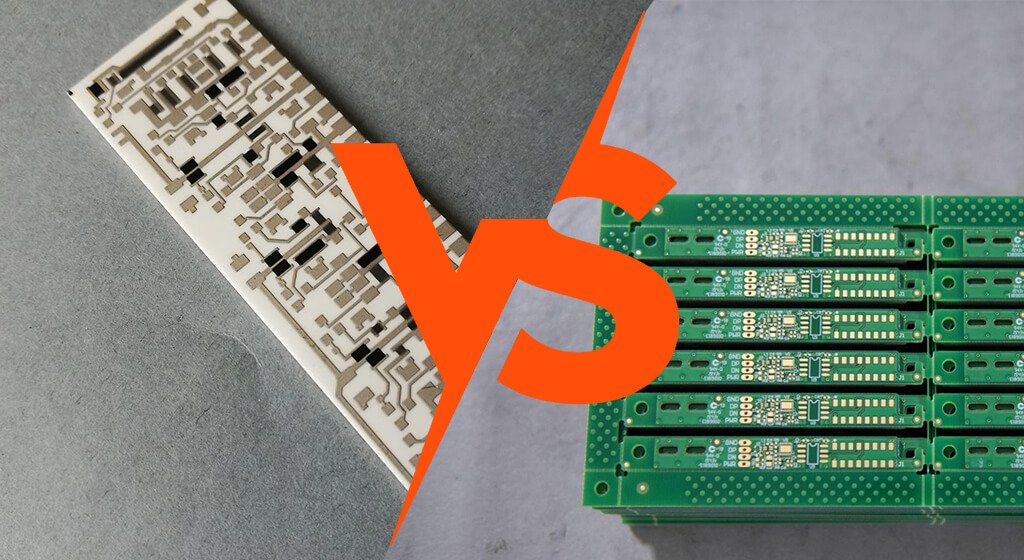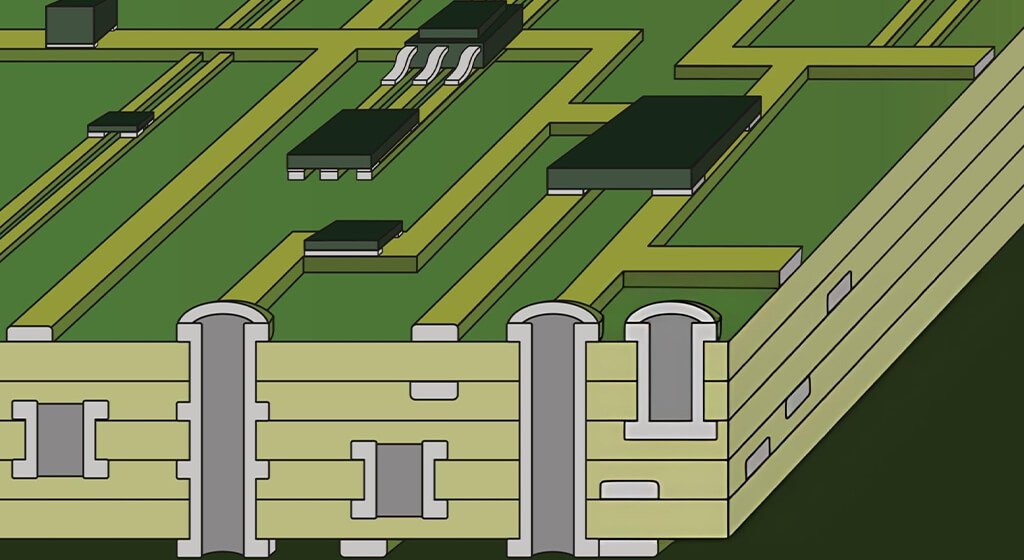
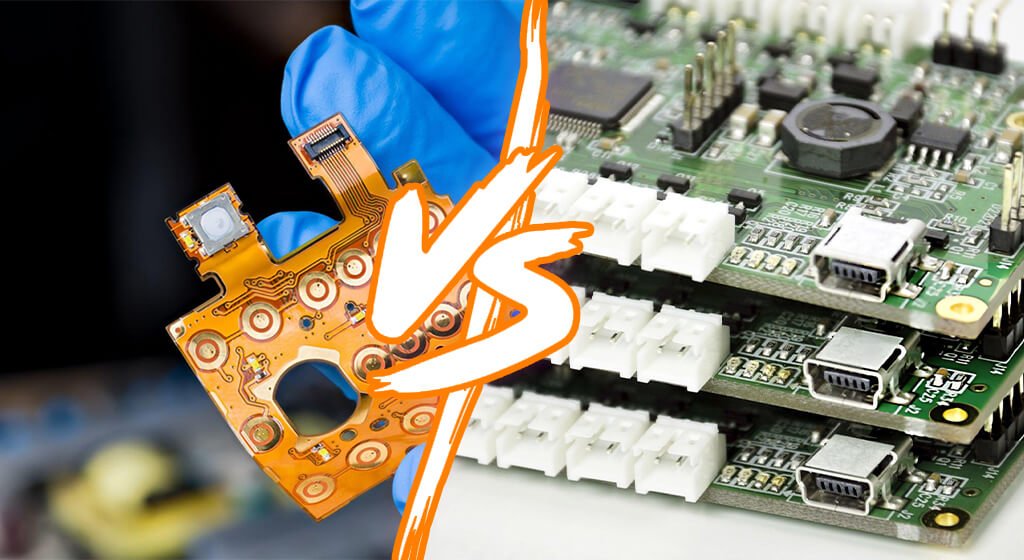
In PCB manufacturing, PCB material is one of the most important factors in electronics design. The material affects thermal performance, reliability, signal integrity, manufacturing cost, and product lifespan.
Among all PCB substrate materials, FR4 and Polyimide are two of the most widely used options. FR4 was widely used in consumer electronics because of its low cost and excellent manufacturability.
And, polyimide is the preferred choice for aerospace, military, automotive, medical, and high-temperature applications.
This guide compares Polyimide PCB and FR4 PCB in detail, helping engineers, purchasers, and product developers make informed decisions.
Table of Contents
1. What Is FR4 PCB?
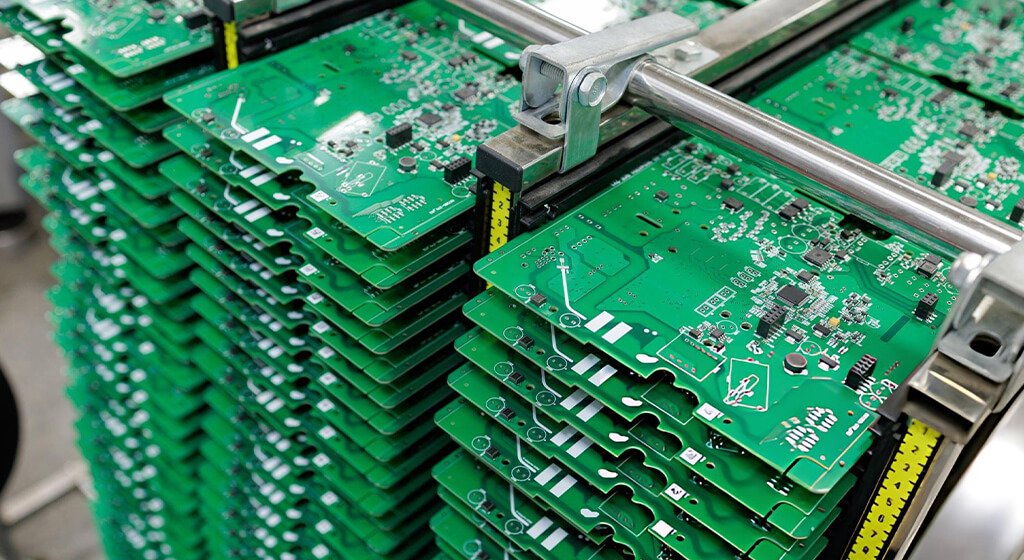
FR4 is the most widely used PCB substrate in the world. It is made from glass-reinforced epoxy laminate.
It Is Composed Of:
- Woven Fiberglass Cloth
- Epoxy Resin Binder
- Flame-retardant Additives (hence “FR” = Flame Retardant)
FR4 has become the industry standard PCB substrate because it offers:
- Low Manufacturing Cost
- Good Mechanical Strength
- Excellent Electrical Insulation
- Easy Fabrication
- Wide Material Availability
1.1. Typical FR4 Properties
Property | Typical Value |
Glass Transition Temperature (Tg) | 130°C–180°C |
Dielectric Constant (Dk) | 4.2–4.8 |
Thermal Conductivity | 0.3–0.4 W/m·K |
Moisture Absorption | 0.10%–0.20% |
Cost | Low |
2. What Is Polyimide PCB?
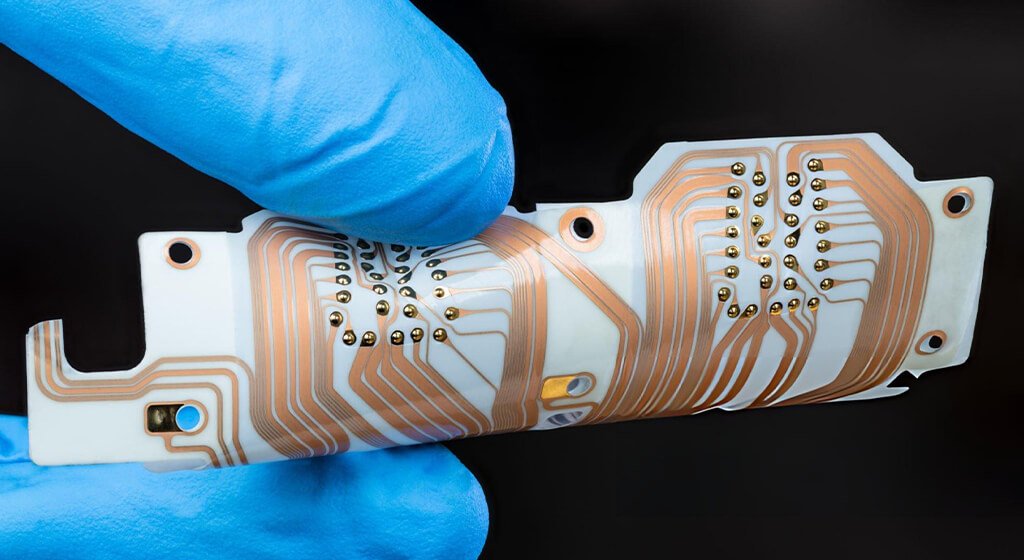
Polyimide is a high-performance thermoset polymer substrate designed for extreme thermal and mechanical conditions.
It Is Widely Used In:
- Aerospace Electronics
- Military Systems
- Automotive Engine Compartments
- Flexible PCB And Rigid-Flex PCBs
2.1. Typical Polyimide Properties
Property | Typical Value |
Glass Transition Temperature (Tg) | 250°C–400°C |
Dielectric Constant (Dk) | 3.2–3.8 |
Thermal Conductivity | 0.4–0.6 W/m·K |
Moisture Absorption | 0.4%–1.5% |
Cost | High |
Do You Need Any Help?
3. Polyimide PCB vs FR4 PCB: Full Technical Comparison
3.1. Thermal Performance
Property | FR4 PCB | Polyimide PCB |
Tg Temperature | 130–180°C | 250–400°C |
Operating Temp | ~105–130°C | 200°C+ |
Thermal Stability | Moderate | Excellent |
Key Insight:
FR4 degrades near 150°C. Polyimide remains stable beyond 250°C.
According to IEC 60216 thermal aging standards, polymer lifespan halves for every 10°C increase above rated Tg. It makes polyimide significantly more reliable in high-heat systems.
3.2. Mechanical Flexibility
Mechanical flexibility is critical for wearable and compact devices.
FR4:
FR4 is rigid and brittle. Repeated bending often causes:
- Copper Cracking
- Trace Failure
- Board Fracture
Polyimide
Polyimide is naturally flexible. It makes it ideal for:
- Flexible PCBs
- Rigid-flex PCBs
- Foldable Electronics
In real-world testing from NASA electronics guidelines, polyimide flex circuits can survive repeated mechanical stress cycles that destroy FR4 in minutes.
3.3. Electrical Performance
Property | FR4 | Polyimide |
Dielectric Constant | 4.2–4.8 | 3.2–3.8 |
Signal Loss | Moderate | Lower |
High-Frequency Suitability | Limited | Better |
Lower dielectric constant in polyimide reduces signal delay and loss, making it more suitable for:
- RF Circuits
- High-Speed Digital Systems
- Signal Integrity-Sensitive Applications
However, FR4 is still widely used in GHz-range designs because its cost is lower than polyimide.
3.4. Moisture Absorption
Moisture absorption impacts long-term reliability.
FR4:
FR4 absorbs relatively little moisture. Typical Walue: 0.10%–0.20%
Polyimide:
Polyimide absorbs more moisture. Typical Value: 0.4%–1.5%. It may require baking before assembly.
FR4 performs better in humid environments.
3.5. Cost Structure Comparison
Cost Factor | FR4 | Polyimide |
Material Cost | Low | High |
Manufacturing Complexity | Low | High |
Yield Rate | High | Medium |
Total Cost per Board | Low | 2–5× FR4 |
FR4 is suitable for mass production due to cost efficiency. Polyimide is reserved for applications where failure cost exceeds material cost.
Do You Need Any Help?
4. Reliability Comparison (Failure Mechanisms)
PCB’s reliability is often more important than initial material cost. A PCB failure in the field can lead to product recalls, warranty claims, production downtime, and reputational damage.
4.1. FR4 PCB Failure Mechanisms
FR4 is highly reliable for most commercial electronics, but its epoxy resin system has limitations when exposed to extreme operating conditions.
4.1.1. Delamination
Delamination occurs when excessive heat or moisture causes the resin layers to separate from the fiberglass reinforcement.
Causes:
- Multiple Lead-Free Reflow Cycles
- High Operating Temperatures
- Poor Storage Conditions
- Excessive Moisture Absorption
Impact:
- Open Circuits
- Reduced Mechanical Strength
- PCB Warping
- Premature Product Failure
4.1.2. Thermal Fatigue Cracking
Repeated heating and cooling cycles create mechanical stress between copper and the substrate due to differences in the coefficient of thermal expansion (CTE).
Common Applications at Risk:
- Automotive Electronics
- Industrial Power Supplies
- Outdoor Equipment
Impact:
- Barrel Cracking In Vias
- Solder Joint Fatigue
- Intermittent Electrical Failures
According to IPC reliability studies, thermal cycling is one of the leading reasones of PCB interconnect failures in harsh environm
4.1.3. Conductive Anodic Filament (CAF) Formation
CAF is an electrochemical failure that develops inside the PCB laminate when moisture and electrical bias are present.
Contributing Factors:
- High Humidity
- Contaminants
- Dense PCB Layouts
- Long-Term Voltage Stress
Impact:
- Leakage Current
- Short Circuits
- Reduced Insulation Resistance
4.1.4. PCB Warpage
FR4 materials can deform during:
- Reflow Soldering
- High-Temperature Operation
- Uneven Copper Distribution
Impact:
- Assembly Defects
- BGA Solder Failures
- Reduced Manufacturing Yield
4.2. Polyimide PCB Failure Mechanisms
Polyimide offers significantly higher thermal and mechanical reliability, but it brought different manufacturing challenges.
4.2.1. Lamination Process Defects
Polyimide materials require tighter process control during multilayer lamination.
Potential Issues:
- Resin Flow Inconsistencies
- Void Formation
- Poor Layer Bonding
Impact:
- Reduced Mechanical Strength
- Reliability Degradation Over Time
However, these failures are usually related to manufacturing quality rather than material limitations.
4.2.2. Drilling and Hole Quality Challenges
Polyimide is mechanically tougher than FR4.
Manufacturing Challenges:
- Increased Drill Wear
- Higher Processing Complexity
- Potential Hole Wall Irregularities
Impact:
- Reduced Plating Reliability
- Via Integrity Concerns
We can mitigate these risks through optimized drilling parameters and inspection processes.
4.2.3. Adhesion Issues in Flexible PCB Structures
In flexible and rigid-flex designs, poor bonding between layers can create localized reliability concerns.
Potential Results:
- Coverlay Lifting
- Trace Separation
- Reduced Flex-Life Performance
These issues are typically process-related. We can prevent it through proper material selection and fabrication control.
Do You Need Any Help?
5. Application
When we choose between Polyimide PCB and FR4 PCB, we should consider the application environment. While FR4 is suitable for most commercial electronics, Polyimide is preferred when reliability, temperature resistance, and flexibility become critical.
Application | FR4 PCB | Polyimide PCB | Recommended Material |
Consumer Electronics | Excellent | Good | FR4 |
Smartphones | Good | Excellent (Flex Sections) | Both |
Excellent | Good | FR4 | |
Home Appliances | Excellent | Good | FR4 |
Excellent | Good | FR4 / MCPCB | |
Good | Excellent | Depends on Environment | |
Automotive Interior Electronics | Excellent | Good | FR4 |
Limited | Excellent | Polyimide | |
Electric Vehicle (EV) Systems | Good | Excellent | Polyimide |
Aerospace Electronics | Limited | Excellent | Polyimide |
Military Electronics | Limited | Excellent | Polyimide |
Good | Excellent | Polyimide | |
Wearable Electronics | Poor | Excellent | Polyimide |
Flexible PCB (FPC) | Not Suitable | Excellent | Polyimide |
Rigid-Flex PCB | Limited | Excellent | Polyimide |
High-Vibration Equipment | Moderate | Excellent | Polyimide |
Downhole Oil & Gas Electronics | Poor | Excellent | Polyimide |
Robotics | Good | Excellent | Depends on Design |
High-Speed Computing | Good | Good | Depends on Signal Requirements |
Satellite Systems | Poor | Excellent | Polyimide |
Defense Systems | Limited | Excellent | Polyimide |
6. People Also Ask?
Why Do Aerospace Companies Use Polyimide PCBs?
Aerospace electronics operate in some of the harshest environments on Earth—and beyond.
Polyimide materials can withstand extreme temperature fluctuations, vibration, humidity, pressure changes, and long service lives without failure.
Can Polyimide PCBs Replace FR4 Completely?
No. While Polyimide offers superior performance in many areas, it is not a practical replacement for FR4 in all applications.
Is High-Tg FR4 Enough for Automotive Electronics?
Not all automotive electronics experience the same environmental conditions.
Under-Hood electronics, Polyimide often provides significantly better long-term reliability.
7. Conclusion
The choice between Polyimide PCB and FR4 PCB ultimately depends on your application’s performance requirements.
Choose FR4 PCB if you need:
- Low cost
- Fast production
- Standard operating temperatures
- High-volume manufacturing
Choose Polyimide PCB if you need:
- Extreme temperature resistance
- Flexible circuit capability
- Superior thermal cycling performance
- Mission-critical reliability
Modern electronics increasingly combine both in rigid-flex architectures, optimizing cost and performance simultaneously.
For procurement teams and engineers, the correct approach is:
Define Environment → Define Failure Risk → Then Select Material, Not The Other Way Around.
Get a PCB Quote