
/Qi & Qi2 PCB Solutions/
Wireless Charger PCB
Wireless charging is transforming how devices are powered—eliminating cables while improving durability and user convenience.
At PCBSAIL, we specialize in high-efficiency, precision-engineered Wireless Charger PCB and PCBA solutions tailored for consumer electronics, automotive systems, and IoT devices.
Our Wireless Charger PCBs are made for high efficiency, stable power transfer, thermal control, and compliance with global standards like Qi. It can ensure seamless wireless charging experiences.
What Is Wireless Charger PCB?
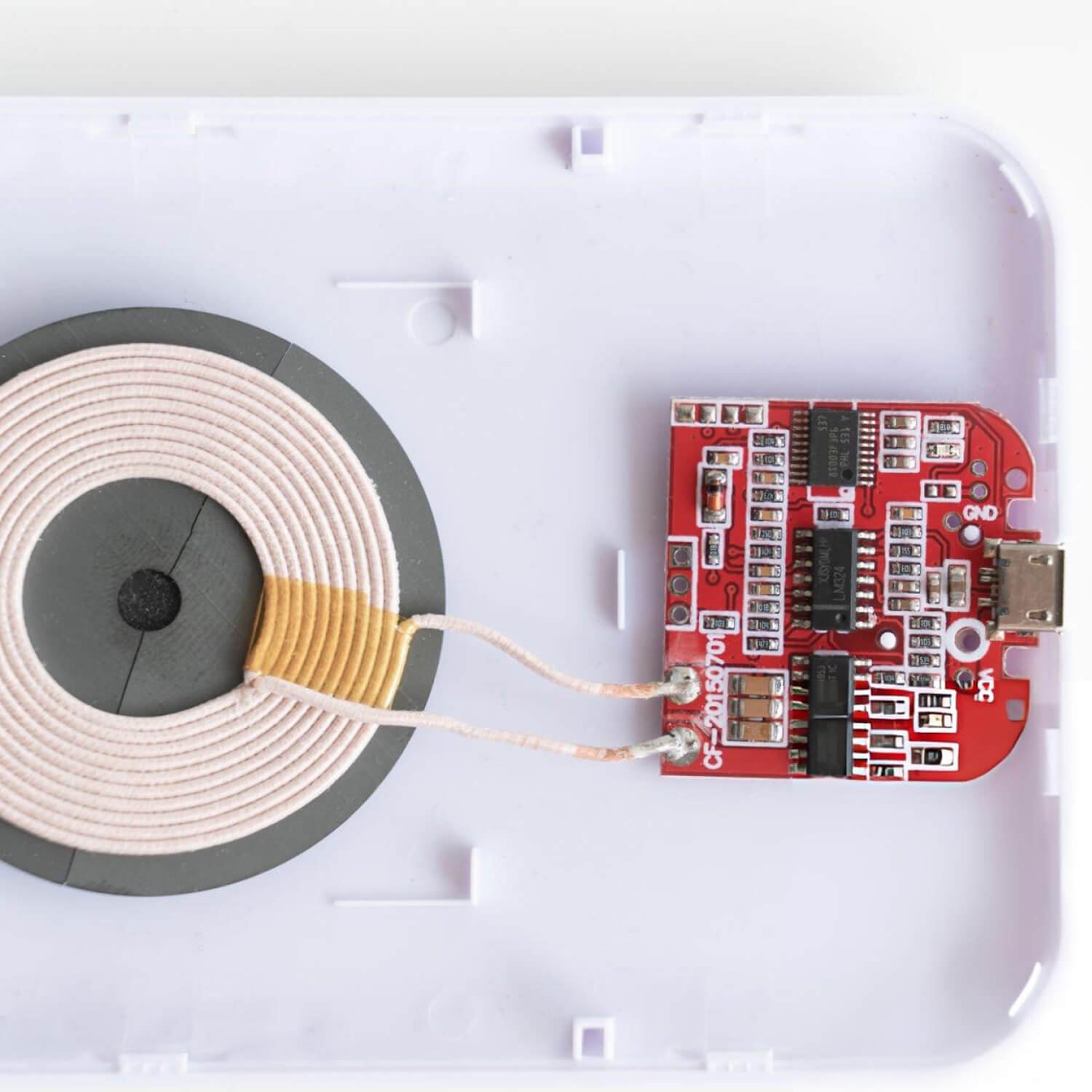
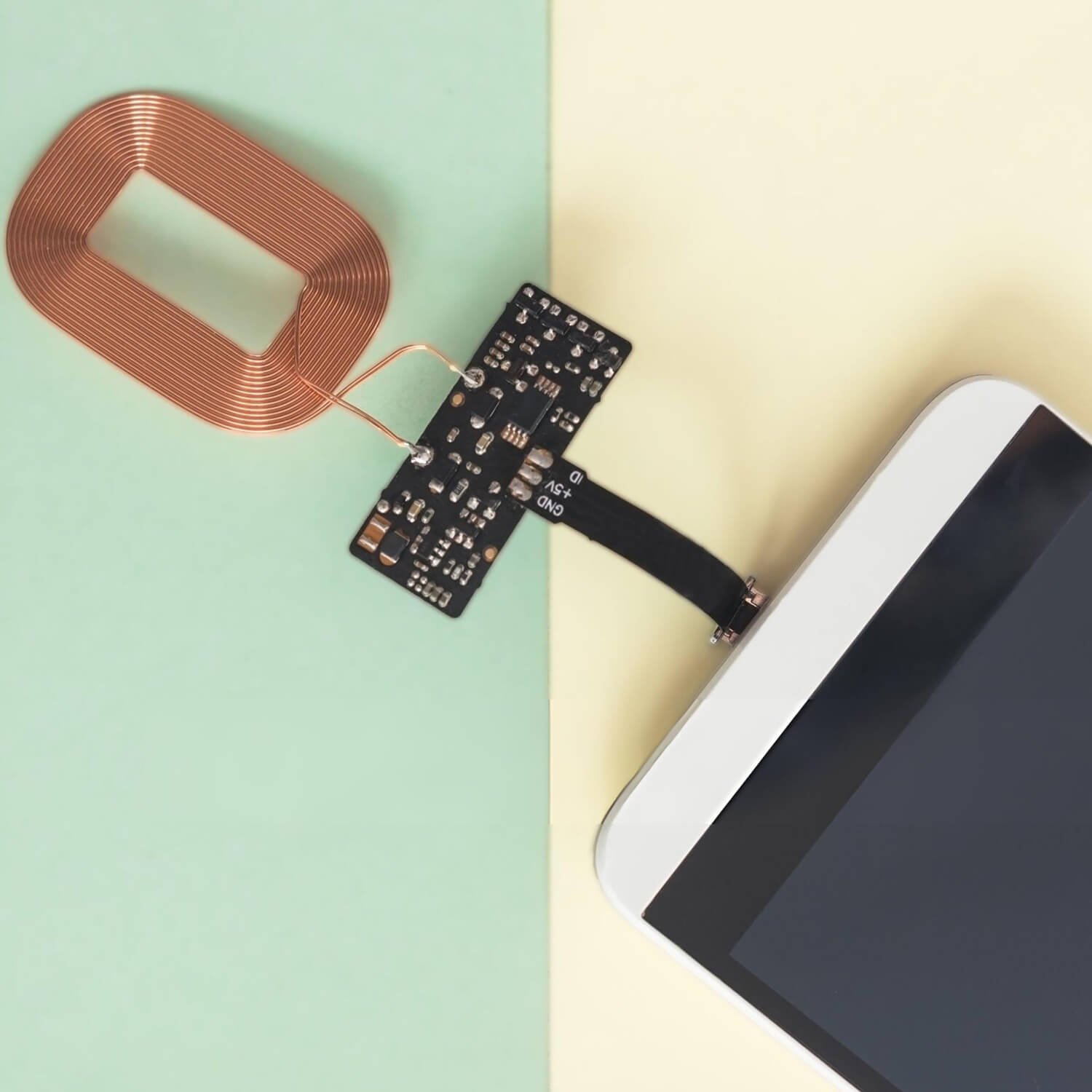
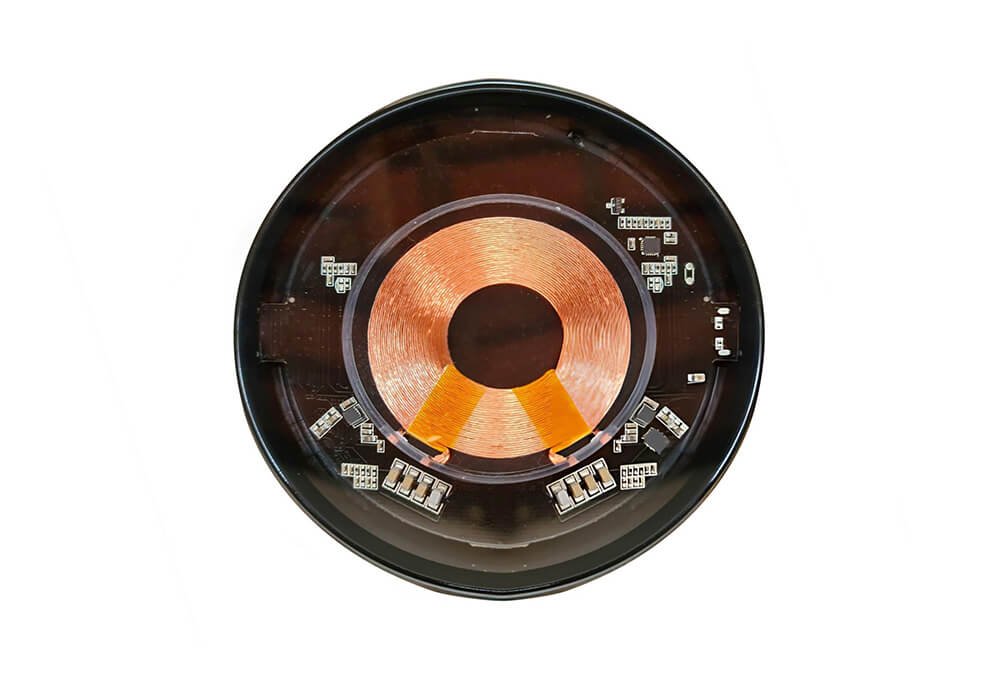
A Wireless Charger PCB is the core platform that enables wireless power transfer using electromagnetic induction or resonant coupling.
It integrates all essential electronic components, which can convert electrical energy into a magnetic field and transmit it wirelessly to a receiving device.
Unlike traditional power PCBs, a wireless charging PCB must handle:
- High-frequency AC power (typically 100–200 kHz)
- Magnetic field generation and control
- Real-time communication between transmitter and receiver
- Thermal and electromagnetic management
Wireless Charger PCB We Offered.
We provide a comprehensive Wireless Charger PCB and PCBA solutions. We focus on high-efficient and reliable Wireless Charger PCB, ensuring optimal performance across different power levels and use environments.
Our Capacity.

Standard Wireless Charger PCB
Our standard wireless charger PCBs are designed for everyday consumer devices such as smartphones, earbuds, and wearable electronics.
- Supports 5W / 7.5W / 10W 15W Output
- Compatible With Mainstream
- Qi-Enabled Devices
- Compact And Cost-Effective Design
- Stable Charging Performance

Fast Charging Wireless Charger PCB
Fast Charging Wireless Charger PCB are designed for high-speed charging. These PCBs support advanced protocols and higher power output for modern devices.
- Supports Up To 25W Or Higher Output
- Qi And Qi2 Standard Compatibility
- Magnetic Alignment For Improved Efficiency
- Intelligent Power Negotiation

Multi-Coil Wireless Charger PCB
Multi-coil PCBs allow flexible device placement without precise alignment.
- Multiple Coil Configurations (2–16 Coils)
- Wide Charging Area Coverage
- Automatic Coil Detection And Switching
- Consistent Charging Performance

Automotive Wireless Charger PCB
Automotive Wireless Charger PCB are made for in-vehicle environments. These PCBs are optimized for durability, safety, and stable performance under varying conditions.
- High Resistance To Vibration And Shock
- Wide Operating Temperature Range
- EMI/EMC Compliant Design
- Integrated Foreign Object Detection (FOD)

Item | Rigid PCB | Flexible PCB | Rigid-Flex PCB |
Max Layer | 60L | 8L | 36L |
Inner Layer Min Trace/Space | 3/3mil | 3/3mil | 3/3mil |
Out Layer Min Trace/Space | 3/3mil | 3.5/4mil | 3.5/4mil |
Inner Layer Max Copper | 6oz | 2oz | 6oz |
Out Layer Max Copper | 6oz | 20z | 3oz |
Min Mead hanical Driling | 0.15mm | 0.1mm | 0.15mm |
Min Laser Drilling | 0.1mm | 0.1mm | 0.1mm |
Max Aspect Ratio (Mechanical Drilling) | 20:01 | 10:01 | 12:01 |
Max Aspect Ratio (Laser Drilling) | 1:01 | / | 1:01 |
Press Fit Hole Tolerance | ±0.05mm | ±0.05mm | ±0.05mm |
PTH Tolerance | ±0.075mm | ±0.075mm | ±0.075mm |
NPTH Tolerance | ±0.05mm | ±0.05mm | ±0.05mm |
Countersink Tolerance | ±0.15mm | ±0.15mm | ±0.15mm |
Board Thickness | 0.4-8mm | 0.1-0.5mm | 0.4-3mm |
Board Thickness Tolerance(<1.0mm) | ±0.1mm | ±0.05mm | ±0.1mm |
Board Thickness Tolerance(≥1.0mm) | ±10% | / | ±10% |
Min Board Size | 10*10mm | 5*10mm | 10*10mm |
Max Board Size | 22.5*30 inch | 9*14 inch | 22.5*30 inch |
Contour Tolerance | ±0.1mm | ±0.05mm | ±0.1mm |
Min BGA | 7mil | 7mil | 7mil |
Min SMT | 7*10mil | 7*10mil | 7*10mil |
Min Solder Mask Clearance | 1.5mil | 3mil | 1.5mil |
Min Solder Mask Dam | 3mil | 8mil | 3mil |
Min Legend Width/Height | 4/23mil | 4/23mil | 4/23mil |
Strain Fillet Width | / | 1.5±0.5mm | 1.5±0.5mm |
Bow &Twist | 0.003 | / | 0.0005 |
Standards for Wireless Charger PCB.
We strictly follow global wireless charging and electronics standards to guarantee that our products meet the requirements of worldwide markets.

IPC Standards
The IPC standards are fundamental in PCB manufacturing and assembly.

RoHS
To meet global environmental and safety regulations, it should reach RoHS standard.

Qi Standard
The Qi standard is the most widely adopted wireless charging standard for consumer electronics.

AirFuel Standard
AirFuel focuses on resonant wireless power transfer, enabling greater flexibility.

EMI / EMC
Wireless charging PCBs must meet strict electromagnetic compatibility requirements, such as EMI / EMC Compliance Standards, to avoid interference with other electronic devices.
Wireless Charger PCB Feature
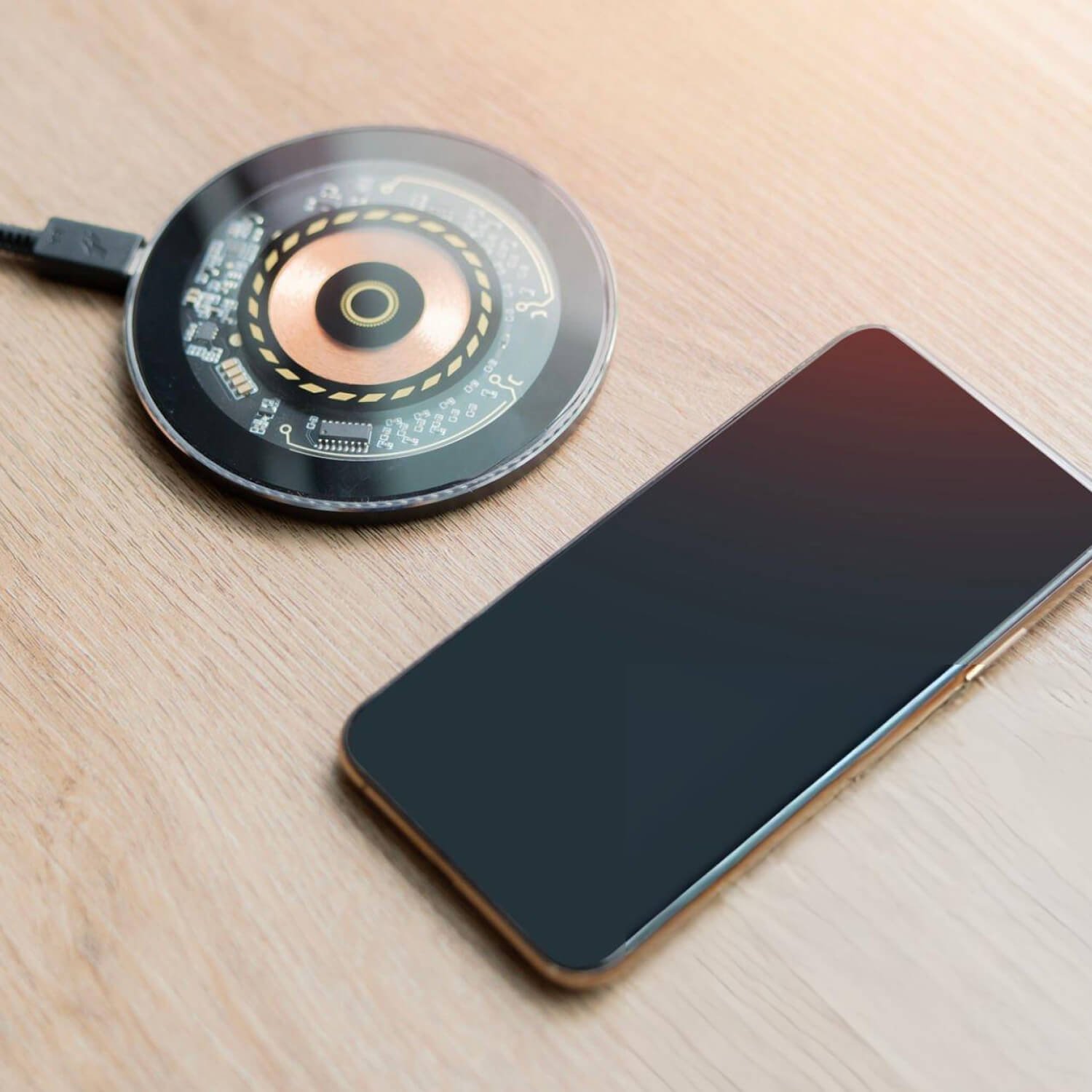
Our Wireless Charger PCB are engineered with advanced technologies to deliver high efficiency, safety, and reliability across a wide range of applications.
High Power Transfer Efficiency
Efficiency is one of the most important performance indicators in wireless charging systems.
- Achieves up to 85%–90% power transfer efficiency
- Optimized resonant circuit design
- Reduced energy loss and heat generation
- Stable output across different load conditions
Advanced Thermal Management
Wireless charging inherently generates heat, which must be effectively controlled.
- Thermal Vias For Efficient Heat Dissipation
- Copper Pours And Heat-Spreading Layers
- Optional Heat Sink Integration
- Real-Time Temperature Monitoring (OTP Protection)
Strong EMI/EMC Performance
Wireless chargers operate at high frequencies, making electromagnetic interference control essential.
- Ferrite shielding to guide magnetic flux
- Optimized ground plane design
- Differential signal routing
- Input filtering circuits
Intelligent Power Control System
Our wireless charger PCBs integrate smart control systems for efficient and adaptive charging.
- Automatic power negotiation with devices
- Dynamic voltage and current adjustment
- Load detection and optimization
- Stable charging under varying conditions
Flexible Coil Integration
We support multiple coil design options to suit different applications.
- Improved charging alignment
- Enhanced user convenience
- Customizable form factors
Wireless Charger PCB Component
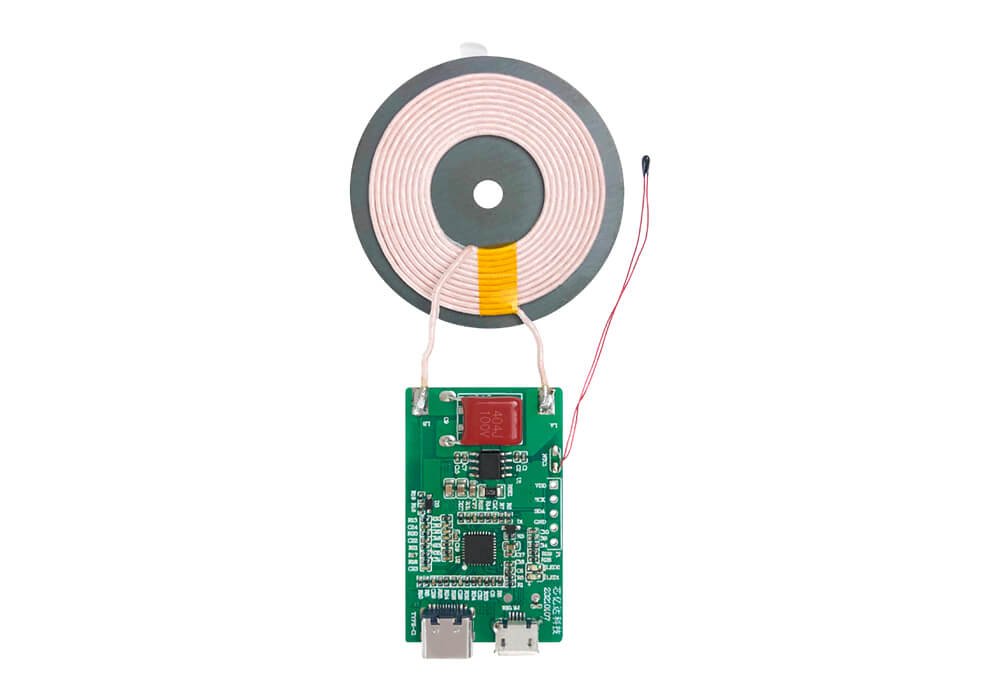
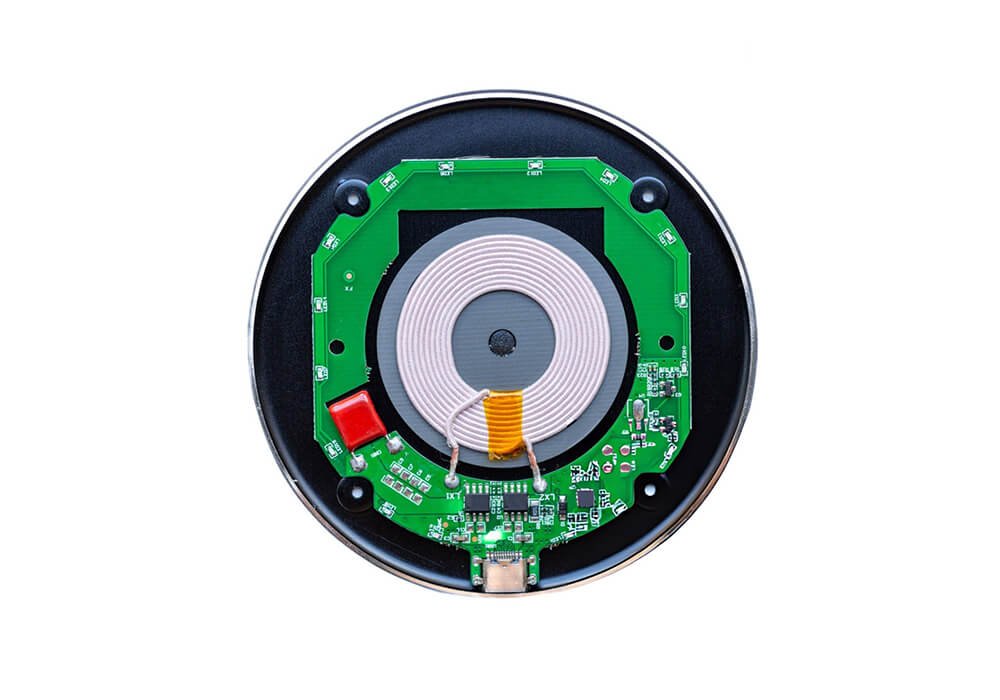
A Wireless Charger PCB is composed of multiple high-precision electronic components working together to enable efficient, stable, and safe wireless power transfer. We carefully select and optimize every component to ensure maximum efficiency, reliability, and compliance with Qi/Qi2 standards.
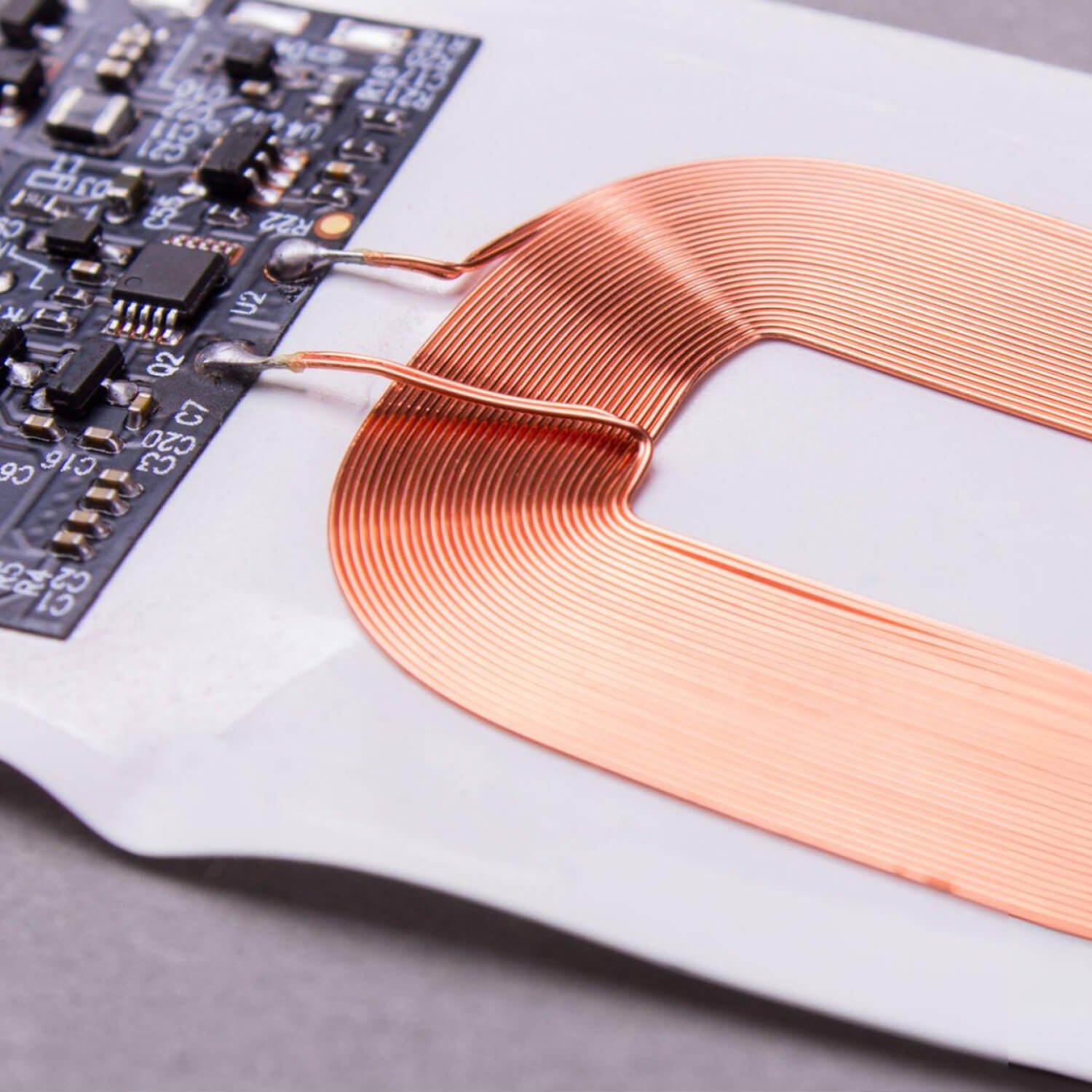
1. Transmitter Coil
The transmitter coil is the core element responsible for generating the magnetic field used in wireless power transfer.
Function:
- Converts electrical energy into an alternating magnetic field
- Determines charging distance and efficiency
2. Power Management IC
The Power Management IC controls energy conversion and regulates output power.
Functions:
- Converts DC input into high-frequency AC
- Controls voltage and current levels
- Supports fast charging protocols
3. Microcontroller / Control Chip
The microcontroller (MCU) acts as the brain of the wireless charger system.
Functions:
- Manages communication with the receiving device
- Controls charging logic and power delivery
- Implements safety features
.
4. Resonant Capacitors
Capacitors are essential for tuning the resonant circuit that enables efficient power transfer.
Function:
- Work with the coil to define resonant frequency
- Improve energy transfer efficiency
- Reduce power loss
5. Inductors and Filtering Components
Inductors and filters stabilize power and reduce electrical noise.
Functions:
- Smooth current flow
- Suppress high-frequency noise
- Improve system stability
6. MOSFETs and Driver Circuits
MOSFETs are used for high-frequency switching in wireless charging circuits.
Function:
- Generate high-frequency AC signals
- Enable efficient power conversion
- Support zero-voltage switching (ZVS)
7. Ferrite Shield
The ferrite shield is placed behind the transmitter coil to control magnetic field direction.
Functions:
- Directs magnetic flux toward the receiver
- Reduces electromagnetic interference (EMI)
- Improves overall efficiency
8. Input Connector
The input connector provides power to the wireless charger PCB.
Features:
- USB Type-C interface (preferred)
- Supports USB Power Delivery (PD)
- Compatible with Quick Charge (QC)
Design for Wireless Charger PCB
When we are designing a Wireless Charger PCB, we should consider its efficiency, thermal management, electromagnetic compatibility (EMC), and safety.
1. Resonant Circuit Design Optimization
Wireless charging relies on resonant inductive coupling, where the transmitter coil and capacitors must operate at the same frequency as the receiver.
We should consider:
- Accurate LC resonance tuning
- Tight tolerance components (±1% recommended)
- Temperature-stable capacitors (C0G/NP0)
- Compensation for PCB parasitic capacitance and inductance
2. Coil Design and Integration
The transmitter coil is the most critical element in wireless power transfer.
Design Options:
- PCB embedded coil (compact, automated manufacturing)
- Litz wire coil (higher Q-factor and efficiency)
3. High-Frequency Performance
At operating frequencies of 100–200 kHz, PCB layout directly impacts efficiency and EMI.
We need to:
- Minimize loop area in power paths
- Use short, wide traces for high-current paths
- Apply multi-layer design for signal isolation
- Separate power and control circuits
.
4. Power Conversion and Switching Design
Efficient power conversion is critical for performance.
We should consider:
- High-efficiency MOSFET selection
- Gate driver optimization
- Zero-voltage switching (ZVS) implementation
- Dead-time control (50–200 ns range)
5. Thermal Management Design
Wireless charging systems generate heat due to power loss.
Goals:
- Maintain safe operating temperatures
- Prevent efficiency degradation
- Extend component lifespan
Why Choose Us
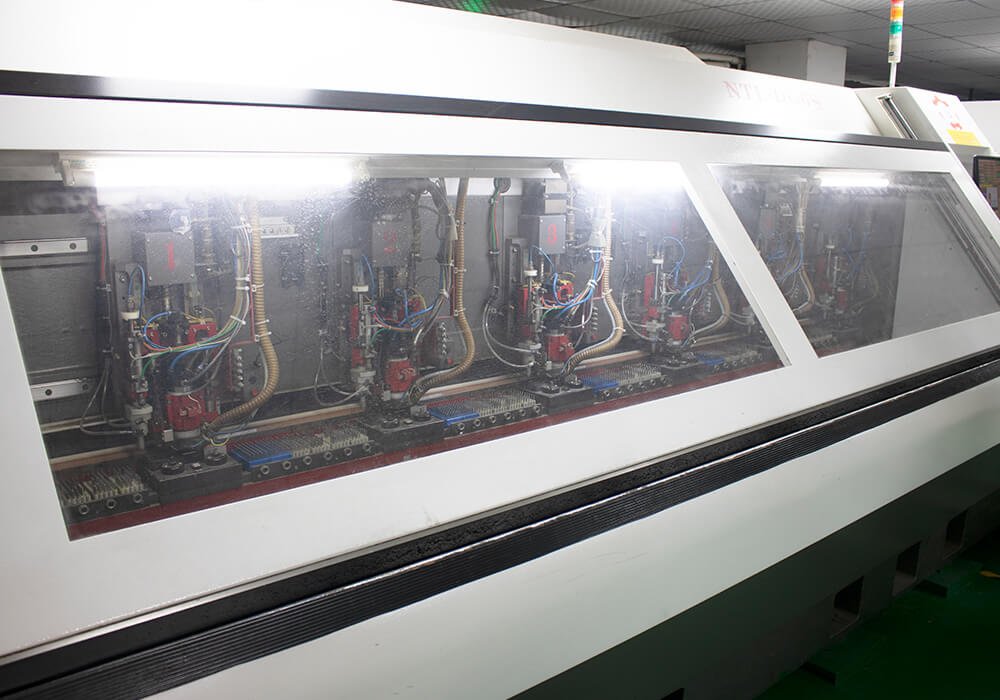
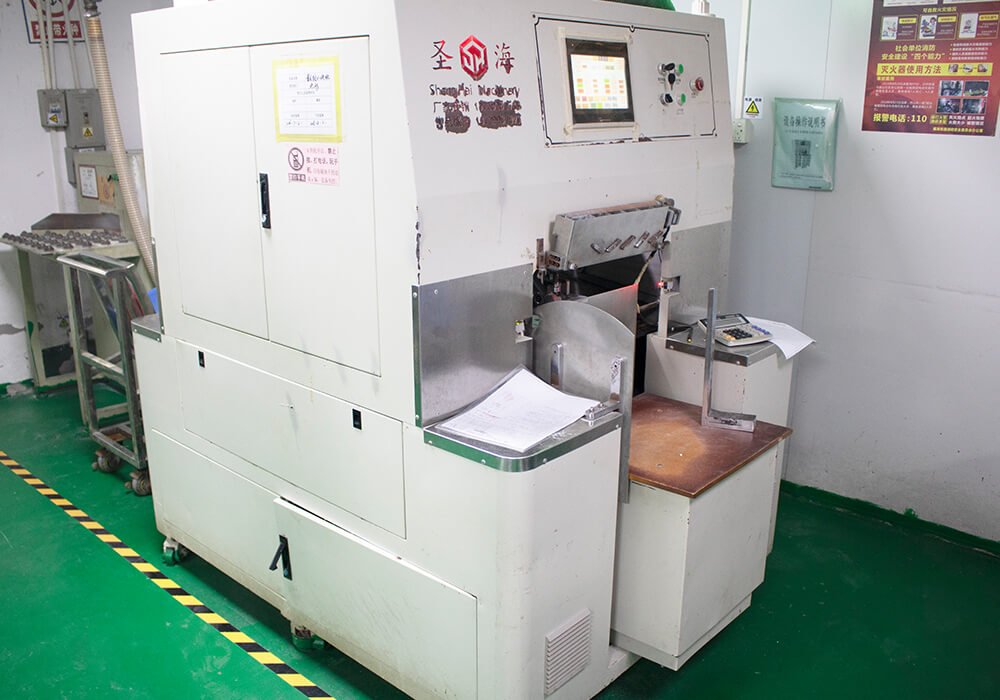
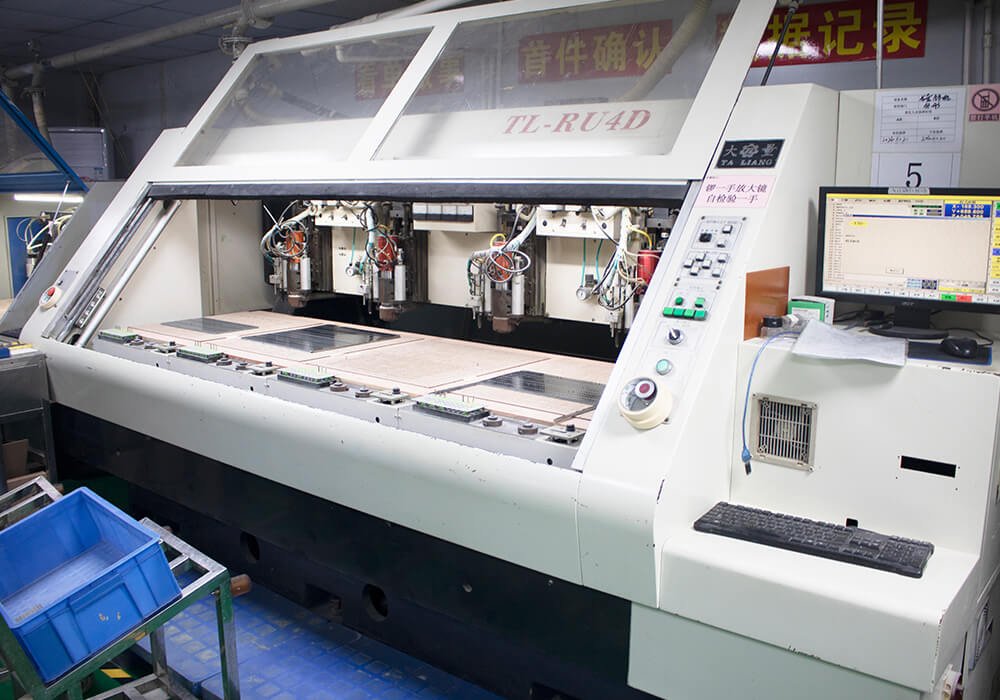
We apply advanced engineering methodologies and equipment to ensure every Wireless Charger PCB delivers stable, efficient, and compliant wireless power transfer.

Turnkey PCB Solution
We provide a complete end-to-end service, eliminating the complexity of managing multiple vendors. We can do:
- PCB design and engineering support
- PCB fabrication Component sourcing
- PCB assembly (SMT, THT, mixed)
- Final testing and quality assurance

Quality
We adhere to globally recognized standards:
- IPC-A-610 Class 3 (high-reliability electronics)
- IPC-6012 (PCB performance standards)
- ISO 9001
- ISO 14001
- UL 94

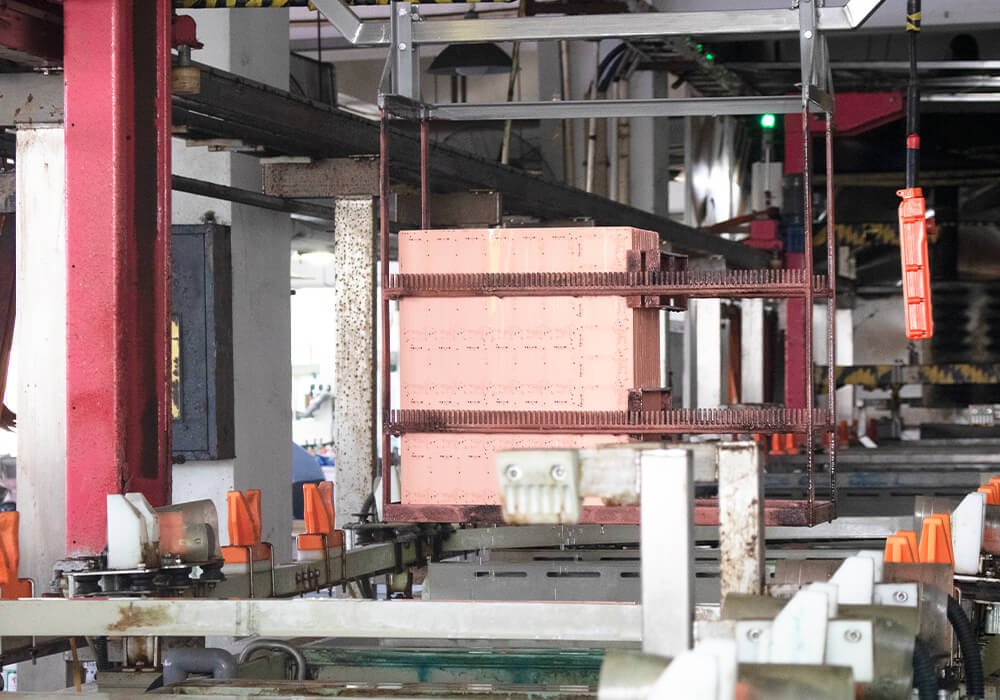
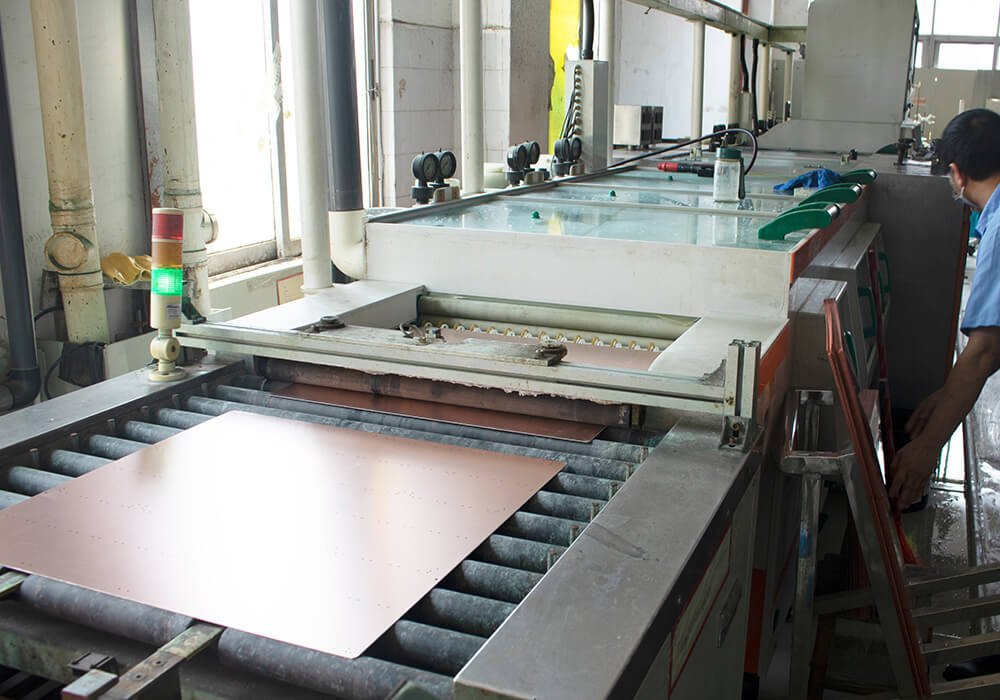
Advanced Manufacturing
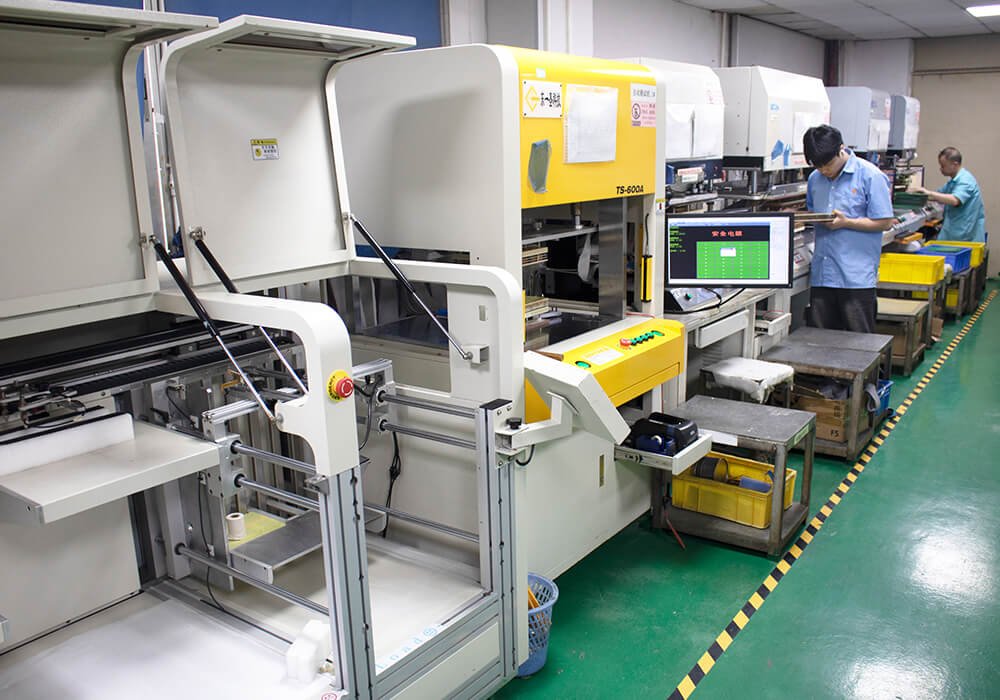
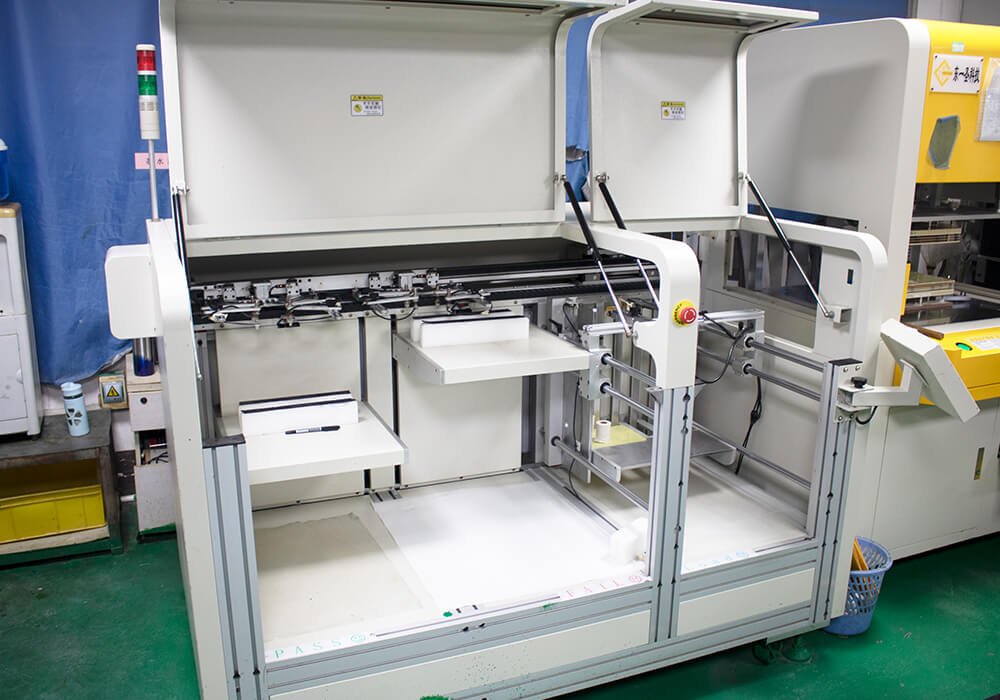
Our state-of-the-art facilities support complex and high-precision PCB assembly. We can do:
- Fine-pitch placement down to 0.38mm
- BGA (0.2mm pitch) with X-ray inspection
- Support for 0201 components
- High-density multilayer PCBs
- Mixed technology assembly (SMT + Through-hole)

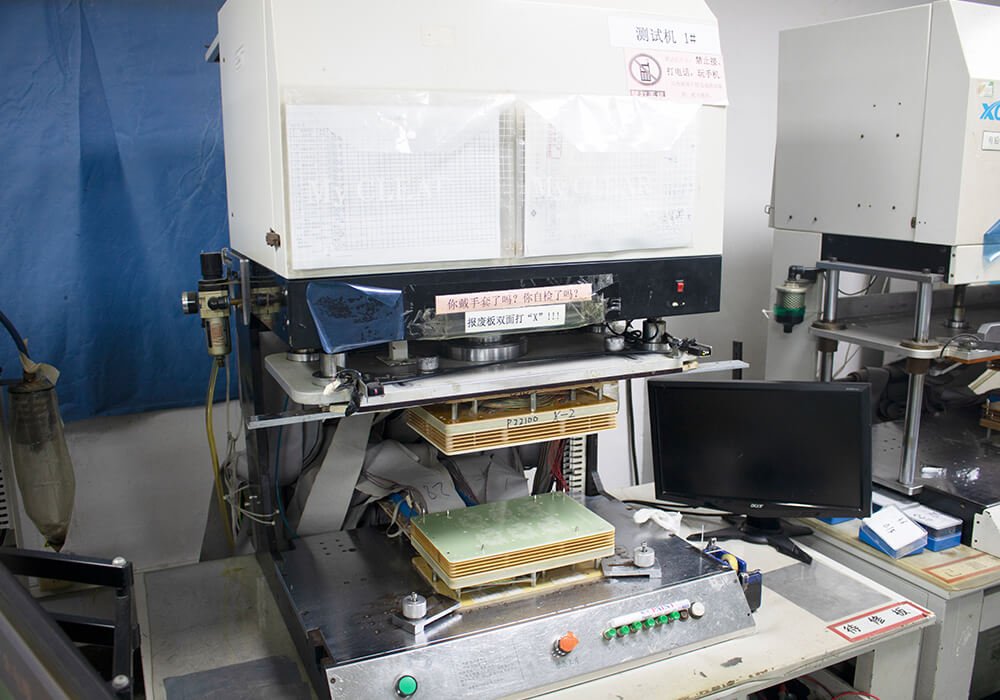
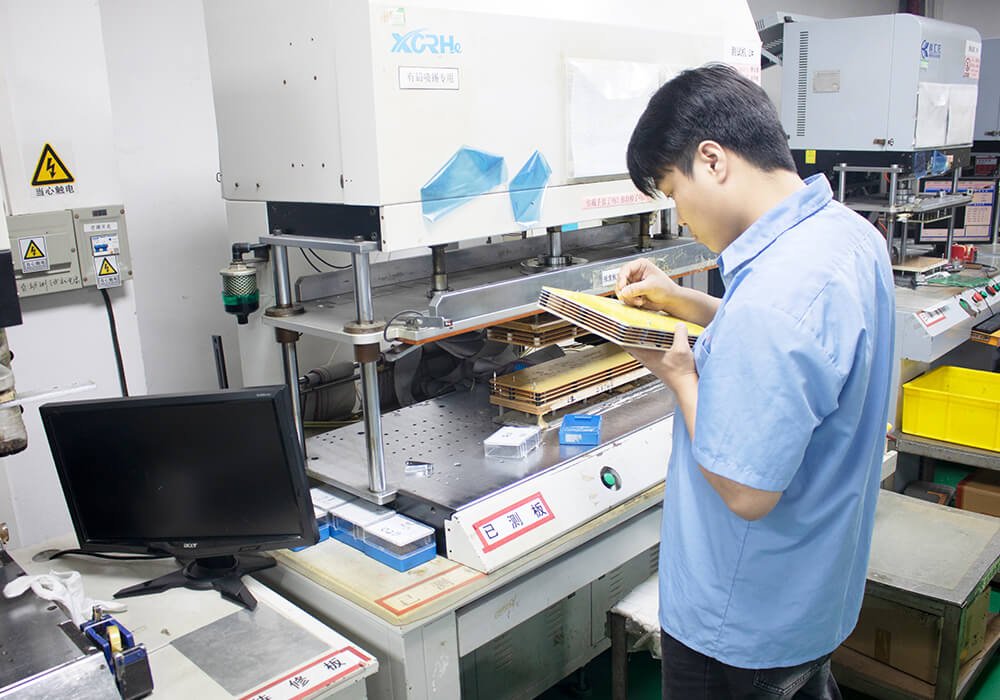
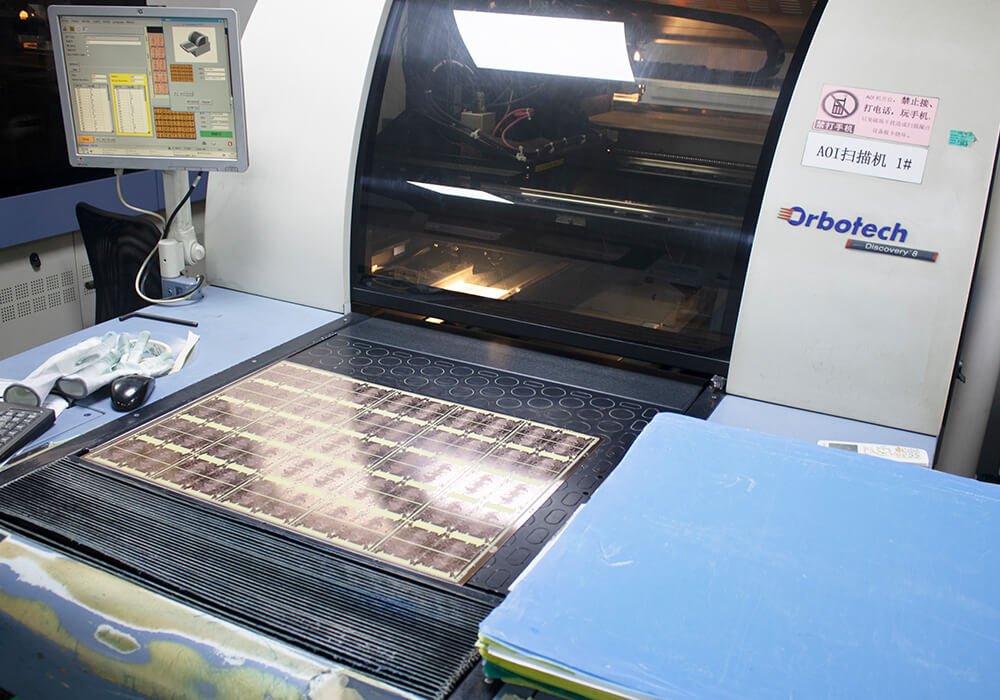
Testing & Inspection
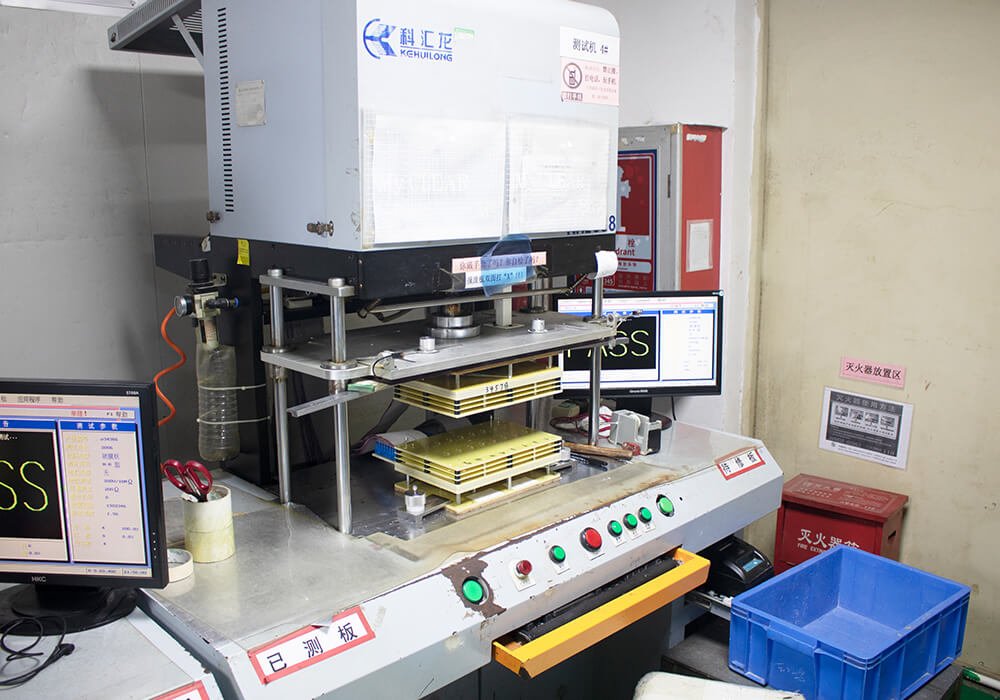
We implement multi-level testing to ensure every PCBA meets strict performance requirements.
- AOI (Automated Optical Inspection)
- X-ray inspection for hidden solder joints
- In-Circuit Testing (ICT)
- Functional testing under real operating conditions
- Voltage and performance validation
Fast Quotation
Our professional sales and engineering teams provide fast PCB quotes and technical support. Simply send us your Gerber files, BOM, and assembly drawings, and we will respond promptly with a competitive solution.
- Gushu Tangxi Second Industrial Zone, Shenzhen
- +86 755 2335 0814
- +86 135 1078 8094
- sales@pcbasail.com
FAQ About Wireless Charger PCB?
1. What is a Wireless Charger PCB?
A Wireless Charger PCB is the core circuit board inside a wireless charging device.
It controls power conversion, generates the magnetic field for energy transfer, and manages communication and safety functions between the charger and the device.
2. How does a Wireless Charger PCB Work?
A Wireless Charger PCB works through electromagnetic induction:
- Converts DC input power into high-frequency AC
- Drives a transmitter coil to create a magnetic field
- Transfers energy wirelessly to a receiver coil
- Regulates voltage and current for safe battery charging
Material selection depends on the drone’s performance, weight, and environmental requirements.
3. What materials are used in Wireless Charger PCBs?
Common materials include:
- FR4 (standard applications)
- High-Tg FR4 (better thermal stability)
- Heavy copper layers (2–6 oz) for high current handling
4. What is the difference between Qi and Qi2 wireless charging?
- Qi: Widely used standard with up to 15W power
- Qi2: Newer standard with magnetic alignment and higher efficiency (up to 25W+)
Qi2 improves charging speed, alignment accuracy, and user experience.
5. What is Foreign Object Detection (FOD)?
FOD is a safety feature that detects unwanted metal objects (such as keys or coins) placed between the charger and device.
Function:
- Monitors power loss and system behavior
- Stops charging if a foreign object is detected
- Prevents overheating and safety risks
6. What is the difference between PCB coil and wire coil?
PCB Coil:
- Integrated into the PCB
- Compact and cost-effective
- Suitable for automated production
Wire Coil (Litz wire):
- Higher efficiency and Q-factor
- Lower resistance
- Better for high-performance applications
7. What Is Your Production Lead Time?
PCB Coil:
- Integrated into the PCB
- Compact and cost-effective
- Suitable for automated production
Wire Coil (Litz wire):
- Higher efficiency and Q-factor
- Lower resistance
- Better for high-performance applications
8. How do I get a quote for a Wireless Charger PCB?
To receive a quotation, please provide:
- Gerber files
- Bill of Materials (BOM)
- Technical specifications
- Project requirements
Our team will respond quickly with a detailed and competitive quote.