
/Excellent Flatness & Excellent Solderability/
Immersion Silver Surface Finish Ultimate Guide
Immersion Silver (ImAg) has become one of the most important PCB surface finishes for modern electronics, especially in high-speed, fine-pitch, and lead-free applications. Get Immersion Silver PCBs Solution From Us.
PCB Surface Finish Type
PCB Surface Finish will directly define PCB’s solderability, signal performance, shelf life, and reliability.
Among modern PCB finishes, Immersion Silver has become one of the most discussed options for RF PCB, HDI boards, and fine-pitch SMT assembly.
This guide explains everything engineers need to know about immersion silver PCB surface finish — including process flow, advantages, and so on.
Let’s Go
Table of Contents
1. What Is Immersion Silver Surface Finish?
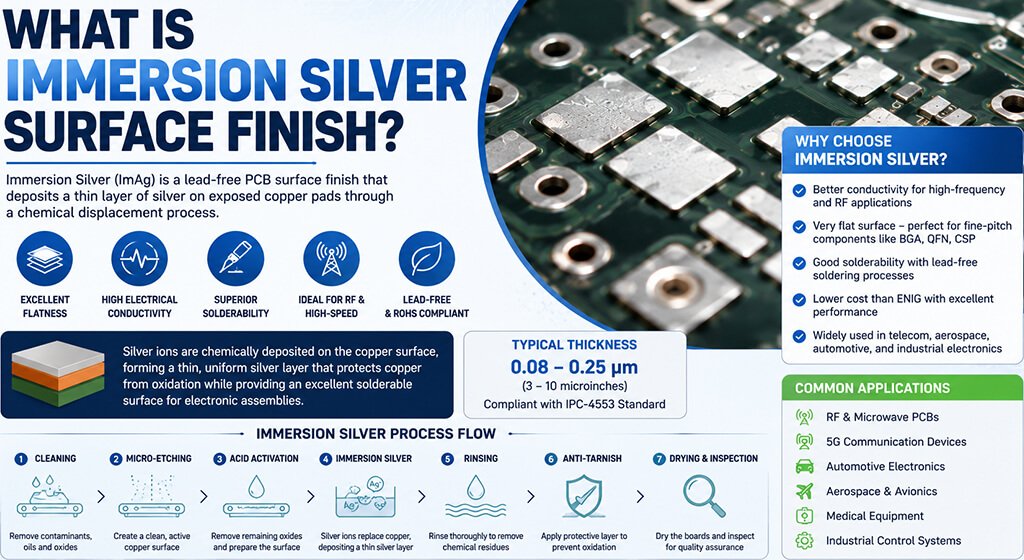
Immersion Silver (ImAg) is a chemical PCB surface finish that deposits a thin layer of pure silver directly onto exposed copper pads through a displacement reaction.
Unlike electroplating, immersion silver uses a chemical deposition process where silver ions replace copper atoms on the PCB surface.
Core Reaction Is:
- 2Ag+ + Cu ═ Ag + Cu2+
Silver Thickness Ranges Between:
- 5–18 microinches
- Approximately 0.1–0.45 μm
Immersion silver is widely used because it provides:
- Excellent solderability
- Very flat pad surfaces
- High electrical conductivity
- Lead-free compliance
- Good compatibility with fine-pitch SMT assembly
Engineers note that immersion silver performs particularly well in RF, automotive, telecom, and high-speed digital applications.
2. How the Immersion Silver Process Works?
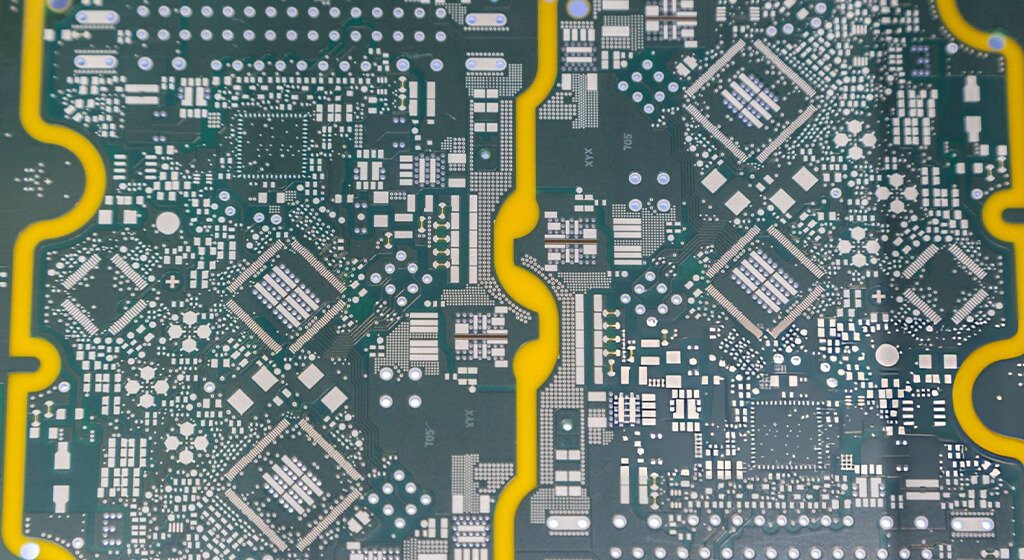
The immersion silver manufacturing sequence typically includes:
- Surface Cleaning
- Micro-Etching
- Acid Activation
- Immersion Silver Deposition
- Rinsing
- Anti-Tarnish Treatment
- Drying
- Inspection and Packaging
Step 1: Surface Cleaning
The first step is thorough cleaning of the copper surface.
PCB panels may contain:
- Oxidation,
- Fingerprints,
- Oil Residues,
- Drilling Contaminants,
- Photoresist Residues,
- And Organic Particles.
These contaminants prevent uniform silver deposition.
Typical Cleaning Methods:
- Alkaline Cleaning,
- Chemical Degreasing,
- Ultrasonic Cleaning,
- Di Water Rinsing.
A perfectly clean copper surface is critical for successful immersion silver plating.
Step 2: Micro-Etching
After cleaning, the copper surface undergoes micro-etching. This process removes a very thin copper layer to:
- Activate The Surface,
- Increase Surface Uniformity,
- Improve Silver Adhesion.
Typical Chemicals Used:
- Sulfuric Acid,
- Hydrogen Peroxide,
- Persulfate-Based Etchants.
Controlled Copper Removal:
We will carefully control:
- Etch Depth,
- Temperature,
- Chemical Concentration,
- Process Time.
Typical Micro-etch Removal:
- Approximately 1–2 microns.
Over-etching can damage fine traces and reduce reliability. Under-etching may create poor silver bonding.
Step 3: Acid Activation
Before silver deposition, the copper surface is chemically activated.
It Removes:
- Oxides,
- Remaining Contaminants,
- Passive Surface Films.
The activation stage prepares copper for the displacement reaction.
Step 4: Immersion Silver Deposition
This is the core stage of the process.
The PCB is immersed into a silver-ion chemical bath.
A Chemical Displacement Reaction Occurs:
- 2Ag+ + Cu ═ Ag + Cu2+
Copper atoms dissolve from the PCB surface while silver deposits onto the copper pads.
Step 5: Rinsing
After silver deposition, the PCB is thoroughly rinsed using DI (deionized) water.
It Removes:
- Chemical Residues,
- Ionic Contamination,
- Loose Silver Particles.
Multiple rinse stages are often used in high-reliability PCB manufacturing.
Step 6: Anti-Tarnish Treatment
Silver naturally reacts with sulfur, chlorine, humidity, and airborne contaminants. Without protection, tarnishing can occur quickly.
To prevent oxidation, we will:
- Anti-Tarnish Chemistry,
- Organic Protective Layers,
- Corrosion Inhibitors.
Step 7: Drying Process
After treatment, the PCB is carefully dried.
We usually use:
- Hot Air Drying,
- Vacuum Drying,
- Clean Dry Air Systems.
Humidity control is essential during drying.
Step 8: Final Inspection
We will inspect perform extensive inspections before shipment.
Common Inspection Methods
- Visual Inspection
- Thickness Testing
- Solderability Testing
- Ionic Contamination Testing
- Microsection Analysis
Do You Need Any Help?
3. Advantages of Immersion Silver PCB Finish
Compared with traditional PCB finishes, immersion silver offers several advantages.
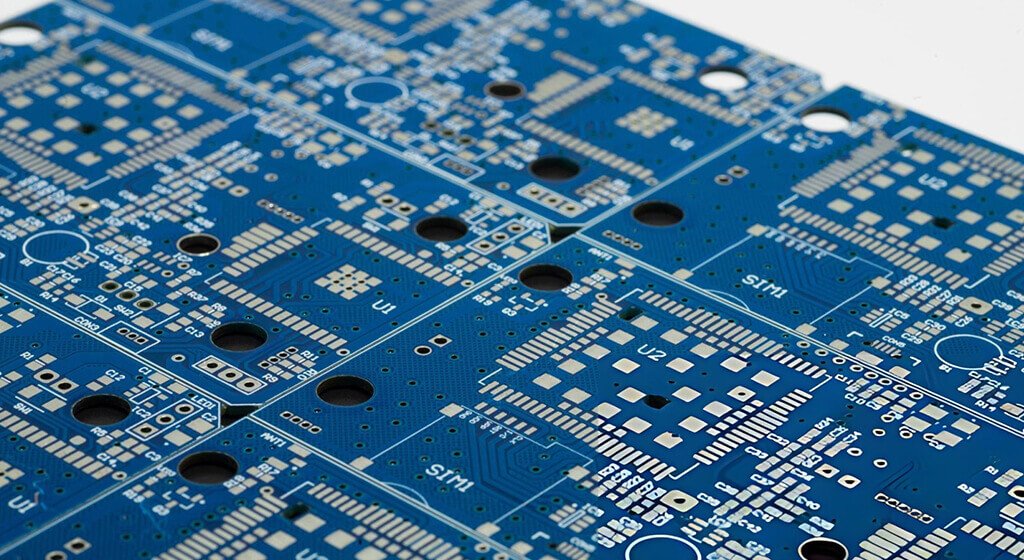
3.1. Excellent Electrical Conductivity
One of the biggest advantages of immersion silver is its outstanding electrical conductivity.
Silver is one of the most conductive metals available, making it highly suitable for:
- RF Circuits,
- Microwave PCBs,
- High-Speed Digital Designs,
- Antenna Systems,
- And Impedance-Sensitive Applications.
Because immersion silver deposits silver directly onto copper without a nickel barrier layer, signal transmission performance can be superior to some other finishes at very high frequencies.
3.2. Extremely Flat Surface
Immersion silver creates a very flat PCB surface. Flatness is critical for modern SMT assembly because electronic packages continue becoming smaller and denser.
Immersion silver Is Ideal for Fine-Pitch Components
Immersion silver performs exceptionally well with:
- BGA Packages,
- QFN Devices,
- CSP Components,
- Micro-BGAs,
- HDI Boards,
- Fine-pitch SMT
3.3. Excellent Solderability
Fresh immersion silver surfaces provide excellent solderability.
It Supports:
- Fast Solder Wetting,
- Stable Solder Flow,
- Strong Solder Joint Formation,
- And Reliable Smt Assembly Performance.
3.4. Lead-Free and RoHS Compliant
Immersion silver is fully compatible with:
- RoHS Regulations,
- REACH Compliance,
- And Lead-free Requirements.
Do You Need Any Help?
4. Disadvantages of Immersion Silver PCB Finish
Immersion silver has lots of advantages, however, immersion silver also has several important limitations that engineers must understand.
4.1. Tarnish and Oxidation Risk
The biggest disadvantage of immersion silver is its sensitivity to tarnishing.
Silver Reacts Easily with:
- Sulfur,
- Chlorine,
- Humidity,
- Airborne Contaminants,
- And Fingerprints.
It can lead to yellow discoloration, dark spots, oxidation, and reduced solderability.
4.2. Sensitive Handling Requirements
Immersion silver requires careful handling throughout manufacturing and assembly. Direct contact with bare hands can rapidly contaminate the surface.
Fingerprints Can Create:
- Localized Corrosion,
- Oxidation Spots,
- Solderability Defects,
- And Uneven Surface Appearance.
Poor handling procedures are one of the most common causes of immersion silver failures.
4.3. Susceptibility to Environmental Contamination
Immersion silver is more environmentally sensitive than many other PCB finishes.
When it exposures to industrial pollution, sulfur gases, and humidity, it can damage the surface.
Do You Need Any Help?
5. How To Avoid Immersion Silver Common Issues?
Below are the most common immersion silver problems and how we prevent them.
5.1. Tarnishing and Oxidation
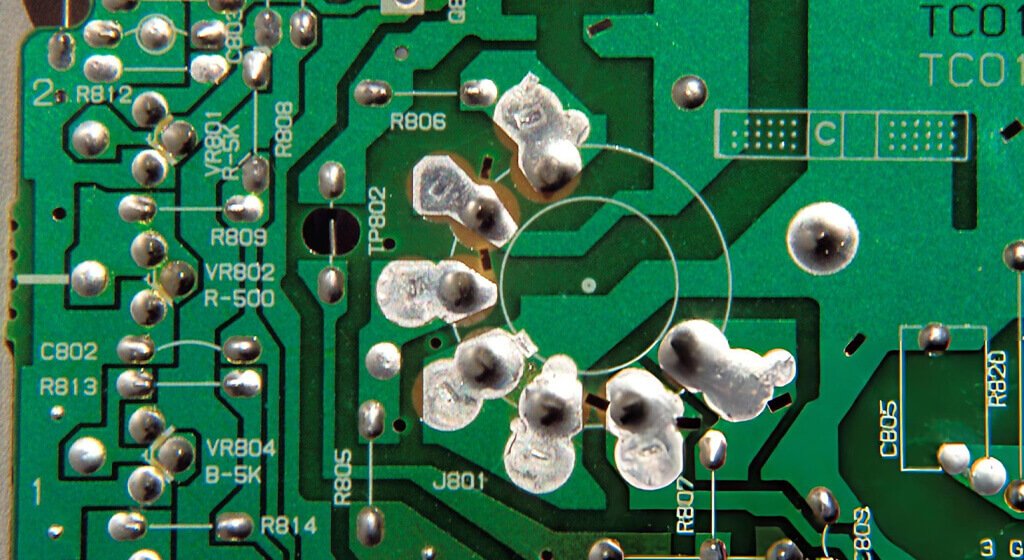
Tarnishing is the most common immersion silver issue.
Causes
- Sulfur-containing air pollutants are highly aggressive toward silver surfaces.
- Poor packaging allows moisture and contaminated air exposure during storage and shipping.
- Fingerprints contain sulfur compounds, oils, and salts that accelerate corrosion.
- Moisture increases oxidation speed and surface degradation.
How We Prevent Tarnishing
- We apply advanced anti-tarnish protection after silver deposition to improve oxidation resistance.
- We will use vacuum-sealed packaging and desiccants to reduce environmental exposure during transportation and storage.
5.2. Poor Solderability
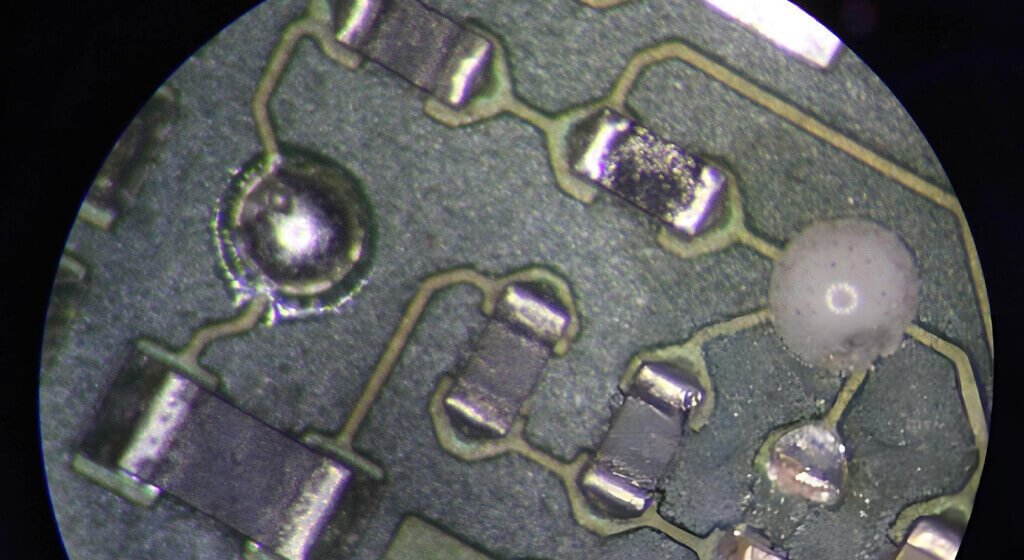
Poor solderability is one of the most expensive immersion silver assembly failures.
Causes
- Surface Oxidation
- Improper Copper Preparation
- Contaminated Surfaces
- Excessive Storage Time.
How We Prevent Solderability Problems
- We will carefully control copper roughness, etching depth, and surface activation.
- The immersion silver chemistry is continuously monitored for:
- We will perform solderability verification according to IPC quality standards.
5.3. Uneven Silver Thickness
Non-uniform silver deposition may create exposed copper, inconsistent solderability, and uneven oxidation resistance
Causes
- Poor Chemical Control
- Improper Immersion Time
- Inconsistent Surface Preparation
How We Control Thickness Uniformity
- We will use tightly controlled process parameters.
- Regular coating measurements verify compliance with IPC-4553 standards.
5.4. Silver Migration and Dendritic Growth
Under certain conditions, silver ions can migrate across the PCB surface. It will lead to conductive dendrites, leakage currents, insulation failures, and electrical shorts.
How We Reduce Migration Risks:
- We will use controlled rinsing and contamination management to reduce ionic residues after plating.
Do You Need Any Help?
6. Immersion Silver vs ENIG
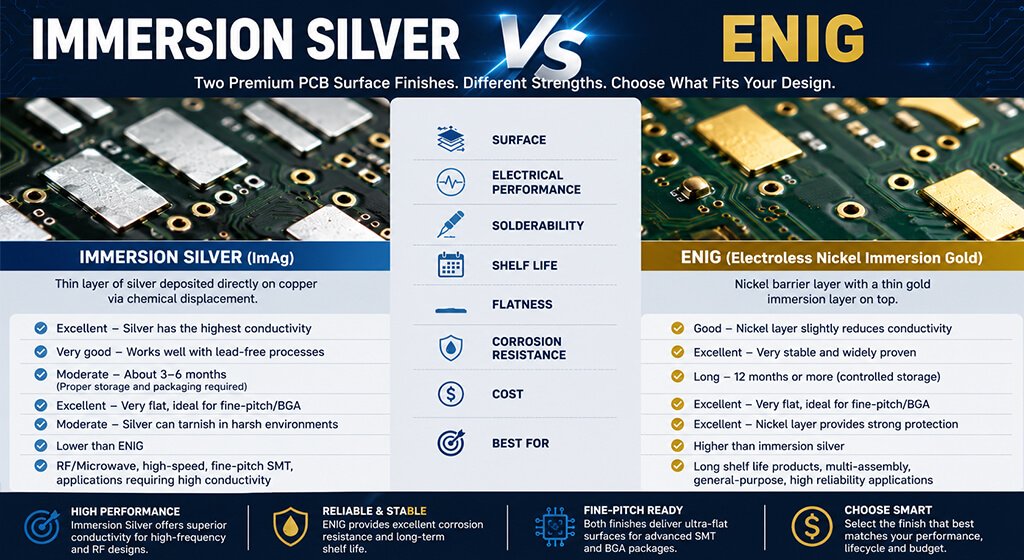
Feature | Immersion Silver | |
Cost | Lower | Higher |
Flatness | Excellent | Excellent |
RF Performance | Better | Very Good |
Shelf Life | Moderate | Long |
Tarnish Resistance | Lower | Excellent |
Fine-Pitch SMT | Excellent | Excellent |
BGA Compatibility | Excellent | Excellent |
Nickel Layer | No | Yes |
High-Frequency Loss | Lower | Slightly Higher |
Storage Stability | More Sensitive | More Stable |
6.1. When to Choose Immersion Silver
Immersion silver is ideal for:
- RF Circuits,
- Microwave PCBs
- High-Speed Digital Boards,
- HDI Designs,
- Fine-Pitch SMT,
- Cost-Sensitive Premium Assemblies.
6.2. When ENIG May Be Better
ENIG may be preferred when:
- Long Shelf Life Is Required
- Boards Experience Long Shipping Cycles
- Storage Conditions Are Difficult
- Corrosion Resistance Is Critical
- Repeated Handling Is Expected
7. Immersion Silver vs HASL
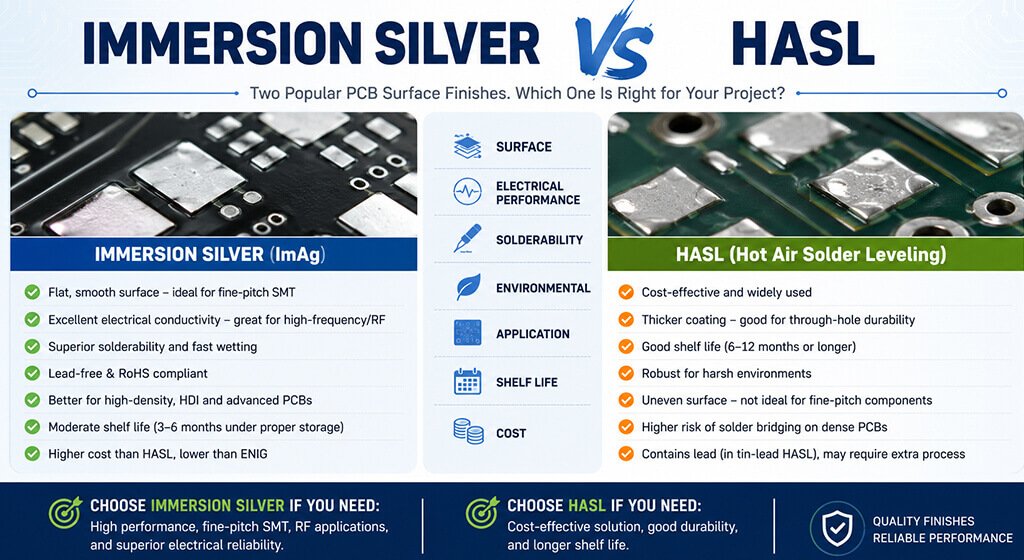
Compared to HASL, immersion silver offers major assembly advantages.
Feature | Immersion Silver | |
Surface Flatness | Excellent | Uneven |
Fine-Pitch Support | Excellent | Limited |
BGA Compatibility | Excellent | Poor |
RF Performance | Better | Lower |
Cost | Medium | Low |
SMT Accuracy | High | Moderate |
HASL is popular in low-cost consumer electronics, but immersion silver is usually superior for precision SMT applications.
Do You Need Any Help?
9. Recommended Storage Conditions?
Proper storage is important for immersion silver PCBs.
Store In:
- Dry Environments
- Low Humidity
- Sealed Packaging
- Anti-Tarnish Bags
- Vacuum Packaging
Avoid:
- Sulfur Exposure
- Rubber Materials
- Cardboard Contamination
- Direct Skin Contact
- High Humidity
10. People Also Ask?
Is Immersion Silver Good for BGA?
How Long Does Immersion Silver Last?
Immersion Silver (ImAg) PCB surface finish typically lasts:
- 3–6 months under proper storage conditions
- Sometimes longer if packaging and environmental control are excellent
11. Final Thoughts
Immersion Silver is one of the most balanced PCB surface finishes available today.
It Can Offer:
- Excellent conductivity
- Flat SMT-compatible surfaces
- Strong solderability
- Lead-free compliance
- Competitive pricing
For PCB manufacturers, immersion silver is one of the most important surface finish technologies in the industry.
Get a PCB Quote