
/Cost, Performance, and When to Use It/
Immersion Tin PCB Surface Finish Ultimate Guide
Among all lead-free PCB finishes, Immersion Tin (ImSn) is one of the most used for fine-pitch SMT, HDI boards, and cost-sensitive electronics manufacturing.
PCB Surface Finish Type
It is one of the most important decisions in printed circuit board manufacturing to choose the correct PCB surface finish.
The surface finish directly affects solderability, assembly yield, reliability, shelf life, signal integrity, and overall production cost.
Immersion Tin (ImSn) is a popular option in PCB manufacturing. Beause Of:
- Excellent Flatness
- Strong Solderability
- Fine-pitch Compatibility
- Lower Cost Than ENIG
- RoHS Compliance
- Reliable SMT Assembly Performance
This guide will guide you to learn everything about Immersion Tin surface finish.
Let’s Go.
Table of Contents
1. What Is Immersion Tin PCB Surface Finish?
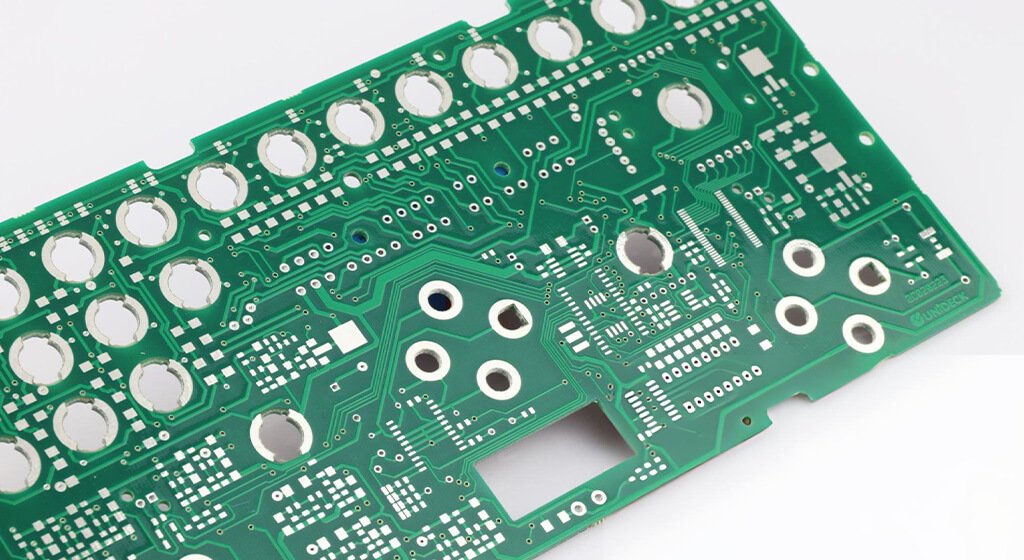
Immersion Tin is lead-free chemical PCB surface finish that deposits a thin layer of pure tin directly onto exposed copper pads through a displacement reaction.
The finish protects copper from oxidation while providing a flat and solderable surface for PCB assembly.
The tin thickness is typically:
- 0.8–1.2 μm (micro-meters)
- Uniform across pads
- Suitable for lead-free soldering
- Compatible with fine-pitch SMT assembly
Immersion Tin is often called:
- ImSn
- White Tin
- Chemical Tin Finish
Unlike HASL, it does not leave uneven solder deposits. Unlike ENIG, it contains no nickel or gold layers.
2. Why PCB Surface Finish Matters?
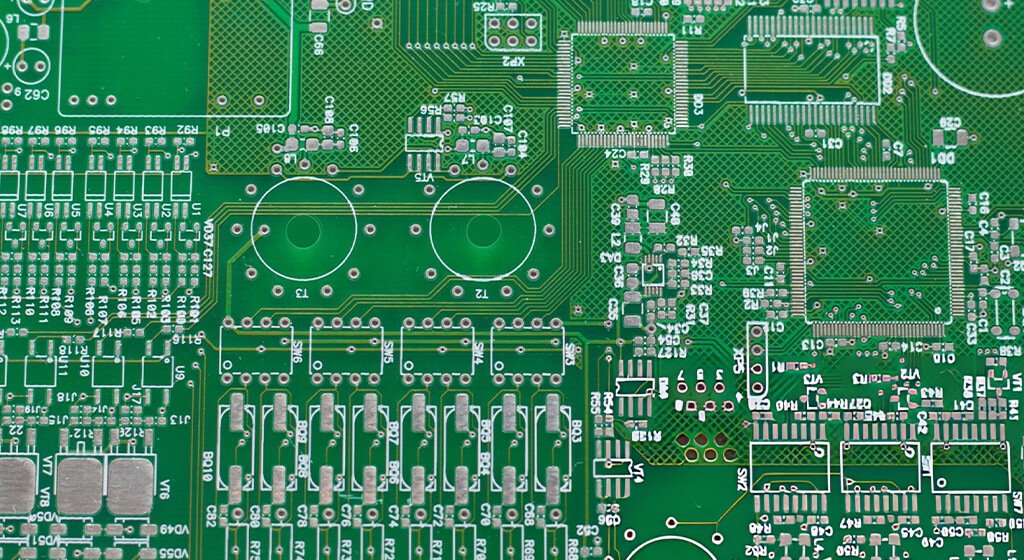
PCB surface finishes serve several critical functions:
2.1. Prevent Copper Oxidation
Bare copper oxidizes rapidly when exposed to air. Oxidized copper becomes difficult or impossible to solder reliably.
Surface finishes create a protective barrier.
2.2. Improve Solderability
The finish must allow:
- Smooth solder wetting
- Strong solder joints
- Consistent reflow performance
Immersion Tin performs extremely well in automated SMT assembly environments.
2.3. Support Fine-Pitch Components
Modern electronics increasingly use:
- BGA
- QFN
- CSP
- Fine-pitch ICs
These packages require very flat PCB pads. Uneven finishes can cause solder bridging or open joints.
Immersion Tin offers excellent planarity.
2.4. Enable Lead-Free Manufacturing
RoHS regulations restrict lead-containing finishes in many global markets.
Immersion Tin is fully lead-free and environmentally compliant.
Do You Need Any Help?
3. How Immersion Tin PCB Finish Works?
The immersion tin process uses a chemical displacement reaction.
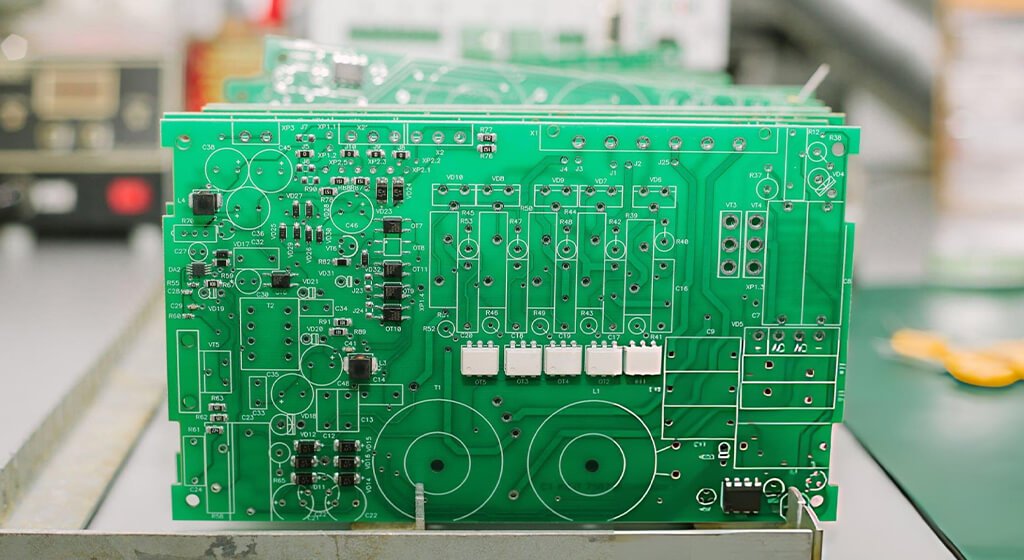
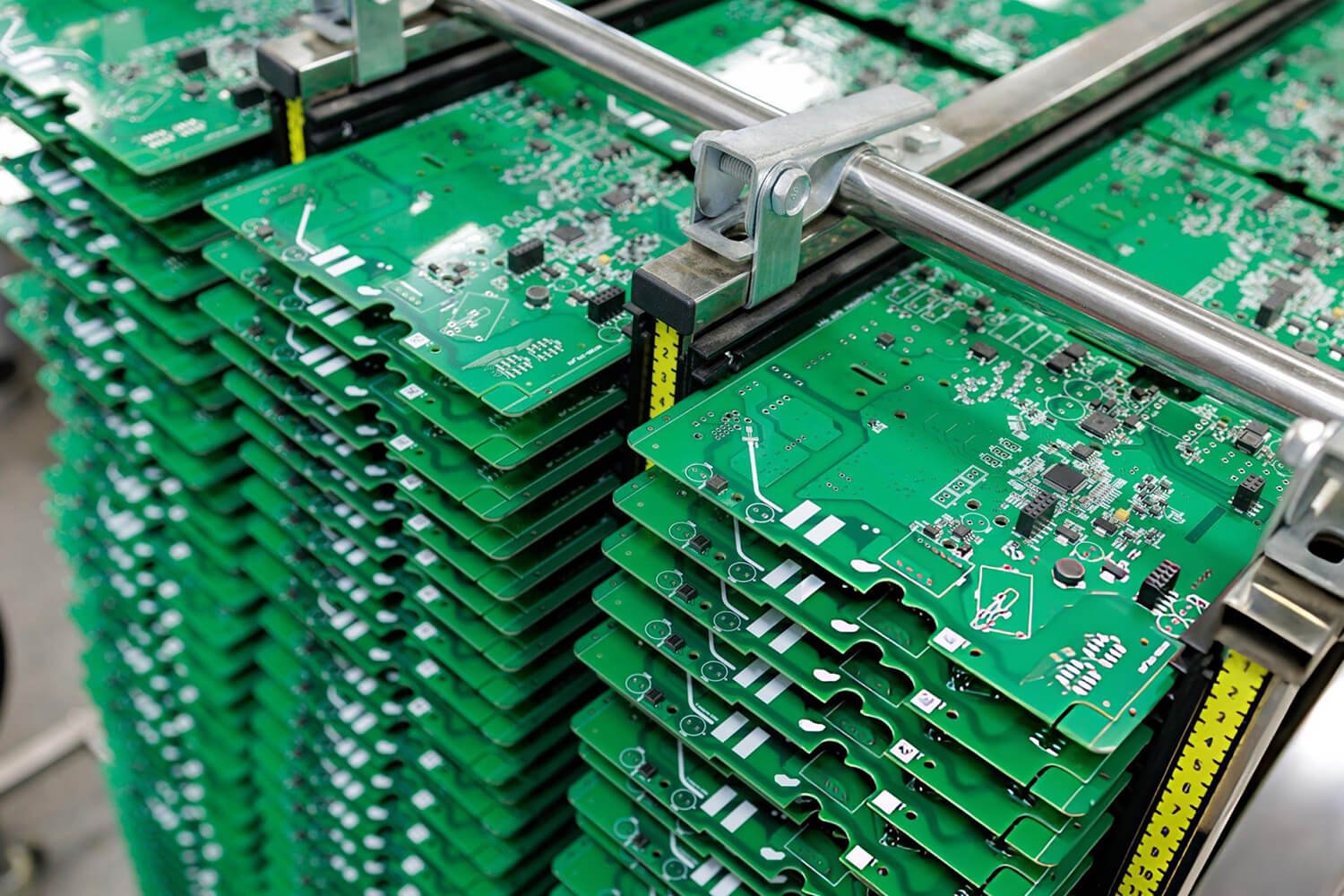
3.1. Step-by-Step Immersion Tin Process
Step 1. Board Cleaning & Degreasing
Before tin deposition begins, the PCB must be thoroughly cleaned.
This stage removes:
- Fingerprints
- Organic contamination
- Oils
- Dust
- Copper oxides
Step 2. Micro-Etching
After cleaning, the copper surface is lightly etched.
Purpose:
- Remove microscopic oxidation
- Activate copper
- Improve bonding surface
- Increase coating adhesion
Typical Etching Depth:
- 0.5–1.5 µm
This stage creates a chemically active copper surface for stable tin deposition.
Step 3. Surface Activation
The activation process conditions the copper surface before immersion tin plating.
Activation Helps:
- Stabilize deposition
- Improve uniformity
- Reduce contamination
- Extend chemical bath life
This stage is especially important in high-volume PCB manufacturing.
Step 4. Pre-Plating
Some immersion tin systems use a pre-plating stage.
A very thin preliminary tin layer is deposited first to:
- Improve nucleation
- Enhance coating density
- Improve final appearance
- Increase adhesion quality
This creates a more compact final tin structure.
Step 5. Immersion Tin Deposition
This is the main coating stage.
The PCB enters the immersion tin bath containing:
- Tin salts
- Acids
- Stabilizers
- Additives
The displacement reaction begins immediately.
3.2. Process Control
3.2.1. Bath Startup (Making the Solution)
Tank Name | Chemical | Tank Volume | Startup Concentration | Startup Amount |
Degrease | GZ-2061 | 100 L | 50 mL/L | 5 L |
| GZ-2062 | 100 L | 2 g/L | 0.2 Kg |
| H₂SO₄ | 100 L | 50 mL/L | 5 L |
Micro-etch | H₂SO₄ | 100 L | 25 mL/L | 2.5 L |
| GZ-2065 | 100 L | 20 g/L | 2 Kg |
| SPS | 100 L | 100 g/L | 10 Kg |
Activation | GZ-2066 | 100 L | 150 mL/L | 15 L |
Pre-plating | GZ-2069 | 100 L | 100% | 100 L |
Immersion Tin A | GZ-2069 | 100 L | 100% | 100 L |
Immersion Tin B | GZ-2069 | 100 L | 100% | 100 L |
3.2.2. Operating Conditions
Bath | Analysis Item | Control Range | Analysis Freq | Temp | Time (min) | Filtration |
Degrease | H₂SO₄ | 40–50 mL/L | once/day | 40–50℃ | 3–5 | Yes |
Micro-etch | H₂SO₄ | 20–25 mL/L | once/day | 20–30℃ | 1–2 | Yes |
| SPS | 80–120 g/L | once/day | — | — | — |
| Micro-etch rate | 0.5–1.5 µm | once/shift | — | — | — |
| Cu²⁺ | <20 g/L | once/day | — | — | — |
Activation | Acid eq. | 0.1–0.2 N | once/day | 22–32℃ | 1–2 | Yes |
Pre-plating | Acid eq. | 2.0–4.0 N | once/day | 36–40℃ | 1–2 | Yes |
| Sn content | 12–16 g/L | — | — | — | — |
Immersion Tin A | Acid eq. | 2.0–4.0 N | once/day | 50–60℃ | 5–10 | Yes |
| Sn content | 12–16 g/L | once/day | — | — | — |
Immersion Tin B | Acid eq. | 2.0–4.0 N | once/day | 68–72℃ | 10–12 | Yes |
| Sn content | 12–16 g/L | once/day | — | — | — |
| Tin thickness | 0.8–1.2 µm | once/day | — | — | — |
3.2.3. Bath Replenishment and Replacement Rules
Bath | Chemical | Replenish | Replace standard | Filter change |
Degrease | H₂SO₄ | Add by analysis | Replace when treat 40–50 m² of boards | Change filter weekly |
Micro-etch | H₂SO₄ | Add by analysis | Replace when Cu²⁺ > 20 g/L | Change filter weekly |
| SPS | Add by analysis | — | — |
Activation | Acid eq. | Add by analysis | — | Change filter weekly |
Pre-plating | — | Add by analysis | Replace when Cu²⁺ > 8 g/L | Change filter every 2 days |
| Sn content | — | — | — |
Immersion tin | Acid content | Add by analysis | Replace when Cu²⁺ > 8 g/L | Change filter every 2 days |
| Sn content | — | — | — |
Do You Need Any Help?
4. Advantages of Immersion Tin PCB Surface Finish?
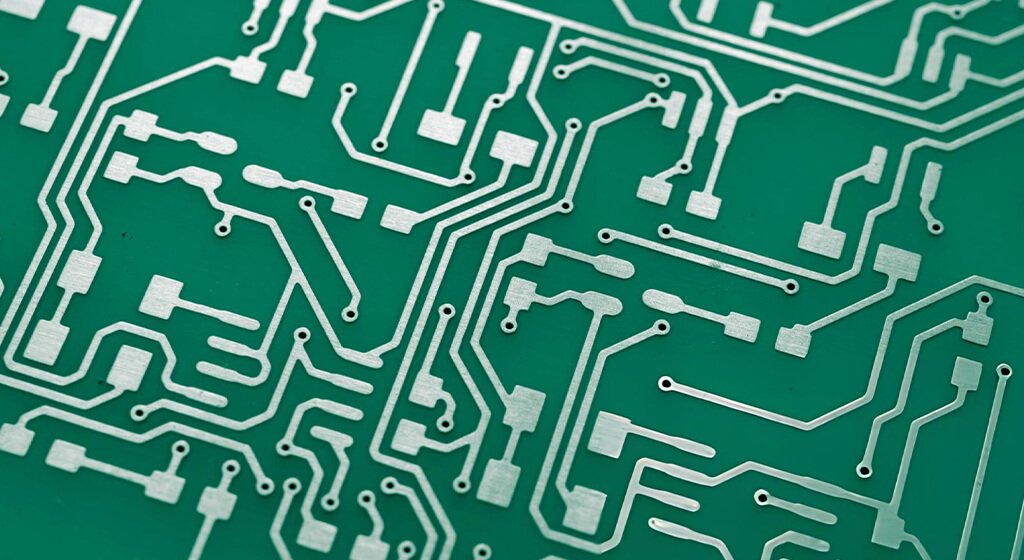
4.1. Excellent Flatness
One of the biggest advantages of Immersion Tin is its extremely flat surface.
This is especially important for:
- BGA
- QFN
- Fine-pitch SMT
- HDI PCB designs
4.2. Strong Solderability
Immersion Tin provides very good solder wetting performance.
- Faster solder flow
- Better joint consistency
- Reduced assembly defects
- Improved SMT yields
Many contract manufacturers prefer immersion finishes for automated assembly lines.
4.3. Lower Cost Than ENIG
ENIG offers excellent reliability but includes expensive gold.
Immersion Tin provides:
- Similar flatness
- Good assembly performance
- Lower manufacturing cost
This makes it attractive for cost-sensitive projects.
4.4. Fully Lead-Free
Immersion Tin complies with:
- RoHS
- REACH
- Lead-free manufacturing standards
It is commonly used in global export products.
Do You Need Any Help?
5. Disadvantages of Immersion Tin?
Despite its strengths, Immersion Tin also has limitations.
5.1. Limited Shelf Life
Compared with ENIG, Immersion Tin has a shorter storage life.
Typical shelf life:
- 6 to 12 months under proper conditions
Poor storage can accelerate oxidation.
5.2. Tin Whisker Risk
Tin whiskers are microscopic conductive filaments that can grow from tin surfaces over time.
Potential Risks:
- Short circuits
- Reliability failures
- Electrical leakage
5.3. Sensitive to Handling
Immersion Tin surfaces can degrade if:
- Touched frequently
- Exposed to sulfur contamination
- Stored improperly
Fingerprints may accelerate oxidation.
5.4. Multiple Reflow Limitations
Compared with ENIG, immersion tin may tolerate fewer thermal cycles.
Excessive reflow exposure can reduce solderability.
Do You Need Any Help?
6. Immersion Tin vs ENIG
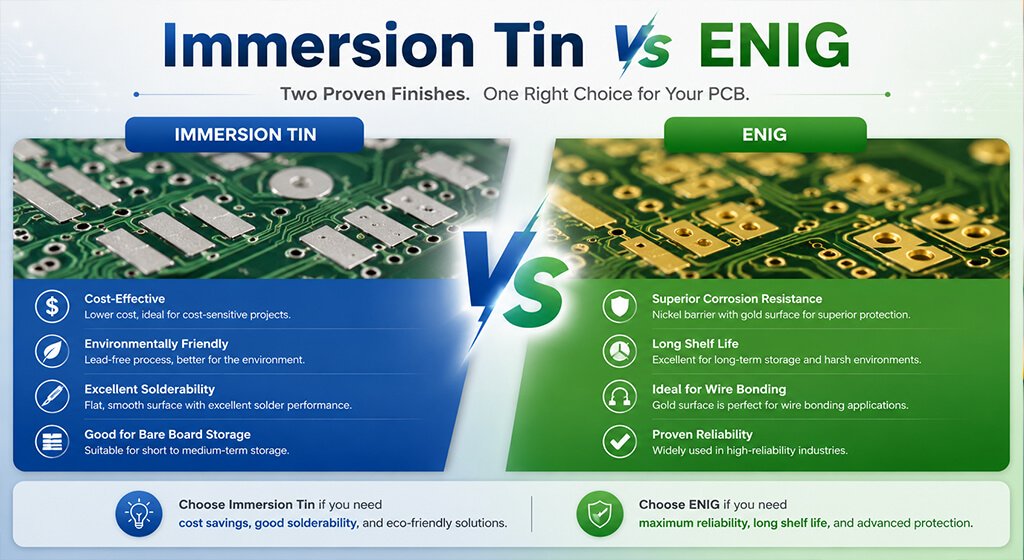
This is one of the most searched PCB surface finish comparisons online.
Feature | Immersion Tin | |
Cost | Lower | Higher |
Flatness | Excellent | Excellent |
Shelf Life | Moderate | Excellent |
Oxidation Resistance | Moderate | Excellent |
Fine-Pitch Support | Excellent | Excellent |
BGA Compatibility | Excellent | Excellent |
Rework Performance | Moderate | Excellent |
Tin Whisker Risk | Possible | None |
High Reliability | Good | Excellent |
Lead-Free | Yes | Yes |
7. Immersion Tin vs HASL
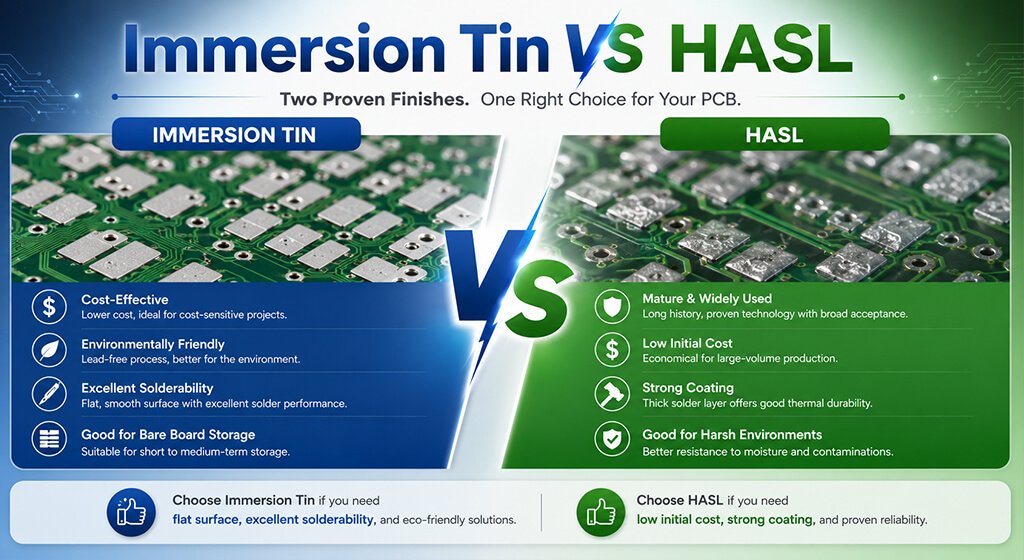
Feature | Immersion Tin | |
Surface Flatness | Excellent | Poor-Moderate |
Fine-Pitch Compatibility | Excellent | Limited |
Cost | Medium-Low | Very Low |
Lead-Free Option | Yes | Yes |
BGA Suitability | Excellent | Poor |
SMT Yield | High | Moderate |
Shelf Life | Moderate | Good |
HASL remains cheaper, but Immersion Tin is far better for modern fine-pitch electronics.
8. Immersion Tin vs OSP
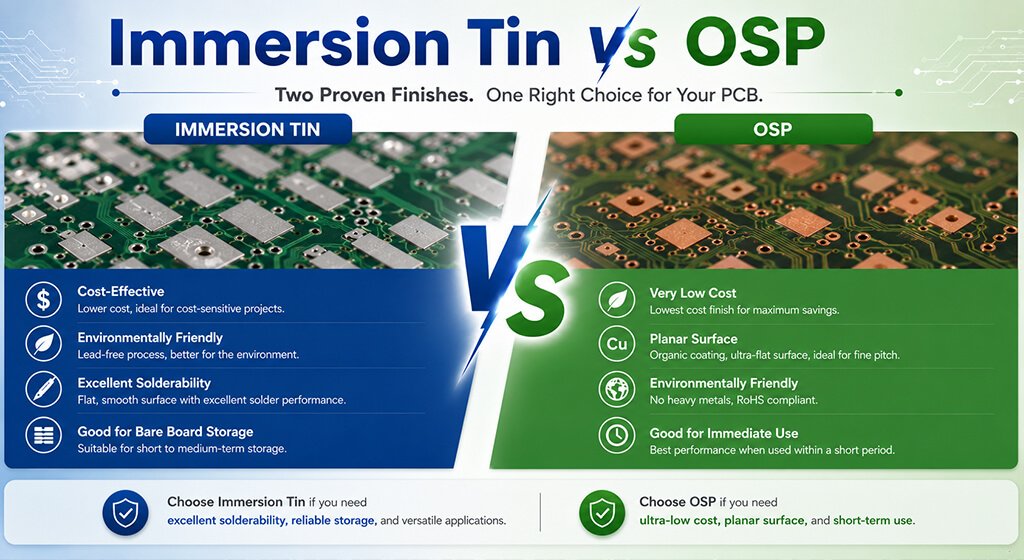
Feature | Immersion Tin | |
Shelf Life | Better | Lower |
Reflow Capability | Better | Limited |
Surface Flatness | Excellent | Excellent |
Cost | Higher | Lowest |
Durability | Better | Lower |
Handling Sensitivity | Moderate | High |
OSP is cheaper but less durable.
9. Immersion Tin vs Immersion Silver
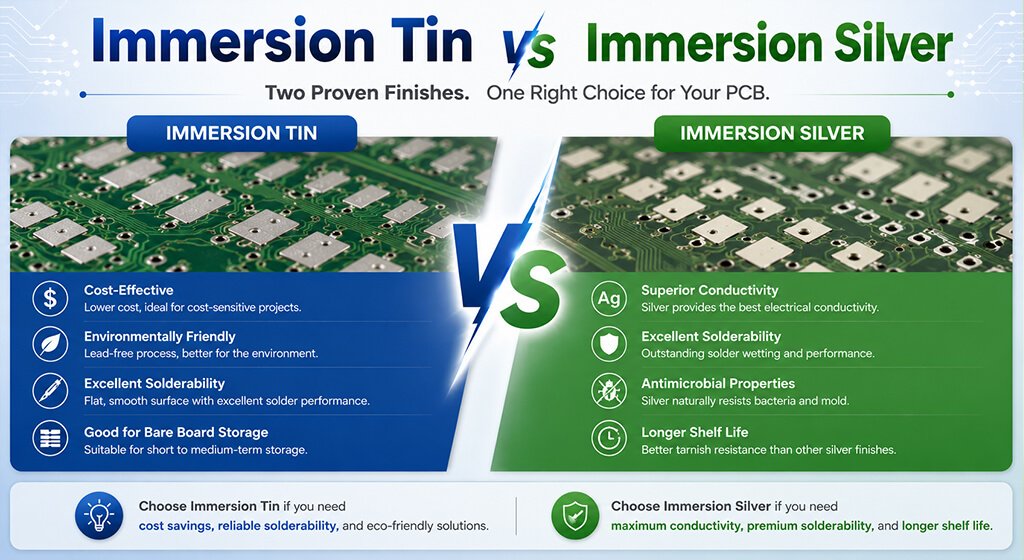
Feature | Immersion Tin | |
Cost | Lower | Higher |
Oxidation Sensitivity | Moderate | High |
Handling Difficulty | Moderate | High |
Signal Performance | Good | Excellent |
Shelf Life | Moderate | Moderate |
Immersion Silver often performs better for RF/high-speed applications but requires stricter handling.
Do You Need Any Help?
10. Common Immersion Tin Problems
Immersion Tin (ImSn) is widely used in PCB manufacturing because of its excellent flatness, strong solderability, and lead-free compatibility. However, Immersion Tin also has certain process limitations and reliability concerns.
Most immersion tin problems are related to:
- Oxidation
- Process contamination
- Poor storage
- Incorrect chemical control
- Surface handling
- Tin whisker growth
10. 1. Oxidation & Discoloration
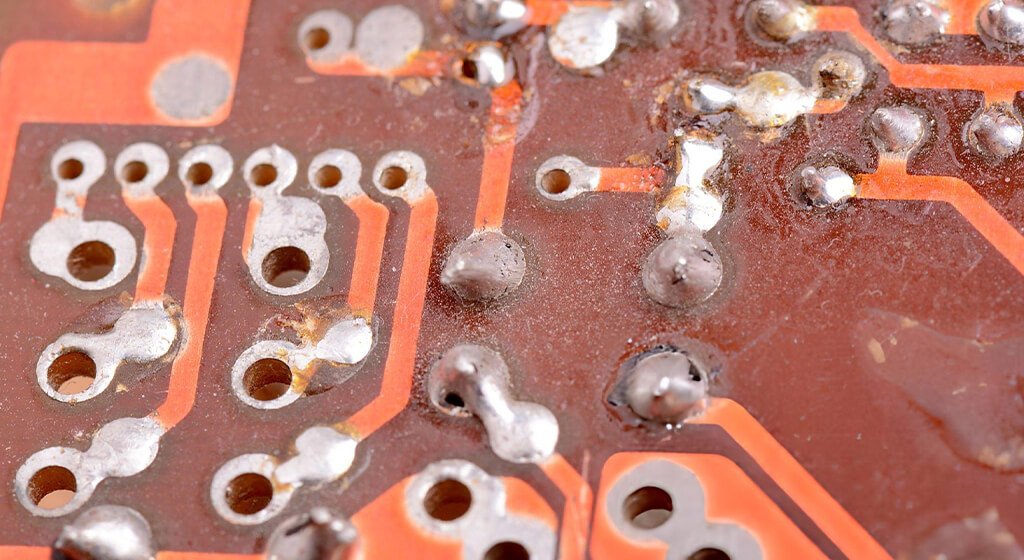
Immersion tin main issue is surface oxidation.
Oxidized immersion tin may appear:
- Yellow
- Brown
- Dark gray
- Uneven or stained
Causes:
- Poor Storage Conditions
- Fingerprints & Handling
- Sulfur Contamination
- Improper Packaging
Prevention:
Based on our experience, we can take the following measures to avoid this.
- Proper Packaging: Vacuum sealing/ Moisture barrier bags/ Desiccants
- Recommended Conditions: Low humidity/ Stable temperature/ Dry environment
10.2. Poor Solderability
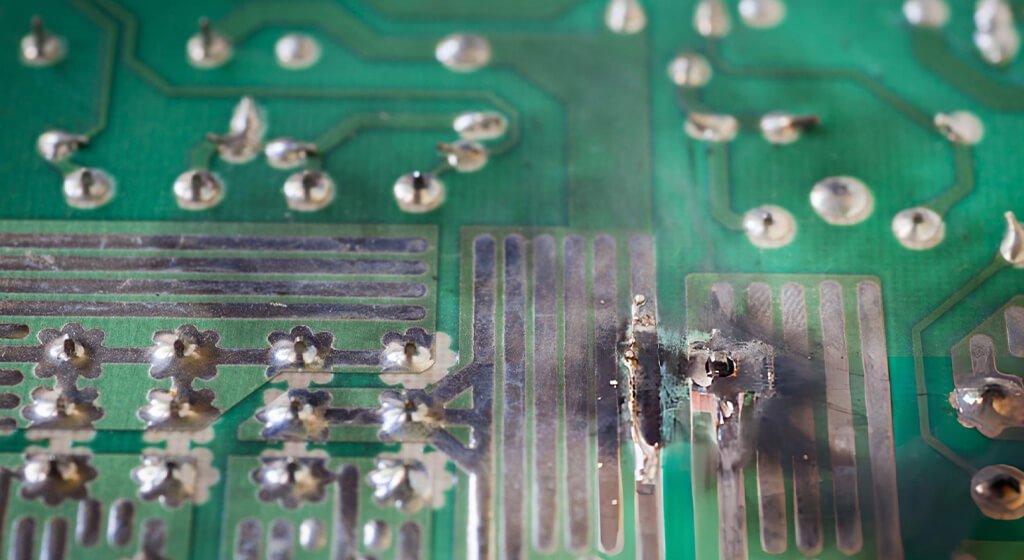
Immersion tin surfaces sometimes show weak solder wetting during SMT assembly.
Symptoms Include:
- Non-wetting
- Dewetting
- Cold joints
- Incomplete solder spread
Causes
- Aged Surface Finish
- Oxidation
- Contamination
- Incorrect Tin Thickness
Prevention
Based on our experience, we can take the following measures to avoid this.
- Maintain Proper Tin Thickness: 0.8–1.2 µm
- Improve Process Control
- Reduce Storage Time
10.3. Tin Whiskers
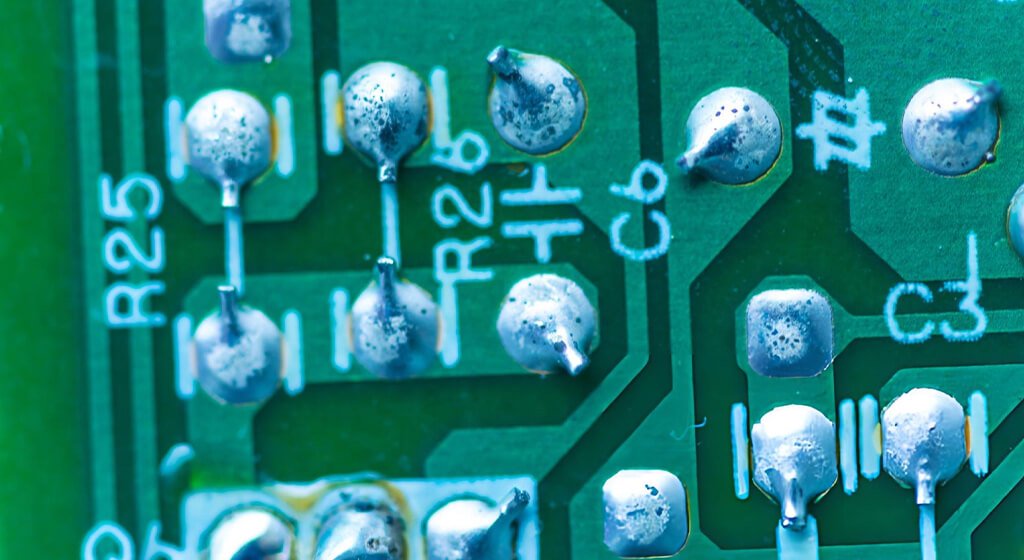
Tin whiskers are microscopic conductive filaments that can grow spontaneously from tin surfaces over time.
They are one of the most discussed immersion tin reliability concerns.
Whiskers Can Cause:
- Electrical shorts
- Arcing
- Leakage currents
- System failure
Tin Whiskers Are Associated With:
- Internal plating stress
- Intermetallic growth
- Mechanical compression
- Thermal cycling
- Improper process chemistry
Prevention
Based on our experience, we can take the following measures to avoid this.
- Use Modern Immersion Tin Chemistry
- Advanced formulations reduce internal stress.
10.4. Uneven Tin Thickness
The immersion tin layer may become non-uniform across the PCB surface.
Symptoms:
- Thin areas
- Dark spots
- Uneven appearance
- Exposed copper
Causes
- Poor Bath Agitation
- Inadequate Cleaning
- Chemical Imbalance
- Poor Rack Design
Prevention
Based on our experience, we can take the following measures to avoid this.
- Maintain Continuous Filtration
- Optimize Agitation
- Regular Chemical Analysis
10.5. Surface Roughness
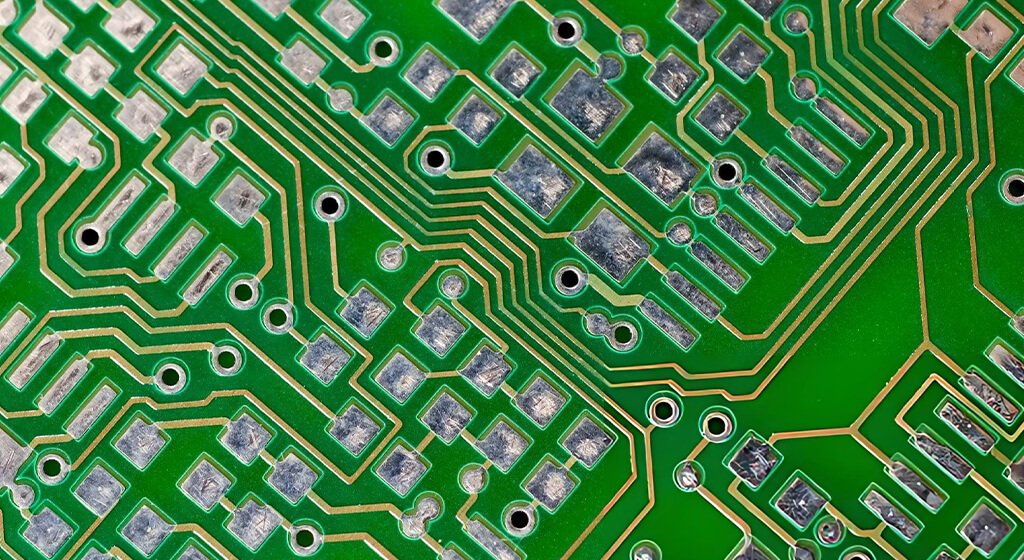
Instead of a smooth finish, some immersion tin surfaces become rough or grainy.
Causes
- High Temperature
- Excessive Deposition Rate
- Chemical Contamination
Prevention
Based on our experience, we can take the following measures to avoid this.
- Maintain Correct Temperature: 50–72℃
- Control Chemistry Carefully
11. Recommended Storage Conditions for Immersion Tin PCB
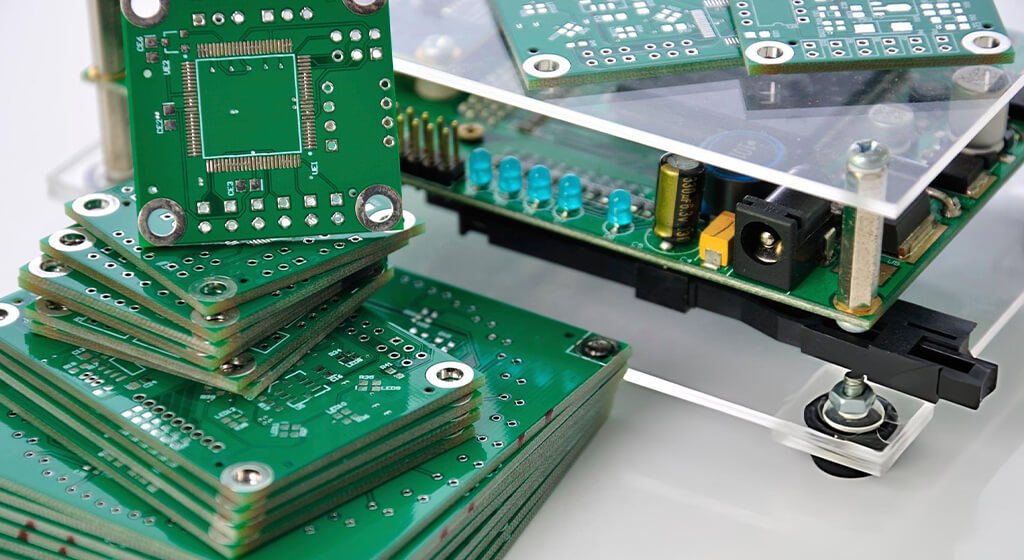
Proper storage conditions are extremely important for Immersion Tin (ImSn) PCB surface finish because tin is more sensitive to oxidation and environmental contamination than finishes such as ENIG.
Incorrect Storage Can Lead To:
- Oxidation
- Discoloration
- Reduced solderability
- SMT assembly defects
- Shortened shelf life
Recommended Storage Environment:
- Temperature Control: 20–25℃ Preferred
- Humidity Control: 30–40% RH
- Use Vacuum-Sealed Packaging
- Use Desiccants & Humidity Indicators
- Avoid Sulfur Contamination
- Store in Clean Environments
12. People Also Ask?
What Is IPC Standards for Immersion Tin
Immersion Tin finishes typically follow:
This standard defines:
- Thickness requirements
- Quality control
- Performance expectations
- Reliability testing
When NOT to Use Immersion Tin?
Avoid Immersion Tin if:
- Extremely long shelf life is required
- Harsh environmental exposure exists
- Aerospace reliability standards dominate
- Multiple reflow cycles are expected
- Ultra-high reliability is mandatory
In these cases, ENIG may be better.
How Manufacturers Reduce Tin Whiskers?
Modern PCB manufacturers use:
- Optimized chemistry
- Controlled deposition
- Annealing processes
- Nickel barrier layers
- Improved stress control
Is Immersion Tin Good for BGA?
Yes.
Immersion Tin is widely used for:
- BGA
- CSP
- QFN
- Fine-pitch SMT packages
Its flat surface improves:
- Solder paste consistency
- Joint formation
- Reflow reliability
Is Immersion Tin Suitable for HDI PCB?
Absolutely.
HDI designs typically require:
- Flat pads
- Fine traces
- Microvias
- Dense component placement
Immersion Tin supports these requirements very well.
What Is Immersion Tin Shelf Life?
Typical Shelf Life:
- 6–12 months
Is Immersion Tin Lead-Free?
Yes. Immersion Tin is fully lead-free and RoHS compliant.
Does Immersion Tin Oxidize?
Yes. Tin oxidizes more easily than gold, so storage conditions matter.
Can Immersion Tin Handle Lead-Free Reflow?
Yes. It is compatible with modern lead-free soldering processes.
13. Final Thoughts
Immersion Tin PCB surface finish is one of the most practical and cost-effective lead-free finishes in the electronics industry.
It Offers:
- Excellent flatness
- Strong solderability
- Fine-pitch compatibility
- Good SMT performance
- Lower cost than ENIG
- Full RoHS compliance
For Applications Involving:
- BGA
- HDI PCB
- Fine-pitch SMT
- Consumer electronics
- Industrial systems
When sourced from an experienced PCB manufacturer with strong process control, Immersion Tin provides a highly balanced combination of performance, manufacturability, and cost efficiency.
As PCB technology continues moving toward higher density and lead-free manufacturing, Immersion Tin will remain an important surface finish option for many electronic products worldwide.
Get a PCB Quote