
/Cost, Performance, and When to Use It/
HASL Surface Finish Ultimate Guide
In the PCB manufacturing, HASL (Hot Air Solder Leveling) is one of the most widely used finishes—especially in cost-driven applications.
PCB Surface Finish Type
With rising demand for fine-pitch components, high-density layouts, and automated assembly, many people are asking:
- Is HASL still a viable option?
- When should I switch to ENIG?
- Does HASL affect SMT yield and reliability?
This guide will answer those questions and help you make the right decision before requesting your next PCB quote.
Let’s Go.
Table of Contents
1. What Is HASL Surface Finish?
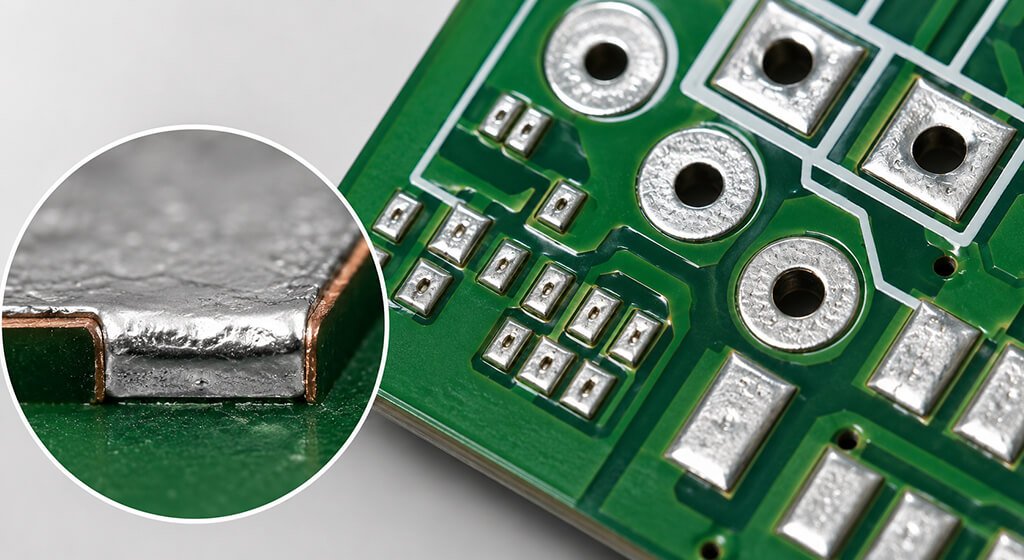
HASL (Hot Air Solder Leveling) is a widely used PCB surface finishing, which can protect exposed copper and improve solderability.
In this process, exposed copper pads are coated with molten solder and then leveled using high-pressure hot air. It will create a protective, solderable metal layer that prevents oxidation and ensures reliable electrical connections during PCB assembly.
That coating helps prevent oxidation and makes later soldering easier, which is why HASL has long been used as a cost-effective finish.
Key Characteristics
- Material: Tin-based solder (SnPb or lead-free SAC alloys)
- Typical Thickness: ~25–50 µm (1–2 mil)
- Surface Shape: Slightly uneven (non-planar)
- Solderability: Excellent
- Cost: One of the lowest among all PCB finishes
2. Types of HASL Surface Finish
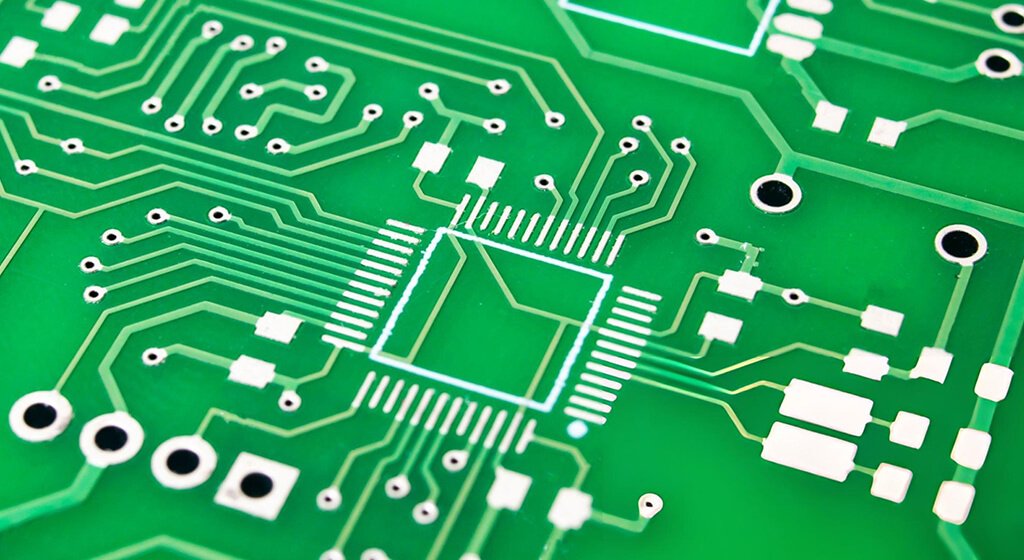
In PCB manufacturing, there are two main types of HASL.
- Leaded HASL
- Lead-Free HASL
Next, we will further explore them.
2.1. Leaded HASL
Leaded HASL uses a tin-lead solder alloy (typically Sn63/Pb37), which has been historically dominant due to its favorable physical properties.
Key Characteristics:
- Excellent surface leveling (flatter than lead-free HASL)
- Lower melting temperature (~183°C)
- Superior wetting performance
- More uniform coating thickness
Advantages:
- Better for fine-pitch components (relative to LF-HASL)
- Lower thermal stress during processing
- Stable and predictable solder behavior
2.2. Lead-Free HASL
Lead-Free HASL replaces lead with tin-silver-copper (SAC) alloys, making it environmentally compliant.
Key Characteristics:
- Higher melting temperature (~217–227°C)
- Rougher and less planar surface
- Slightly thicker and more uneven coating
Advantages:
- Fully RoHS compliant
- Widely accepted in global electronics manufacturing
- Suitable for most consumer and industrial applications
Do You Need Any Help?
3. How HASL PCB Finish Process?
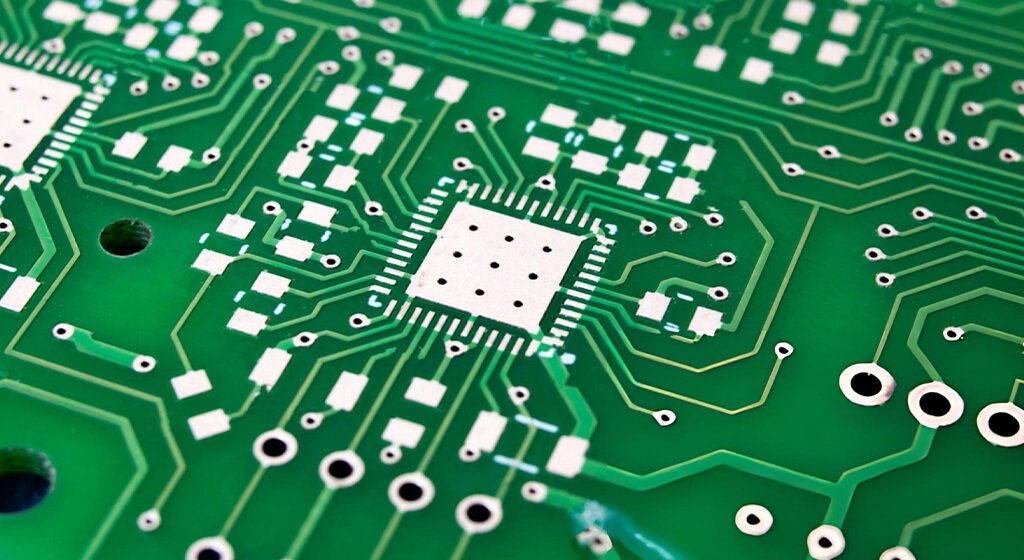
The HASL is a very simple process.
Step 1: Pre-Treatment and Cleaning
The PCB needs to be cleaned first, often including micro-etching, to remove contaminants, oils, dust, and copper oxides. It ensures the copper surfaces are pristine for good solder adhesion.
Step 2: Flux Application
A flux is applied to the board. Flux removes any oxides. It can prevent new oxidation during heating and improve the “wetting” ability of the molten solder, so it spreads evenly over the copper pads and traces.
Step 3. Preheating (Optional)
The board is sometimes preheated to reduce thermal shock when it enters the hot solder bath.
Step 4. Immersion in Molten Solder Bath
The PCB is dipped (vertically or horizontally) into a bath of molten solder.
- Leaded HASL: Typically Sn63/Pb37 alloy at ~230–260°C.
- Lead-Free HASL: Alloys like SnAgCu (SAC) at higher temperatures (~250–280°C).
The solder wets and coats all exposed copper surfaces, including pads, traces, and hole walls (PTH).
Step 5. Hot Air Leveling (Blowing)
As the board is withdrawn from the solder bath, it immediately passes between hot air knives (high-pressure jets of hot air, often 400–450°C, above the solder’s melting point).
These knives blow off excess molten solder, leaving a thin, relatively uniform coating while clearing solder from between fine features and reducing bridging.
The air pressure, angle, temperature, and withdrawal speed critically affect the final thickness and uniformity.
Step 6. Cooling and Solidification
The solder solidifies quickly as the board cools, forming a protective metallic layer on the copper.
Step 7. Post-Cleaning
The board passes through a washer to remove flux residues, which could cause corrosion or reliability issues later.
Note: Process Parameters
|
Parameter |
Recommended Range |
Unit |
Note |
|
Solder Pot Temp (Lead) |
245–260 |
°C |
Common 250°C. Too high may warp board. |
|
Solder Pot Temp (Lead-Free) |
280–300 |
°C |
Common 290°C. Higher melting point. |
|
Immersion Time |
2–4 |
s |
Too long → bubbling. Too short → poor wetting. |
|
Air Knife Pressure |
0.30–0.50 |
MPa |
Higher → thinner coating. Front slightly higher (≈0.05 MPa). |
|
Air Knife Temp |
≥176; common 300–400 |
°C |
Higher → faster air flow and better leveling. |
|
Air Knife Gap |
0.95–1.25 |
cm |
Larger gap → weaker airflow. |
|
Air Knife Angle |
2°–6° (common 4°) |
° |
Affects coating evenness. |
|
Preheat Temp |
120–180 |
°C |
Board surface target 60–100°C. |
|
Preheat Time |
10–30 |
s |
Reduces thermal shock. |
Do You Need Any Help?
4. What Is the HASL Advantage?
HASL (Hot Air Solder Leveling) remains a go-to PCB surface finish because it delivers a strong combination of cost efficiency, solderability, and manufacturing robustness.
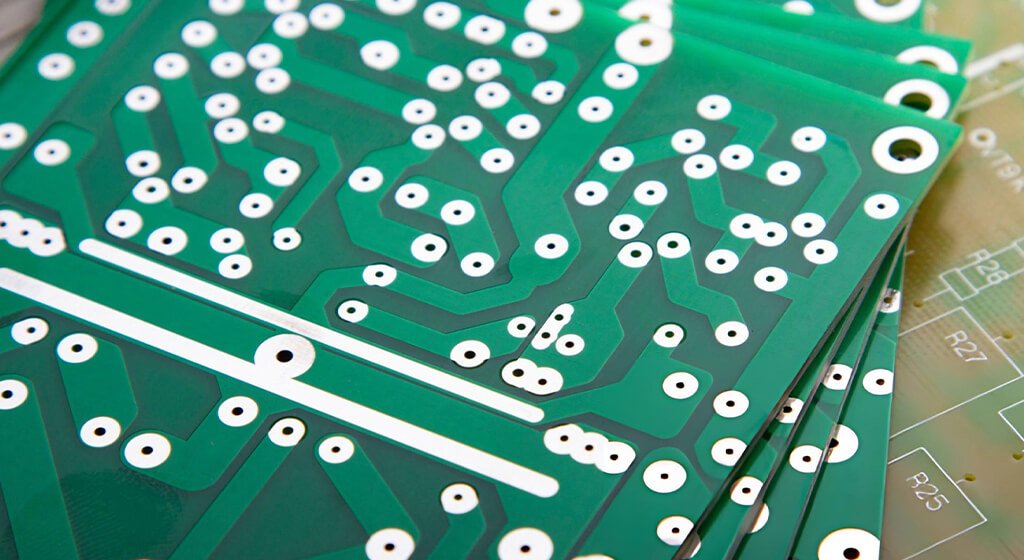
4.1. Lowest Cost Surface Finish
Compared with other finishes, HASL is typically the most economical.
- No use of precious metals (e.g., gold or palladium)
- Lower processing complexity
4.2. Excellent Solderability
HASL deposits actual solder onto the pads:
- Strong wetting during reflow and wave soldering
- Reliable formation of solder joints
- Less sensitivity to assembly process variations
Particularly Beneficial For:
- Through-hole (THT) components
- Mixed-technology boards (THT + SMT)
- Manual soldering and rework
4.3. Robust Mechanical Strength
The solder coating provides:
- Durable pad structure
- Good resistance to vibration and mechanical stress
- Strong intermetallic bonding during assembly
4.4. Mature and Stable Process
HASL is one of the oldest PCB finishing methods:
- Highly standardized across global manufacturers
- Well-understood process control
- Consistent output quality
Do You Need Any Help?
5. HASL vs ENIG: Which Is Better?
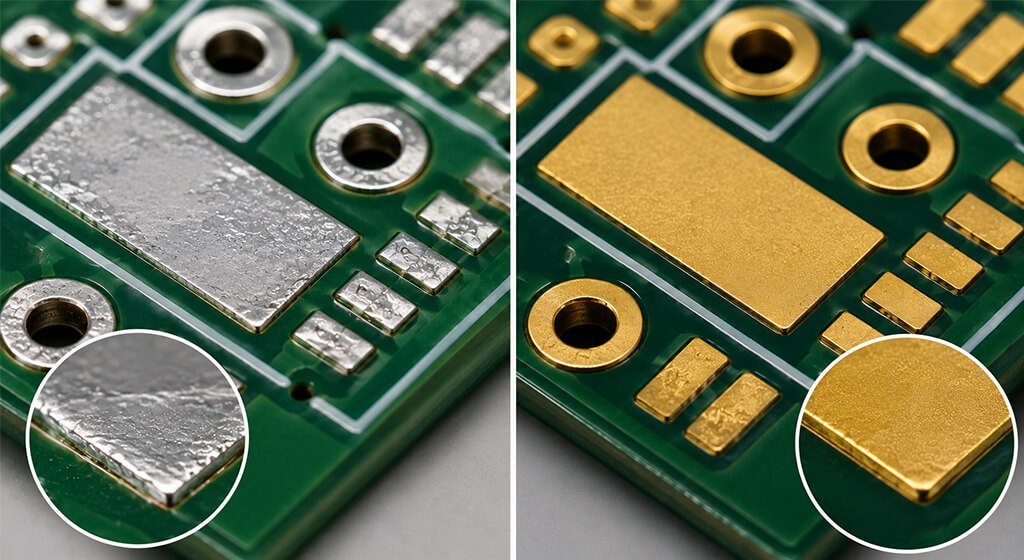
This section will compare HASL and ENIG, so you can make a decision quickly and defensibly before requesting quotes.
5.1. Fundamental Difference
- HASL: Pads are coated with molten solder, then leveled with hot air
- ENIG: Pads are coated with nickel + a thin layer of gold via a chemical process
Translation:
- HASL = mechanical coating (uneven, thicker)
- ENIG = chemical deposition (flat, thin, precise)
5.2. Cost Comparison
Factor | HASL | ENIG |
Process Cost | Low | High |
Material Cost | Low | High (gold + nickel) |
Overall PCB Price | Cheapest | 20–50% higher |
Note: If your design allows it, HASL is the fastest way to reduce PCB cost.
5.3. Surface Flatness
Feature | HASL | ENIG |
Pad Flatness | Uneven | Very flat |
Coplanarity | Variable | Excellent |
Fine-pitch Capability | Limited | Excellent |
Why It Matters:
- Flatness directly impacts:
- Solder paste printing
- Component placement
- Reflow consistency
ENIG Is Strongly Preferred For:
- BGA
- QFN
- CSP
- ≤0.5 mm pitch components
5.4. Solderability & Joint Strength
Factor | HASL | ENIG |
Initial Solderability | Excellent | Excellent |
Joint Strength | Strong | Slightly lower |
Rework Performance | Very good | Good |
Insight:
- HASL uses actual solder → stronger mechanical joints
- ENIG relies on nickel interface → more controlled but thinner
Do You Need Any Help?
6. How to Avoid Some Issues In HASL?
While HASL is cost-effective and reliable for many designs, it will bring some risks—especially in SMT-heavy boards.
6.1. Uneven Surface
Pads are non-planar, with height variation across the footprint.
Cause
- Air-knife leveling variability
- Surface tension effects during solder solidification
- Board orientation (vertical vs horizontal HASL)
How to Avoid
Based on our experience, we can take the following measures to avoid this.
- Prefer horizontal HASL over vertical
- Avoid HASL for ≤0.5–0.65 mm pitch
- Tighten stencil design (see §2)
- For dense SMT, switch to ENIG
6.2. Tombstoning
One end of a passive (e.g., 0402/0603) lifts during reflow.
Cause
- Unequal wetting forces due to pad height differences
- Asymmetric paste deposition
How to Avoid
Based on our experience, we can take the following measures to avoid this.
- Use home-plate stencil apertures or reduce aperture on the higher pad
- Optimize reflow profile (balanced ramp/soak)
- Keep HASL to ≥0603 / wider pitch; use ENIG for 0402 and below
6.3. Solder Bridging
Unintended solder connections between adjacent pads.
Cause
- Excess solder thickness/variation
- Tight pad spacing + non-flat pads
- Over-deposition of paste
How to Avoid
Based on our experience, we can take the following measures to avoid this.
- Reduce stencil thickness (e.g., 0.10–0.12 mm typical for finer SMT)
- Apply aperture reduction (5–15%) for fine-pitch areas
- Enforce design rules: avoid HASL for <0.5 mm pitch
6.4. Inconsistent Coating Thickness
HASL thickness varies (nominal 25–50 μm / 1–2 mil), but not uniformly.
Cause
- Process control limits (air pressure, temperature)
- Panel layout effects (copper distribution, edge vs center)
How to Avoid
Based on our experience, we can take the following measures to avoid this.
- Specify thickness targets/tolerances with the fabricator
- Choose suppliers with SPC-controlled HASL lines
- Prefer panel designs with balanced copper distribution
6.5. Thermal Stress & Board Warpage
Exposure to ~250 °C during solder dip can stress materials.
Cause
- High process temperature
- Thin cores, low-Tg laminates, asymmetric stack-ups
How to Avoid
Based on our experience, we can take the following measures to avoid this.
- Use high-Tg FR-4 (or better)
- Ensure symmetrical stack-up
- Define max warpage spec (e.g., ≤0.75% for SMT)
- Consider ENIG for thin or high-layer-count boards
6.6. Poor Suitability for Fine-Pitch / HDI
HASL cannot reliably support BGA, QFN, CSP or tight pitches.
Cause
- Non-planar pads + solder thickness variability
How to Avoid
Based on our experience, we can take the following measures to avoid this.
- Use ENIG (or other flat finishes) for ≤0.5 mm pitch
- Reserve HASL for low-to-medium density designs
Do You Need Any Help?
7. People Also Ask?
Is HASL cheaper than ENIG?
Yes.
HASL is typically 15–40% cheaper than ENIG due to:
- No gold layer
- Simpler manufacturing process
It’s often the default choice for budget-driven projects.
What Are The Disadvantages Of HASL?
The main limitations include:
- Uneven surface (poor flatness)
- Not suitable for fine-pitch SMT
- Higher risk of: Tombstoning &Solder bridging
Can HASL Be Used For SMT Assembly?
Yes—but with constraints.
Works Well For:
- Larger components (≥0603)
- Low-density layouts
Not Recommended For:
- Fine-pitch ICs (≤0.5 mm)
- BGA / QFN packages
Note: For advanced SMT, ENIG is usually a better option.
What Is The Thickness Of HASL?
Typical HASL Thickness Is:
25–50 µm (1–2 mil)
However, it may vary depending on:
- Process Control
- PCB Design
- Manufacturer Capability
What Pitch Is Safe For HASL?
General Guideline:
- Safe: ≥0.8 mm pitch
- Borderline: 0.5–0.8 mm
- Not recommended: ≤0.5 mm
8. Final Thoughts
In PCB manufacturing, HASL is still an efficient choice today.
HASL is economical, but it has some issues, such as non-planarity, which can impact paste consistency and component placement.
When experienced teams choose one finish, they will consider the design’s complexity, risk profile, and production goals.
Get a PCB Quote