
/Custom Flexible PCB Solutions/

Flex PCB

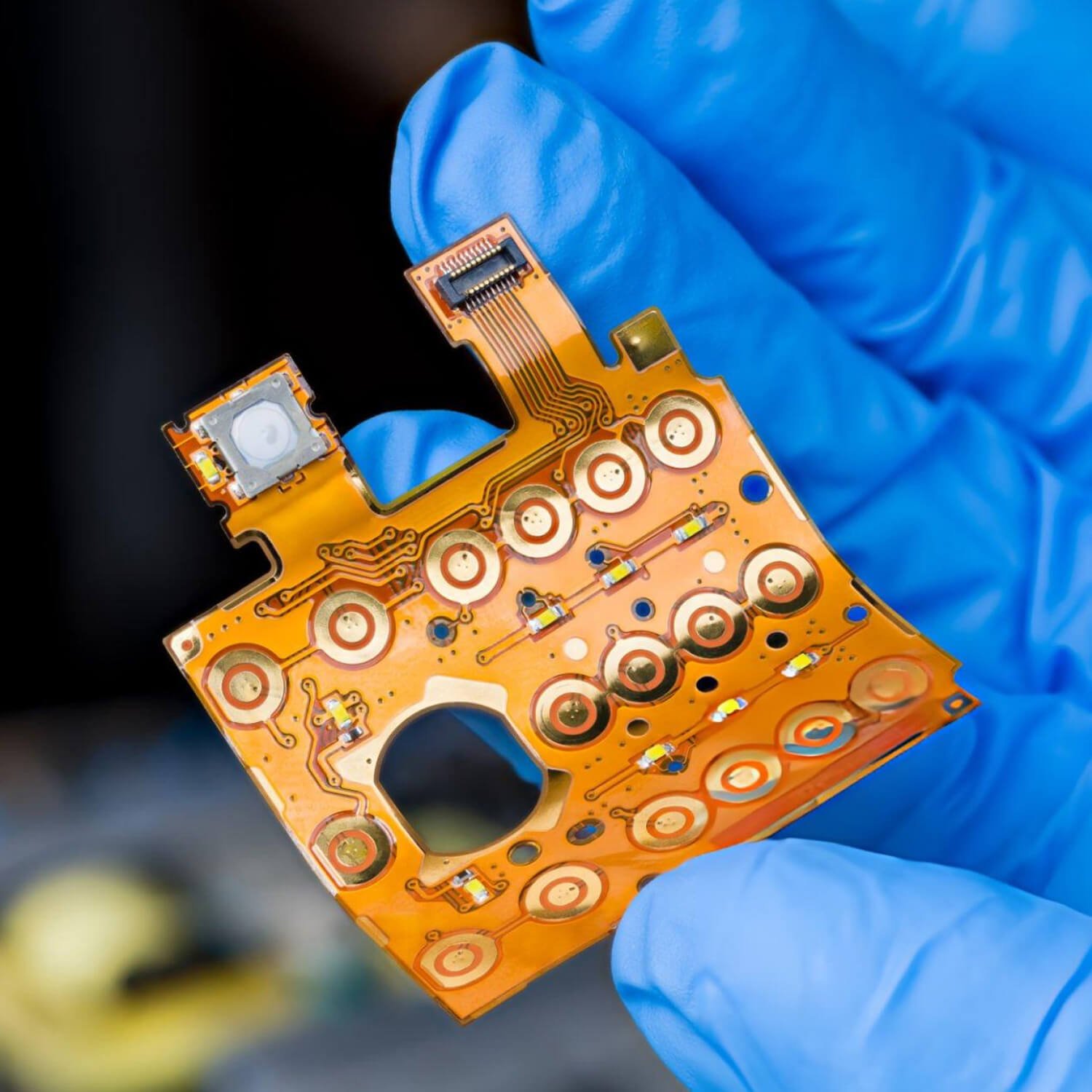
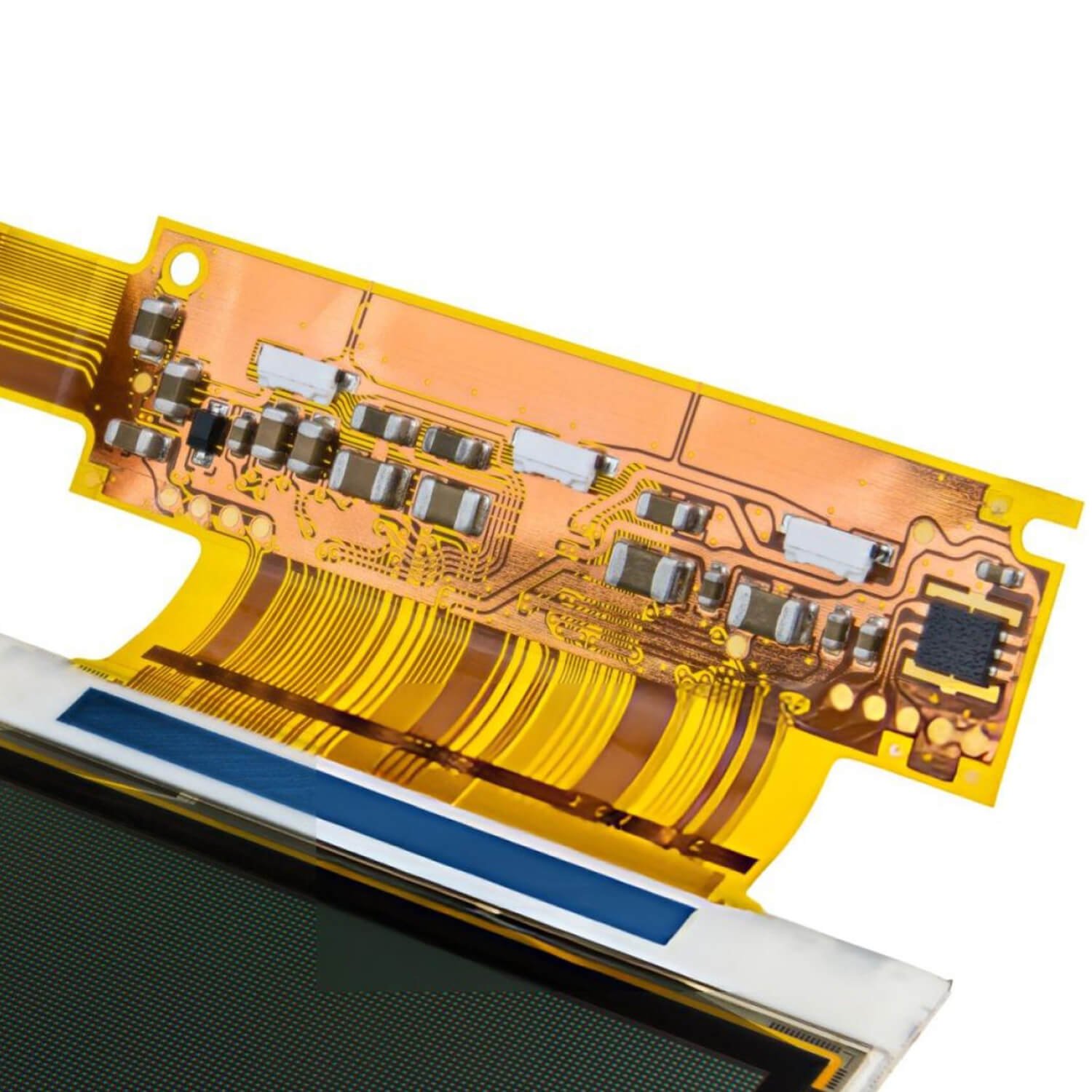
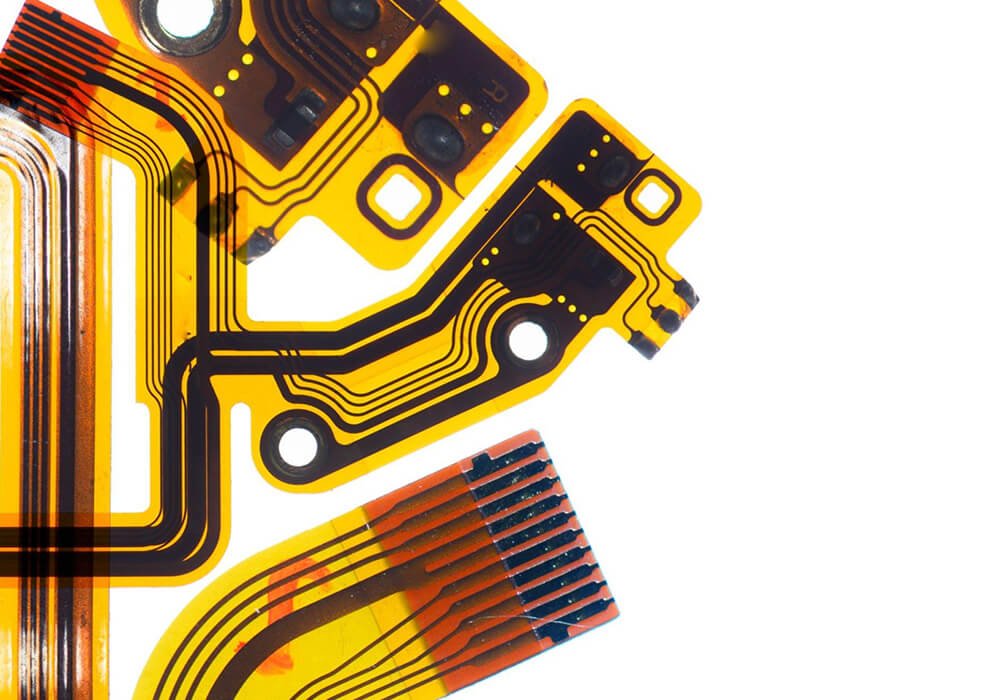
Flex PCBs enable you to design compact, three-dimensional layouts that improve reliability while reducing system size and weight.

We specialize in single-sided, double-sided, multilayer flex PCBs, flex with stiffeners, and rigid-flex PCBs. It can meet demanding requirements for miniaturization, dynamic bending, signal integrity, and mechanical durability.

Flex PCB Manufacturer

Flex PCB Manufacturer.

We are a professional Flex PCB manufacturer and Flex PCB assembly provider in China. We always deliver high-quality flexible printed circuit boards engineered for reliability, durability, and space-saving designs. 

Our Flex PCB solutions support today’s most demanding electronics, from consumer devices to automotive, medical, aerospace, and industrial applications.

By combining advanced polyimide materials, fine-line imaging, impedance control, and strict quality control, we help you replace bulky wiring and rigid interconnects with lightweight, flexible, and highly reliable circuits.

Our manufacturing capacity is designed to support engineering prototypes, pilot runs, and volume production, while ensuring consistent electrical and mechanical performance.

Precision Fabrication

  • Minimum trace/space: 3 / 3 mil
  • Minimum laser drill: 0.1 mm
  • Tight dimensional tolerances

Advanced Surface Finishes

  • ENIG, OSP, Immersion Silver, Immersion Tin, Hard Gold
  • Selective surface finishes available

100% Electrical Testing

  • All Flex PCBs undergo AOI and flying probe testing, with optional ICT, FCT, and impedance verification to ensure compliance with design specifications.

Feature Flex PCB.

PCBSAIL provides a complete range of Flex PCB solutions, tailored to different performance, cost, and mechanical requirements.

Get Flex PCB
Get Flex PCB
Get Flex PCB
Get Flex PCB
Get Flex PCB

Flex PCB We Offer.

Flex PCB Single-Sided Flex PCB

Single-Sided Flex PCB

Single-sided flex PCBs feature one copper layer laminated onto a flexible substrate, typically polyimide.

  • Ultra-thin and lightweight
  • Simple structure and low cost
  • One-time or static bending designs

Flex PCB Double-Sided Flex PCB

Double-Sided Flex PCB

Double-sided flex PCBs have copper layers on both sides, interconnected with plated through-holes or microvias.

  • Higher routing density
  • Better power and signal separation
  • Maintains flexibility with moderate complexity

Flex PCB Multilayer Flex PCB

Multilayer Flex PCB

Multilayer flex PCBs contain three or more conductive layers with internal power and ground planes.

  • Blind and buried microvias
  • Excellent EMI control
  • High-speed and RF compatibility

Flex PCB with Stiffeners

Flex PCB with Stiffeners

Stiffeners provide localized rigidity for connectors and components while preserving flexibility elsewhere.

  • FR-4
  • Polyimide (PI)
  • PET
  • Stainless steel
  • Aluminum

Flex PCB Rigid-Flex PCB

Rigid-Flex PCB

Rigid-flex PCBs combine rigid PCB sections and flexible interconnections into a single structure.

  • Eliminates cables and connectors
  • Integrated rigid and flex stack-ups
  • Complex 3D assembly capability

ItemUnitFlex PCB
Max. LayersL16
Min. Finished Board Thicknessmm0.04
Max. Sizemm500 × 2200
Min. Laser Drill Holemm0.025
Min. Mechanical Drill Holemm0.1
Min. Line Width / Spacingmm0.035 / 0.035
Min. Annular Ring (Single / Double Side)mm0.075
Min. Annular Ring (Multilayer Inner Layer)mm0.1
Min. Annular Ring (Multilayer Outer Layer)mm0.1
Min. Coverlay Bridgemm0.1
Min. Solder Mask Openingmm0.15
Min. Coverlay Openingmm0.30 × 0.30
Min. BGA Pitchmm0.45
Single-ended Impedance Tolerance%±7
Base Material Type/Polyimide, LCP, PET
Base Material Brands/Shengyi, ITEQ, Taiflex, Newflex, Nikko, Panasonic, DuPont, Jiujiang
Stiffener Types/FR4, PI, PET, Steel, Aluminum, PSA, Nylon
Surface Finish/ENIG, ENEPIG, OSP, Electroplated Gold, Electroplated Gold + ENIG, Electroplated Gold + OSP, Immersion Silver, Immersion Tin, Electroplated Tin
Flex + HDI/2+N+2 (Mass production)

Flex PCB Materials

Selecting the correct substrate material is critical for electrical performance, flexibility, and long-term reliability. PCBSAIL supports a wide range of flex PCB materials from global and domestic brands.

Order flex pcb board

Standard flexible circuit material with excellent thermal stability and mechanical strength.

  • Temperature Range: −65 °C to 260 °C
  • Dielectric Constant: 3.4–3.5
  • Applications: Standard flex circuits, industrial electronics, medical devices

A cost-effective flexible material for low-temperature consumer applications.

  • Temperature Range: −40 °C to 105 °C
  • Dielectric Constant: ~3.3
  • Applications: Consumer electronics, disposable devices

Enhanced polyester with better heat resistance and mechanical properties.

  • Temperature Range: −50 °C to 155 °C
  • Dielectric Constant: ~3.2
  • Applications: Automotive electronics, industrial controls

A high-performance flex material for RF and high-frequency designs.

  • Temperature Range: −200 °C to 240 °C
  • Dielectric Constant: 2.9–3.2
  • Applications: RF, microwave, antenna modules

Flex PCB Feature

Our flexible printed circuit boards are engineered for durability, signal integrity, and space efficiency. It makes them ideal for compact and high-density applications.

Flex PCBs are built on thin polyimide or adhesiveless substrates that allow the circuit to bend, fold, or twist.

Optimized copper thickness, rolled-annealed copper foil, and controlled stack-up design enable tight bend radii while maintaining long flex life.

With finished thicknesses as low as 0.05 mm, Flex PCBs significantly reduce overall system weight and volume

Our Flex PCBs with controlled single-ended and differential impedance, achieving tolerances as tight as ±3 Ω for high-speed digital, RF, and sensor applications.

Flex PCBs support 3 mil / 3 mil trace and space, microvias, and fine-pitch components, enabling high-density layouts in limited spaces.

best flex pcb price

Flex PCB Manufacturing

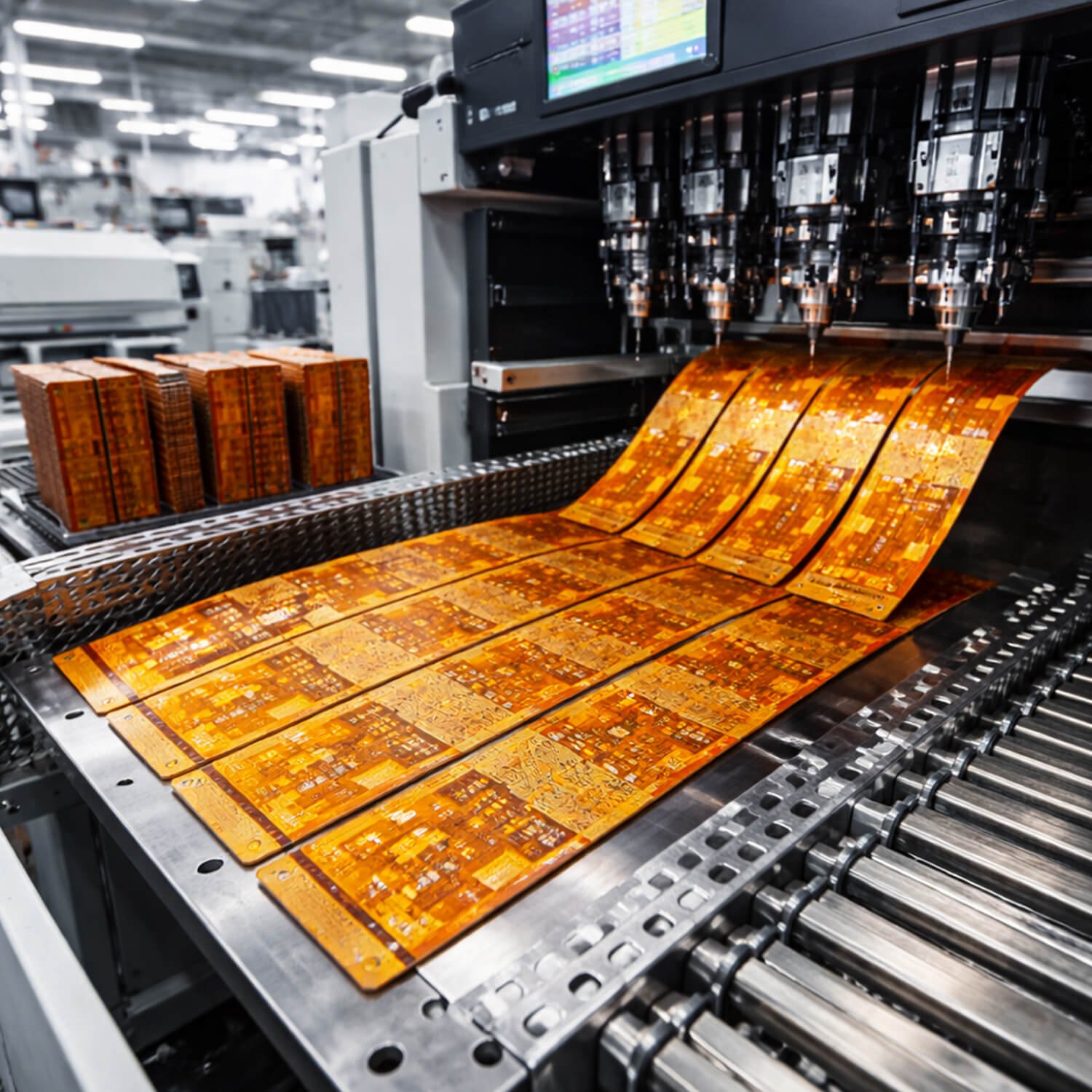
Our Flex PCB manufacturing process is executed under strict IPC standards and controlled cleanroom conditions to ensure dimensional accuracy, electrical reliability, and long-term mechanical durability.

Each build follows a tightly controlled, multi-stage workflow designed to support fine-line routing, controlled impedance, and high flex-cycle performance.

Flex PCB Manufacturring Process

Material Cutting

High-quality polyimide copper-clad laminates are precision-cut to panel size. Material thickness, copper weight, and grain direction are verified to ensure stable flex performance and consistent bend characteristics.

Flex PCB Manufacturring Process

Mechanical

Via and hole structures are formed using mechanical drilling or UV/CO₂ laser drilling, depending on hole size and design requirements.

  • Laser vias down to 0.1 mm
  • Controlled hole wall quality for reliable plating
  • Optimized for HDI and multilayer flex structures

Flex PCB Manufacturring Process

Copper Electroplating

Electroless and electrolytic copper plating are applied to build uniform copper thickness within vias and on circuit traces, ensuring strong electrical continuity and mechanical reliability.

Flex PCB Manufacturring Process

Dry Film Lamination

Photosensitive dry film is laminated onto the copper surface under controlled pressure and temperature, preparing the panel for precise circuit imaging.

Flex PCB Manufacturring Process

Imaging & UV Exposure

Circuit patterns are transferred using high-resolution phototools and UV exposure systems. This step defines trace geometry, impedance-critical features, and fine-pitch structures.

Flex PCB Manufacturring Process

Pattern Plating

Unexposed photoresist is developed away, followed by selective copper and tin plating on circuit features to reinforce traces and pads before etching.

Flex PCB Manufacturring Process

Etching & Resist Stripping

Unwanted copper is chemically etched to form the final circuit pattern. Remaining photoresist and plating resist layers are stripped, leaving clean and accurate conductor geometries.

Flex PCB Manufacturring Process

Surface Finishing

Surface finishes are applied to protect exposed copper and ensure solderability and contact reliability:

  • OSP
  • ENIG (Electroless Nickel Immersion Gold)
  • Immersion Silver

Selective finishes such as ENIG + OSP are available for mixed-performance zones.

Flex PCB Manufacturring Process

Coverlay Application

Polyimide coverlay films are precisely aligned and laminated to protect flexible traces while maintaining controlled openings for pads, connectors, and solder areas.

Flex PCB Manufacturring Process

Pressing

Multi-layer flex or rigid-flex structures are thermally laminated under controlled heat and pressure to ensure layer integrity, adhesion strength, and dimensional stability.

Flex PCB Manufacturring Process

Electrical Testing

All boards undergo comprehensive electrical inspection:

  • AOI (Automated Optical Inspection) for pattern accuracy
  • Flying probe testing for opens, shorts, and continuity
  • Impedance verification for controlled-impedance designs

Flex PCB Manufacturring Process

Final Inspection

Final inspections confirm mechanical dimensions, surface quality, and workmanship compliance with IPC standards. Boards are vacuum-sealed and packaged using ESD-safe materials to prevent damage during shipment.

ItemUnitFlex PCB
Max. LayersL16
Min. Finished Board Thicknessmm0.04
Max. Sizemm500 × 2200
Min. Laser Drill Holemm0.025
Min. Mechanical Drill Holemm0.1
Min. Line Width / Spacingmm0.035 / 0.035
Min. Annular Ring (Single / Double Side)mm0.075
Min. Annular Ring (Multilayer Inner Layer)mm0.1
Min. Annular Ring (Multilayer Outer Layer)mm0.1
Min. Coverlay Bridgemm0.1
Min. Solder Mask Openingmm0.15
Min. Coverlay Openingmm0.30 × 0.30
Min. BGA Pitchmm0.45
Single-ended Impedance Tolerance%±7
Base Material Type/Polyimide, LCP, PET
Base Material Brands/Shengyi, ITEQ, Taiflex, Newflex, Nikko, Panasonic, DuPont, Jiujiang
Stiffener Types/FR4, PI, PET, Steel, Aluminum, PSA, Nylon
Surface Finish/ENIG, ENEPIG, OSP, Electroplated Gold, Electroplated Gold + ENIG, Electroplated Gold + OSP, Immersion Silver, Immersion Tin, Electroplated Tin
Flex + HDI/2+N+2 (Mass production)

Flex PCB Applications

Flexible Printed Circuit Boards (Flex PCBs) are widely used in modern electronics where space efficiency, mechanical flexibility, and high reliability are critical. By replacing rigid boards, connectors, and wire harnesses, Flex PCBs enable compact designs, improved durability, and simplified system integration.

PCBSAIL manufactures high-reliability Flex PCBs for both static and dynamic applications, supporting prototypes through high-volume production.

PCB Manufacturer Drone

Electronics

Flex PCBs are essential in compact, lightweight consumer devices that require complex internal routing.

Typical applications include:

  • Smartphones and tablets
  • Wearable devices (smartwatches, fitness trackers)
  • Cameras and image sensors
  • Foldable and hinge-based products

PCB Manufacturer Automotive Electronics

Automotive Electronics

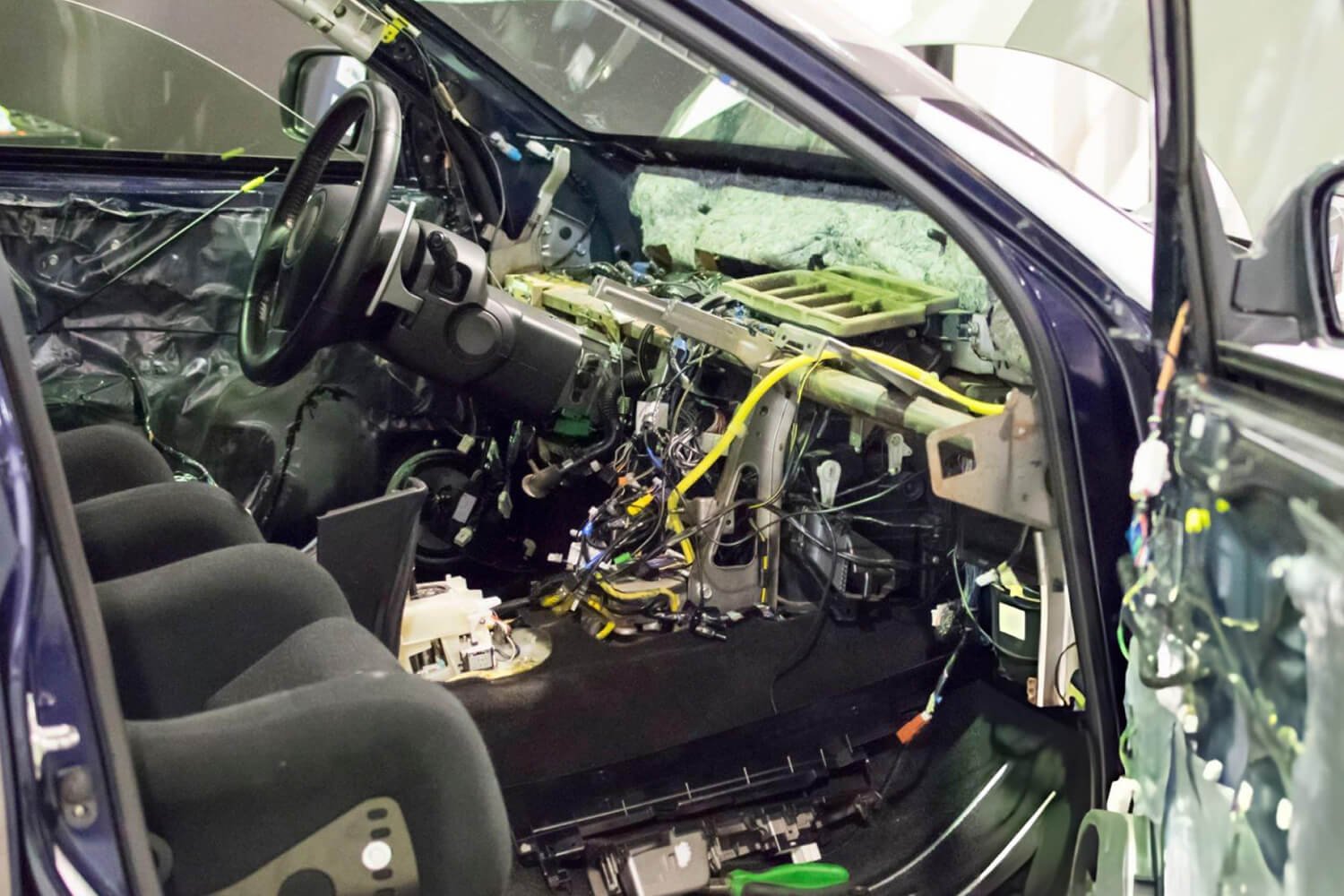
Automotive systems demand Flex PCBs that withstand vibration, temperature extremes, and long service life.

Typical applications include:

  • Instrument clusters and dashboards
  • ADAS cameras and sensors
  • Battery management systems (BMS)
  • Interior lighting and control modules

PCB Manufacturer Industrial Automation

Automation

In industrial environments, Flex PCBs provide durability and design flexibility for complex electromechanical systems.

Typical applications include:

  • Robotics and motion control systems
  • Industrial sensors and actuators
  • Human-machine interfaces (HMI)
  • Control and monitoring equipment

PCB Manufacturer Medical Devices

Medical Devices

In industrial environments, Flex PCBs provide durability and design flexibility for complex electromechanical systems.

Typical applications include:

  • Robotics and motion control systems
  • Industrial sensors and actuators
  • Human-machine interfaces (HMI)
  • Control and monitoring equipment

PCB Manufacturer Telecommunications

Telecommunication

Flex PCBs support high-speed signal transmission and compact module design.

Typical applications include:

  • RF modules and antennas
  • High-speed data interconnects
  • 5G communication equipment
  • Optical transceivers

Fast Quotation

Our professional sales and engineering teams provide fast PCB quotes and technical support. Simply send us your Gerber files, BOM, and assembly drawings, and we will respond promptly with a competitive solution.

FAQ About Flex PCB

1. What Is a Flex PCB?

A Flex PCB (Flexible Printed Circuit Board) is a circuit board built on flexible base materials such as polyimide, allowing it to bend, fold, or twist without damaging the electrical connections. Flex PCBs are widely used in compact, lightweight, and high-reliability electronic products.

A Rigid-Flex PCB combines rigid PCB sections with flexible circuit layers in a single structure. It eliminates connectors between rigid boards and flex cables, improving reliability and reducing assembly complexity. Rigid-Flex PCBs are commonly used in aerospace, medical, and high-end industrial applications.

Structural Comparison

FeatureFlex PCBRigid PCB
Base MaterialPolyimide, PET, LCPFR-4 (glass epoxy)
Mechanical BehaviorBendable, foldableRigid, inflexible
ThicknessUltra-thin (≥0.05 mm)Thicker (≥0.8 mm typical)
Shape OptionsCustom, 3D layoutsFlat, fixed shape

Mechanical Performance

AspectFlex PCBRigid PCB
Vibration ResistanceExcellentModerate
Shock ResistanceHighLimited
Dynamic MovementSupportedNot supported
Connector DependencyLowHigh

Flex PCBs excel in environments with movement, vibration, or mechanical stress, where rigid boards are prone to failure.


Electrical Performance

AspectFlex PCBRigid PCB
Signal Path LengthShorterLonger
EMI ControlImproved (fewer interconnects)Standard
Controlled ImpedanceExcellent (±3 Ω achievable)Excellent
High-Speed SupportYesYes

While both technologies support high-speed designs, Flex PCBs reduce discontinuities caused by connectors and cables.


Assembly & System Integration

AspectFlex PCBRigid PCB
Assembly ComplexityLowerHigher
Cable & Harness UseMinimal or noneOften required
System WeightLowerHigher
ReliabilityHigher (fewer failure points)Lower in complex systems

Cost Consideration

FactorFlex PCBRigid PCB
Board Fabrication CostHigherLower
Assembly CostLowerHigher
Total System CostOften lowerOften higher
Maintenance CostLowerHigher

Flex PCBs frequently provide better overall cost efficiency at the system level, especially in compact or high-reliability designs.

Most Flex PCBs use:

  • Polyimide (PI) for high temperature and mechanical stability
  • Rolled-annealed copper for dynamic flex areas
  • Adhesive or adhesiveless copper-clad laminates

Optional materials include PET or LCP for specific cost or high-frequency requirements.

Typical manufacturing capability:

  • Minimum trace/space: 3 mil / 3 mil
  • Advanced HDI designs: 3 mil spacing

Actual limits depend on layer count, copper weight, and impedance requirements.

Yes. Flex PCBs can be manufactured with controlled impedance for high-speed and RF applications.

  • Single-ended impedance tolerance: ±5 Ω
  • Advanced designs: ±3 Ω
    Impedance is verified using TDR testing.

Yes. When designed correctly, Flex PCBs can support repeated or continuous bending.
Key design factors include:

  • Bend radius
  • Copper type (rolled-annealed)
  • Layer stack-up
  • Avoidance of vias in bend areas

Dynamic flex designs are commonly used in hinges, robotics, and camera modules.

Common surface finishes include:

  • ENIG (Electroless Nickel Immersion Gold)
  • OSP
  • Immersion Silver
  • Lead-free HASL

Selective finishes such as ENIG + OSP are available for mixed-function areas.

Dynamic flex designs are commonly used in hinges, robotics, and camera modules.

Common surface finishes include:

  • ENIG (Electroless Nickel Immersion Gold)
  • OSP
  • Immersion Silver
  • Lead-free HASL

Selective finishes such as ENIG + OSP are available for mixed-function areas.

Dynamic flex designs are commonly used in hinges, robotics, and camera modules.

Yes. We provide turnkey Flex PCB assembly, including:

  • SMT and through-hole assembly
  • Fine-pitch BGA and QFP support
  • Component sourcing
  • Functional and electrical testing

Standard Flex PCBs typically support 1–6 layers. Advanced designs can reach 7–10 layers, depending on material selection, stack-up design, and application requirements.