/Zero-Defect Manufacturing for Mission-Critical Electronics/

PCB Quality Control at PCBSail

As a leading PCB and PCB assembly service provider, PCBSail has built an integrated quality ecosystem that combines Design for Manufacturability (DFM), advanced SMT quality control, multi-layer inspection, data traceability, and final performance validation into one seamless system. Our approach ensures that every PCB assembly we deliver is stable, repeatable, and market-ready.

PCB Quality Control best pcb

Our Quality Philosophy

Many manufacturers treat quality as a gate at the end of production. PCBSail embeds quality at every phase — from data review to shipment.

Our philosophy is built on three pillars:

  1. Prevention over correction — eliminate defects before they form.
  2. Process control over random inspection — stable manufacturing beats reactive fixes.
  3. Data traceability over assumption — every board is trackable from material to shipment.

This philosophy is operationalized through our 12-stage PCB inspection process, which forms the backbone of our PCB quality control system.

PCB Quality Control Process (Process Review)

Quality begins before production. Our engineering team performs a rigorous process review to eliminate risk at the design stage.

We verify all customer-defined specifications, including:

  • Special-shaped components compatibility
  • High-temperature resistance requirements
  • Mechanical mounting constraints
  • Conformal coating or high-reliability applications
  • Vibration and shock resistance for automotive or industrial PCBs

This step ensures that every design aligns with manufacturability and long-term reliability.

Before production release, we confirm that:

  • The Bill of Materials (BOM) is up to date
  • Gerber files, drill files, and fabrication drawings are consistent
  • Component footprints match assembly data
  • No missing or conflicting design details exist

This prevents costly rework and ensures seamless production execution.

For panelized boards, irregular shapes, or multi-board arrays, we assess:

  • Depanelization strategy
  • Milling stability
  • Mechanical stress points
  • Breakaway tab placement

Only designs that can be produced reliably in volume are approved for mass manufacturing.

We evaluate surface finish compatibility based on application:

  • ENIG (Electroless Nickel Immersion Gold) – for fine-pitch and high reliability
  • OSP (Organic Solderability Preservative) – cost-effective for standard assemblies
  • HASL / Lead-Free HASL – robust for general electronics
  • Immersion Tin (ISn) – good for backplane and press-fit connectors
  • SMD vs NSMD pad design – optimized for solder joint reliability

Our PCB quality control process ensures the right surface finish for each application.

We design custom solder stencil openings based on:

  • Component pitch
  • Pad geometry
  • Solder paste volume requirements
  • Thermal mass of components

This ensures consistent solder paste deposition and minimizes defects such as bridging or insufficient solder.

We validate that all specialized components — including BGAs, QFNs, and large thermal pads — align properly with PCB pad geometry to prevent soldering failures.

PCB Quality Control Process(End-to-End Assurance)

Incoming Quality Control

1. Incoming Quality Control

Our IQC department inspects all raw materials before they enter production, including:

  • PCB laminates (FR-4, High-Tg, Rogers, Aluminum, etc.)
  • Copper foil thickness
  • Solder mask adhesion
  • Component authenticity and traceability
  • Moisture sensitivity level (MSL) compliance
By filtering out non-conforming materials at the source, we prevent production failures and long-term reliability issues.

Warehouse Control

2. Warehouse Control

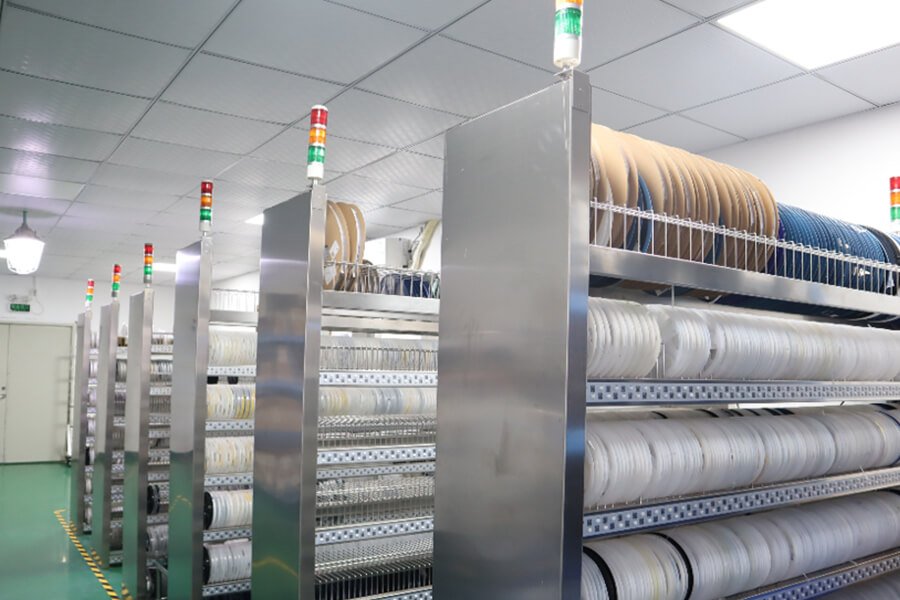
All materials are categorized and stored under controlled conditions:

  • Temperature and humidity regulation
  • FIFO (First-In, First-Out) management
  • Lot tracking with barcode system
  • Anti-static packaging for sensitive components
This system guarantees material integrity throughout the PCB quality control lifecycle.

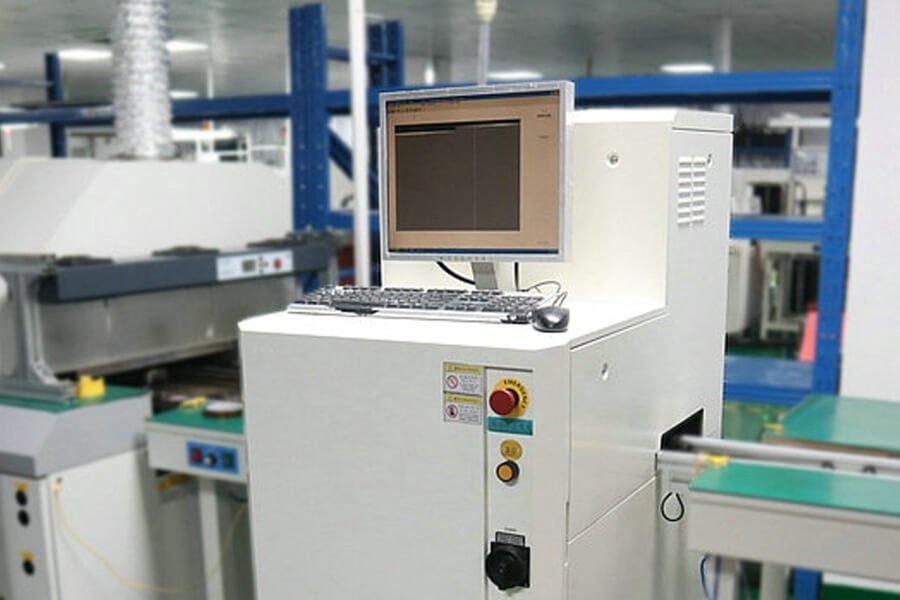
SPI

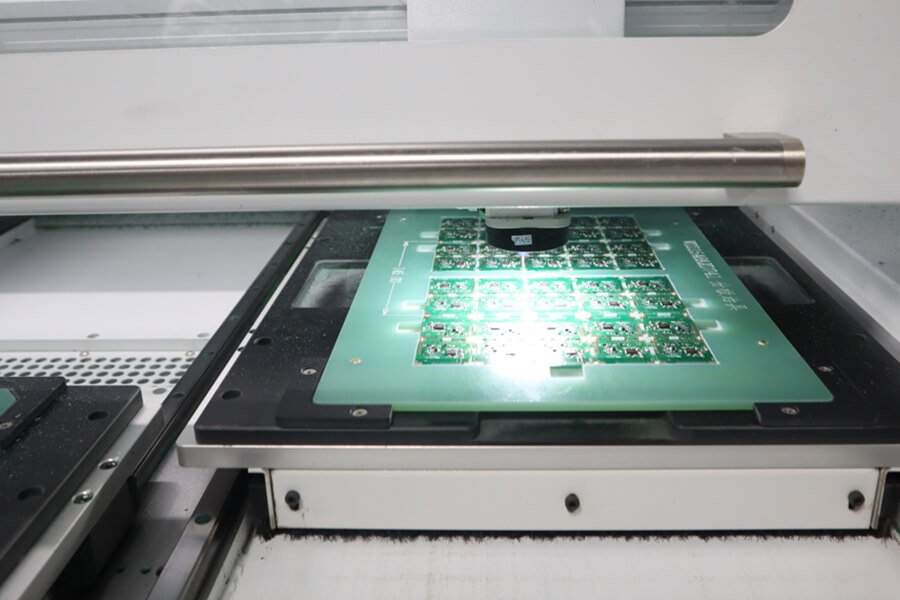
3. SPI

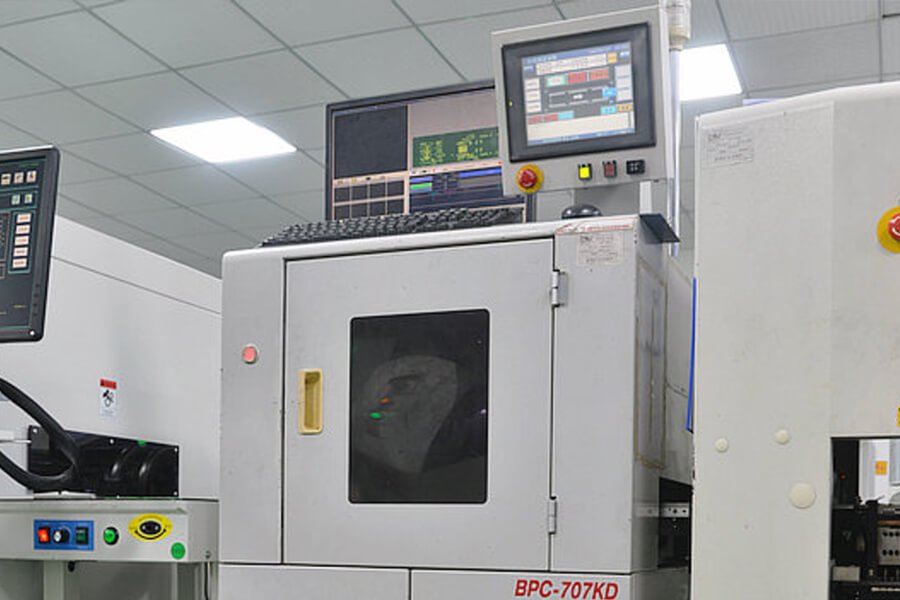
Our SPI (Solder Paste Inspection) system analyzes solder paste printing in real time by measuring:

  • Paste volume
  • Paste height
  • Alignment accuracy
  • Uniformity of deposition
Any deviation triggers immediate corrective action before boards proceed to SMT placement.

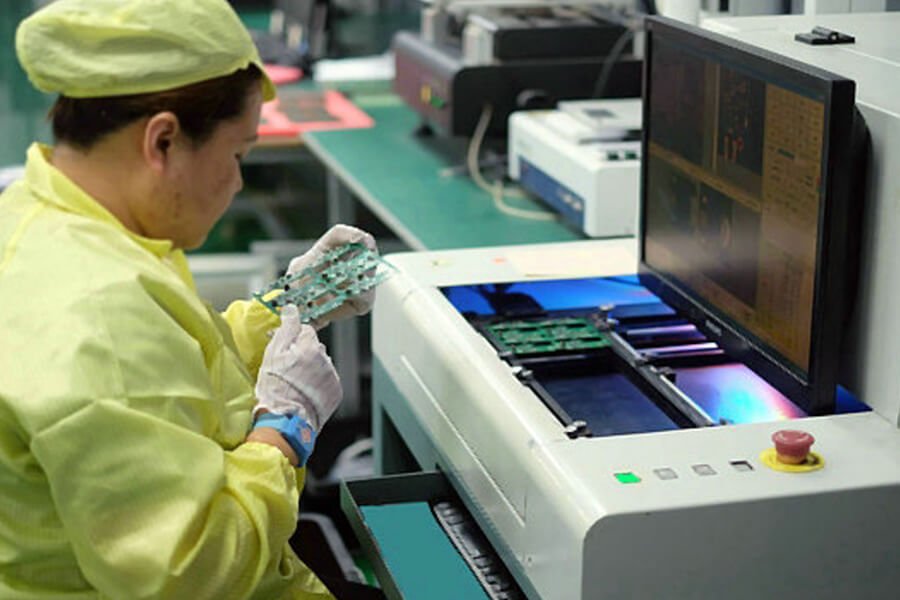
AOI

4. AOI

Our AOI system inspects every assembled PCB for defects including:

  • Missing components
  • Misalignment
  • Tombstoning
  • Incorrect polarity
  • Cold solder joints
This layer of PCB quality control prevents defective boards from advancing in the production line.

SMT FAI

5. SMT FAI

Before full production runs, we perform a First Article Inspection, confirming:

  • Correct component placement
  • Accurate machine programming
  • Solder reflow profile compliance
  • Electrical parameter consistency for resistors and capacitors
This step locks in process stability for mass production.

IPQC

6. IPQC

During production, our IPQC team conducts random sampling checks across all stages:

  • SMT placement accuracy
  • Reflow soldering consistency
  • Operator compliance with work instructions
  • Equipment calibration status
This continuous monitoring guarantees real-time defect prevention.

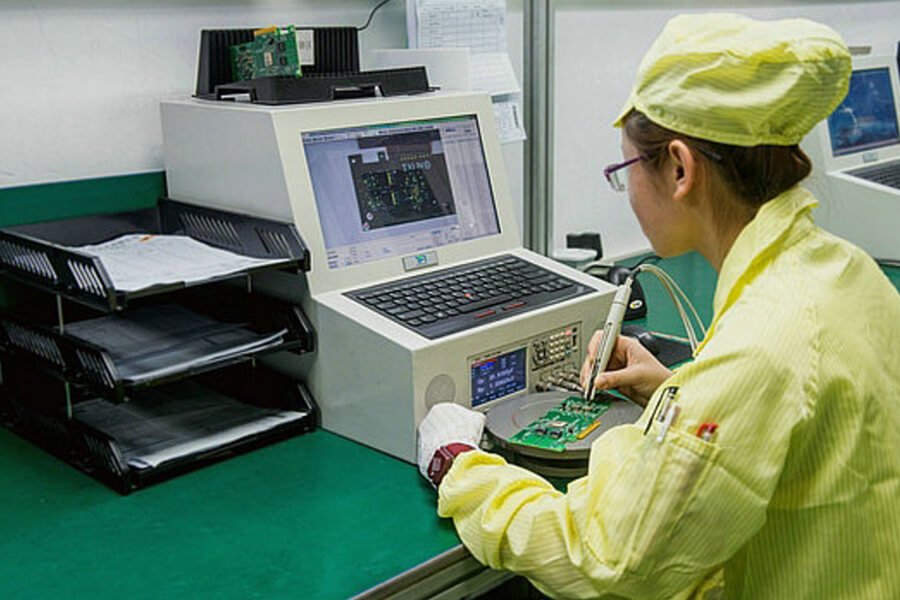
Visual Inspection

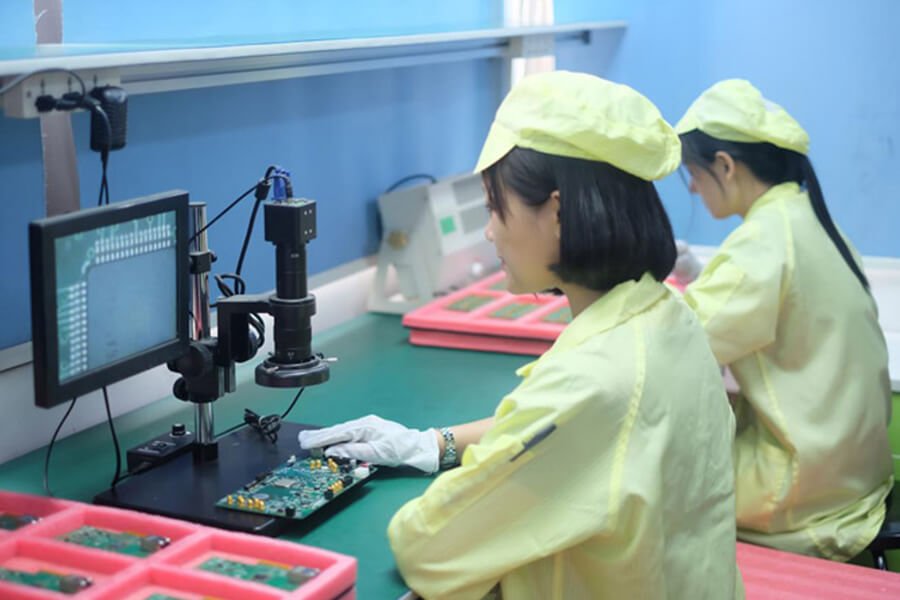
7. Visual Inspection

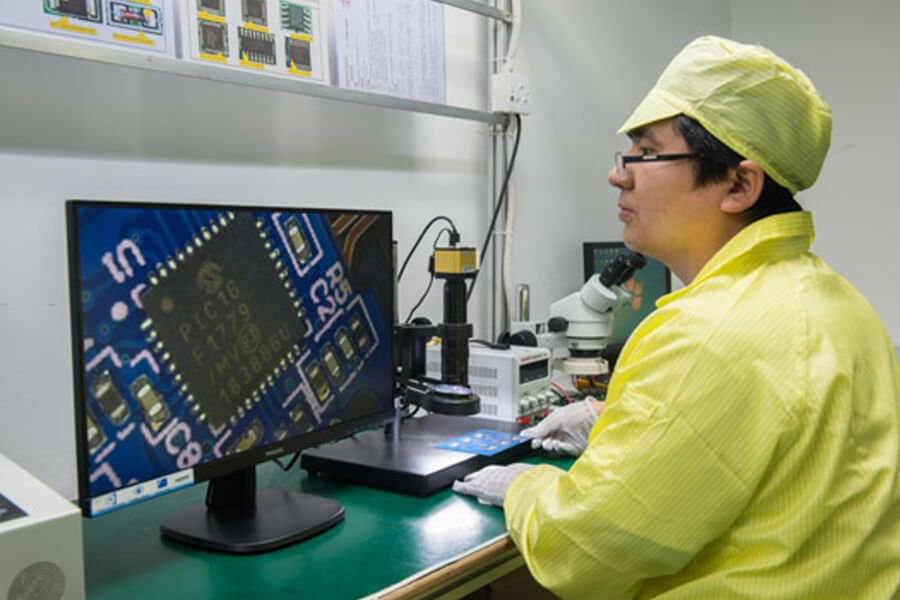
After soldering, our inspectors manually examine each board under magnification for:

  • Solder joint quality
  • Component alignment
  • Flux residue
  • Potential micro-cracks
We strictly follow IPC-A-610 standards, ensuring globally recognized quality.

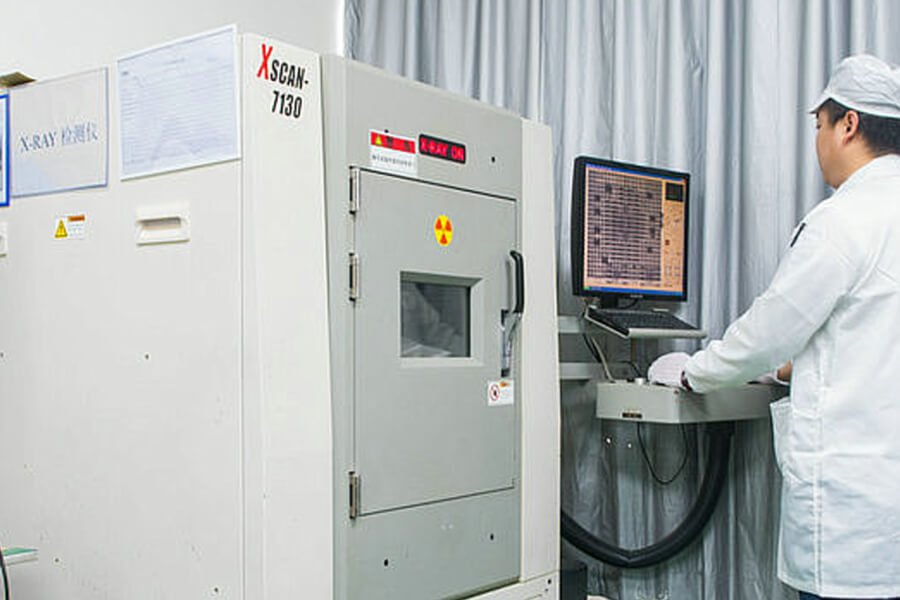
X-Ray Inspection

8. X-Ray Inspection

For advanced PCBs containing BGAs, QFNs, or stacked packages, we utilize X-ray inspection to verify:

  • Solder ball integrity
  • Internal voiding levels
  • Alignment beneath components
  • Hidden solder joint reliability
This is a critical element of high-reliability PCB quality control.

Final QC Manual Inspection

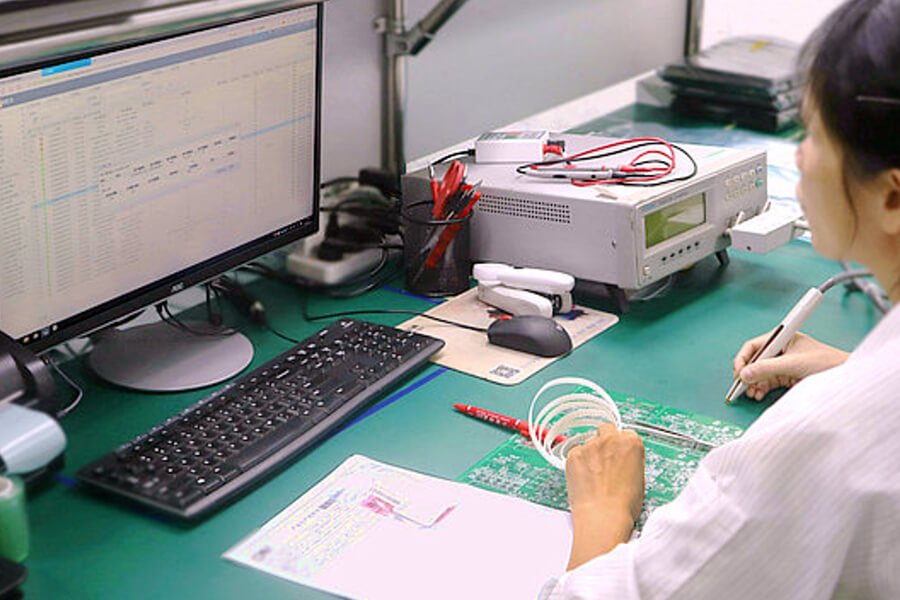
9. Final QC Manual Inspection

Before shipment, our QC team performs a final board audit based on IPC-610 standards, guaranteeing 99.98% defect-free delivery.

Each board is visually and functionally reviewed before packaging.
Automatic Selective Wave Soldering

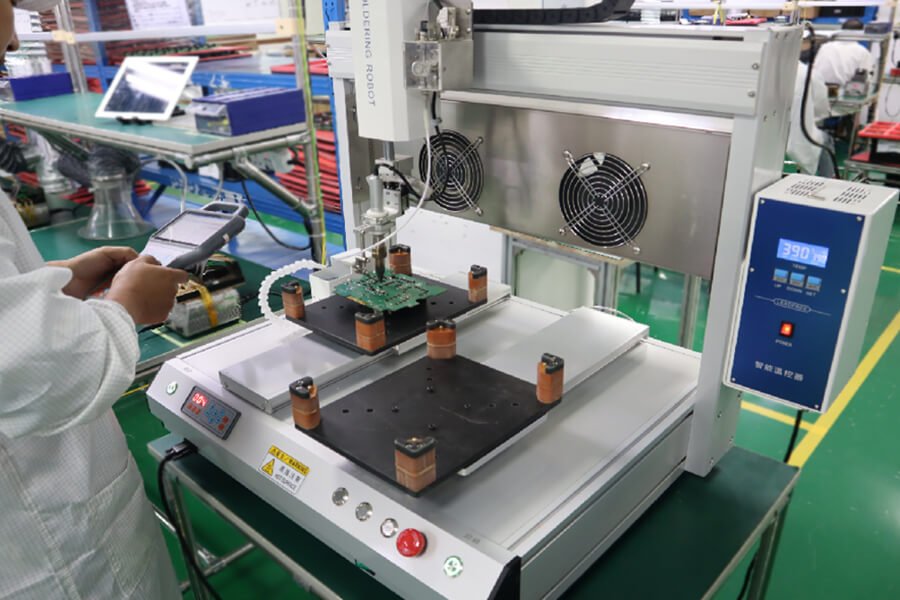
10. Automatic Selective Wave Soldering

For through-hole components, we use automated selective soldering machines that provide:

  • Uniform solder joints
  • Minimal thermal stress
  • Clean, residue-free finishes
  • High mechanical strength
This ensures superior long-term reliability.

Automatic PCB Depaneling

11. Automatic PCB Depaneling

We utilize fully automated CNC depaneling machines that:

  • Reduce mechanical stress
  • Improve edge precision
  • Eliminate manual handling risks
  • Increase production efficiency
This is especially important for high-density PCBs and thin boards.

QA Shipment Inspection

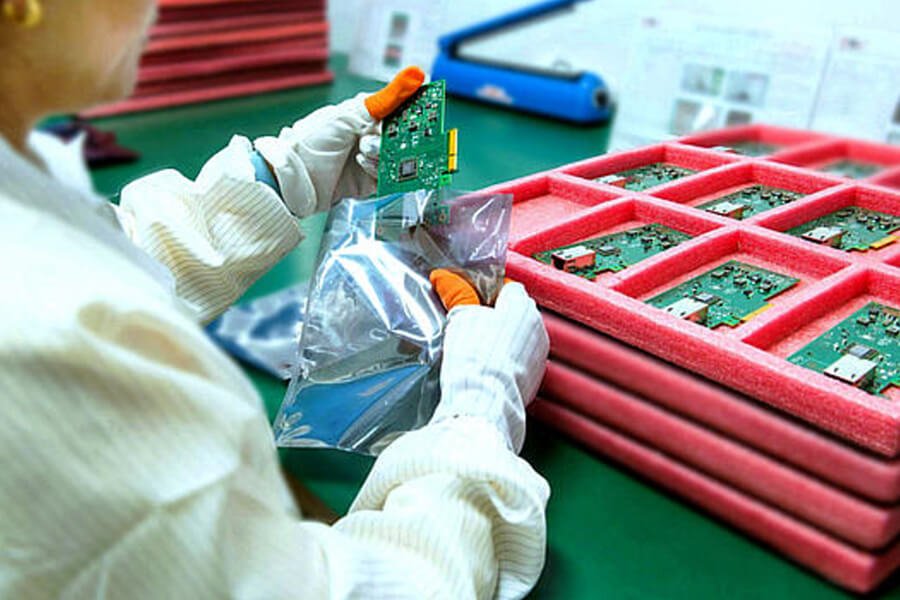
12. QA Shipment Inspection

Before delivery, our QA team conducts final verification including:

  • Barcode scanning
  • Lot traceability confirmation
  • Packaging integrity check
  • Moisture-proof and anti-static protection
Only boards that pass this final audit are released for shipment.

Fast Quotation

Our professional sales and engineering teams provide fast PCB quotes and technical support. Simply send us your Gerber files, BOM, and assembly drawings, and we will respond promptly with a competitive solution.